
If your fixed rate is ending and you’re wondering what to do next, the best move is usually to start early, not when the lender writes to you at the last minute.
💡 Top tip: start looking at your options around six months before your deal ends so you’ve got time to compare properly, avoid rushed decisions, and line up a new deal. I’ll explain why that timing matters later.
A remortgage means replacing your current mortgage on the same property with a new one, usually to get a better rate, change the term, or borrow more against your home.
Your Guide to Remortgaging in 2026
Your fixed deal is ending, the lender’s letter lands, and the rate you have now is about to disappear. For many homeowners in Chelmsford, Braintree, Colchester and across Essex, that is the moment remortgaging stops being a term you have heard before and becomes a live decision with real monthly cost attached.
Remortgaging means replacing your current mortgage on the same property with a new one. The part many homeowners miss is that switching to a new lender is different from taking a new deal with your existing lender. That second option is usually a product transfer. Both can be sensible. The right choice depends on the rate, fees, underwriting, how much paperwork you are prepared to do, and whether your circumstances have changed since you first took the mortgage.
Experian notes that homeowners can either move to a new lender or choose a new deal with their current one, although brokers and lenders often use the word remortgage more precisely to mean a switch to a different lender, as explained in Experian’s guide to remortgaging.
That distinction matters.
A product transfer is often quicker and lighter on admin. A full remortgage can open up more options, but it may involve affordability checks, legal work, a valuation, and a closer look at your income and credit profile. I regularly see Essex homeowners focus only on the headline rate, then realise too late that the cheaper-looking option comes with fees or criteria that do not suit them.
Practical rule: review both routes early enough to compare the true cost, not just the advertised rate.
The mistake I see most often is leaving it late and choosing whatever can be arranged fastest. Sometimes that is fine. Sometimes it means missing a better deal, overlooking early repayment charges, or ruling out a lender switch that would have worked well with a bit more time.
What Remortgaging a House Really Means
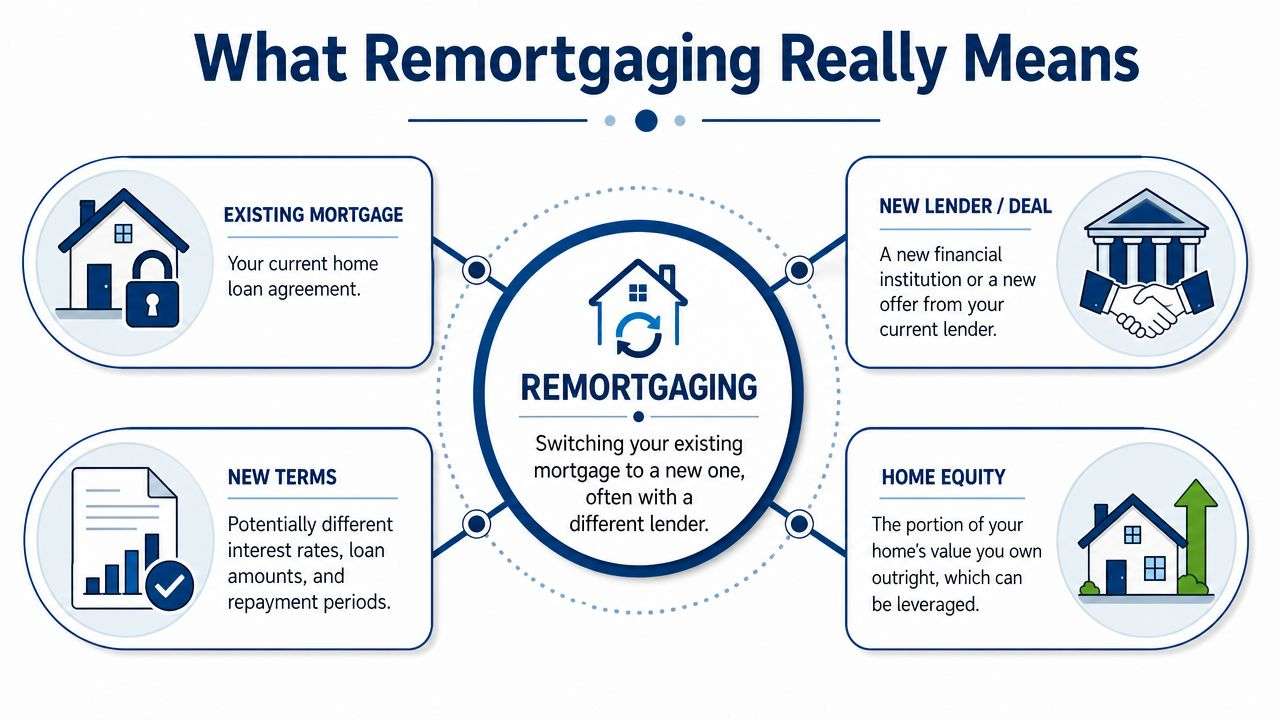
A remortgage is not buying another home. It is not taking out a second mortgage on top of the first one. It is replacing the existing mortgage on your current property with a new loan.
The easiest way to think about it is this. You are changing the finances behind the house, not changing the house itself.
What it is and what it is not
If you switch from one lender to another, the new lender pays off the old mortgage, and your new deal takes its place. You still own and live in the same property.
If you stay with the same lender and choose a new deal, that is often called a product transfer. That distinction matters. NatWest states that a remortgage means taking out a new mortgage deal with a different lender, while staying with your current lender is a different route with different process and cost implications, as explained in NatWest’s remortgage guide.
Changing lender is like changing your mobile provider to get a better contract. Staying with the same lender is more like renewing with your current provider.
That sounds simple, but many guides blur the two. Homeowners then assume every switch needs the same legal work, valuation, paperwork and timescale, which isn’t always true.
Why the distinction matters
A remortgage with a new lender may involve:
Fresh affordability checks based on current income and outgoings
A property valuation to support the new loan
Legal work to remove the old lender’s charge and register the new one
Different fees depending on the lender and product
A product transfer may be simpler if:
You’re happy where you are
The lender’s retention deal is competitive
You want less paperwork
You don’t need to change the structure of the borrowing much
Cambridge Dictionary’s definition also highlights another practical point. As you repay the loan and your property value may rise, your loan-to-value can improve, which may open up access to more competitive pricing, as noted in the Cambridge remortgage definition.
That’s one reason remortgaging can be worth reviewing even if you’ve no intention of moving.
Top Reasons Homeowners Choose to Remortgage
People don’t remortgage just because the paperwork arrives. They remortgage because something has changed. Sometimes it is the market. Sometimes it is the household budget. Sometimes it is the property itself.
To reduce monthly payments or improve the deal
The most common reason is simple. A homeowner wants a better rate or a more suitable product than the one they are about to leave.
That often happens at the end of a fixed or discounted deal. The old deal ends, the lender’s standard variable rate looms in the background, and suddenly the difference between acting now and doing nothing can feel very real.
“For homeowners who fixed into expensive deals, remortgaging can lead to savings of thousands of pounds per year, especially if market rates have dropped. It’s always worth checking the numbers, even if you have to pay a small exit fee.”
That doesn’t mean a switch is always right. It means the maths needs checking.
To raise money for planned borrowing
Another common reason is to release equity for a specific purpose. A family in Colchester might want to improve the kitchen, convert the loft, or consolidate more expensive borrowing into a single secured arrangement. The Openwork Partnership notes that remortgaging can be used to secure better rates, release equity, or consolidate debts in its guide on what remortgaging is and how it works.
Used carefully, that can be sensible. Used casually, it can stretch the mortgage further than necessary. Borrowing for short-term spending over a much longer mortgage term is one of the trade-offs that requires careful thought.
To change the shape of the mortgage
Sometimes the issue isn’t the interest rate. It’s the structure.
A homeowner might want to:
Shorten the term to aim for mortgage freedom earlier
Extend the term to ease monthly pressure
Change ownership arrangements after a life event
Borrow for another property plan, which may start with a guide on remortgaging to buy another property
What works well is tying the remortgage to a clear objective. What tends not to work is remortgaging just because a comparison table shows a cheaper headline rate, without considering fees, flexibility, and future plans.

The Remortgage Process Step by Step
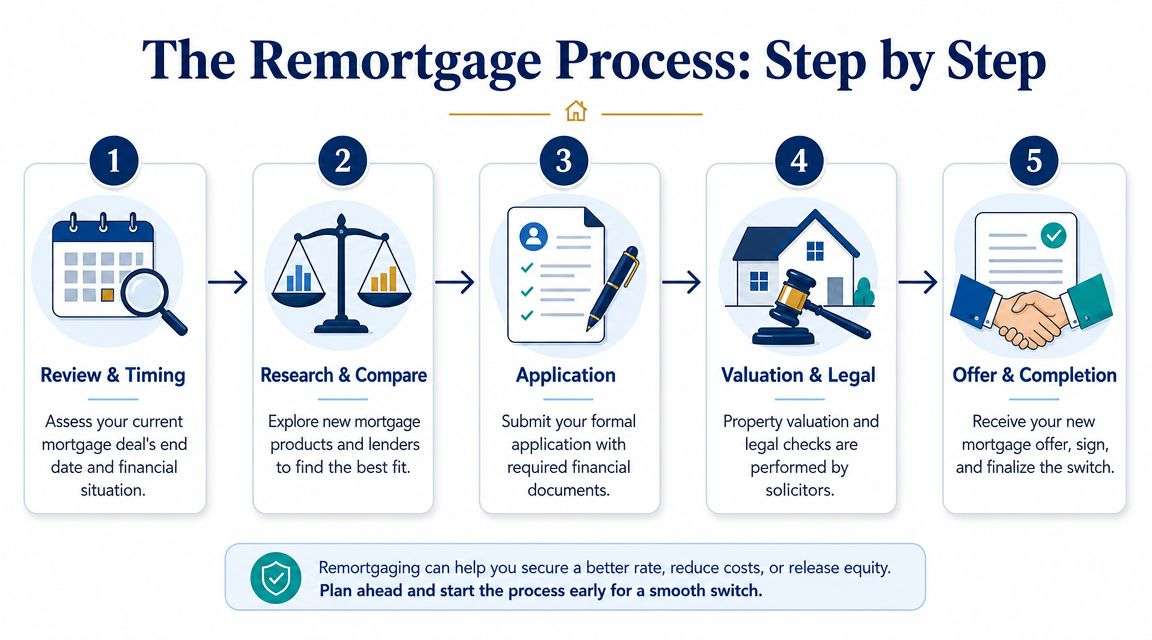
A common Chelmsford scenario is this. Your fixed rate is due to end in a few months. Your lender has sent a new deal through the post, and comparison sites are showing lower rates elsewhere. Before doing anything else, separate the two different routes. A remortgage means moving the mortgage to a new lender. A product transfer means taking a new deal with your current lender. That distinction matters because the price, paperwork, checks, and timescales can vary widely.
Review the current deal early
Start with your current mortgage offer and the latest statement. Check when the existing deal ends, whether an early repayment charge still applies, and whether there are any exit fees. Also, check if your lender has offered a product transfer.
Starting early gives you room to choose properly. In practice, many homeowners begin reviewing options a few months before the current rate ends so they can compare deals, gather documents, and avoid being pushed onto the lender’s standard variable rate through delay.
Compare the two routes before applying
This is the point many homeowners get wrong. They ask, “Should I remortgage?” when the fundamental question is, “Should I switch lender or stay put?”
A product transfer is often quicker and lighter on paperwork. Your current lender may not ask for full income evidence or legal work in the same way a new lender would. A remortgage with a new lender can offer more choice and sometimes better value overall, but it usually involves fuller underwriting, a valuation, and solicitor involvement.
The right answer depends on the whole case. A lower rate elsewhere can still prove a loss once fees, incentives, flexibility, and your plans for the next few years are taken into account. If you want a fuller practical walkthrough, this guide on how to remortgage a house sets out the stages in more detail.
A cheaper headline rate is only part of the decision. The route you choose affects cost, timescale, and the amount of admin involved.
Submit the application
If you choose a remortgage with a new lender, the application is much like applying for a mortgage again, just without buying a new property. The lender will check income, outgoings, credit history, and details about the property. Employed applicants are usually asked for payslips and bank statements. Self-employed applicants usually need tax calculations and tax year overviews.
Good preparation saves time here. Missing documents, undisclosed credit commitments, or mismatched figures on the application are common reasons cases slow down.
A quick visual overview can help before the details get technical.
Valuation, offer and legal work
Once the application is in, the lender assesses the property value and the case as a whole. Sometimes that is done with a desktop valuation. Sometimes a physical inspection is needed. The result affects the loan-to-value and, in turn, the deals available.
If the lender is satisfied, it issues the formal mortgage offer. After that, the legal side finishes the switch from the old lender to the new one. For many remortgages, the legal work is fairly routine, but delays can still occur if names, addresses, title details, or ID checks do not align cleanly.
If fees are part of your calculation, some borrowers also look into related tax questions, such as how to deduct mortgage points, although tax treatment depends on personal circumstances and should be checked with an appropriate adviser.
Completion day
On completion, the new lender sends funds to repay the old mortgage, and the new deal starts. If you are taking on additional borrowing, that money is usually released at the same time, once the old balance and any fees are settled.
Most completions are quiet. The key work is choosing the right route at the start and getting the paperwork rightthe first time.
Understanding Remortgage Costs and Timelines
The rate gets the attention. The costs decide whether the switch is worth doing.
The main charges to check
Experian makes the key point clearly. A successful remortgage depends on whether the savings from a lower rate outweigh transaction costs such as early exit charges, valuation fees and arrangement fees, as explained in Experian’s remortgage guide.
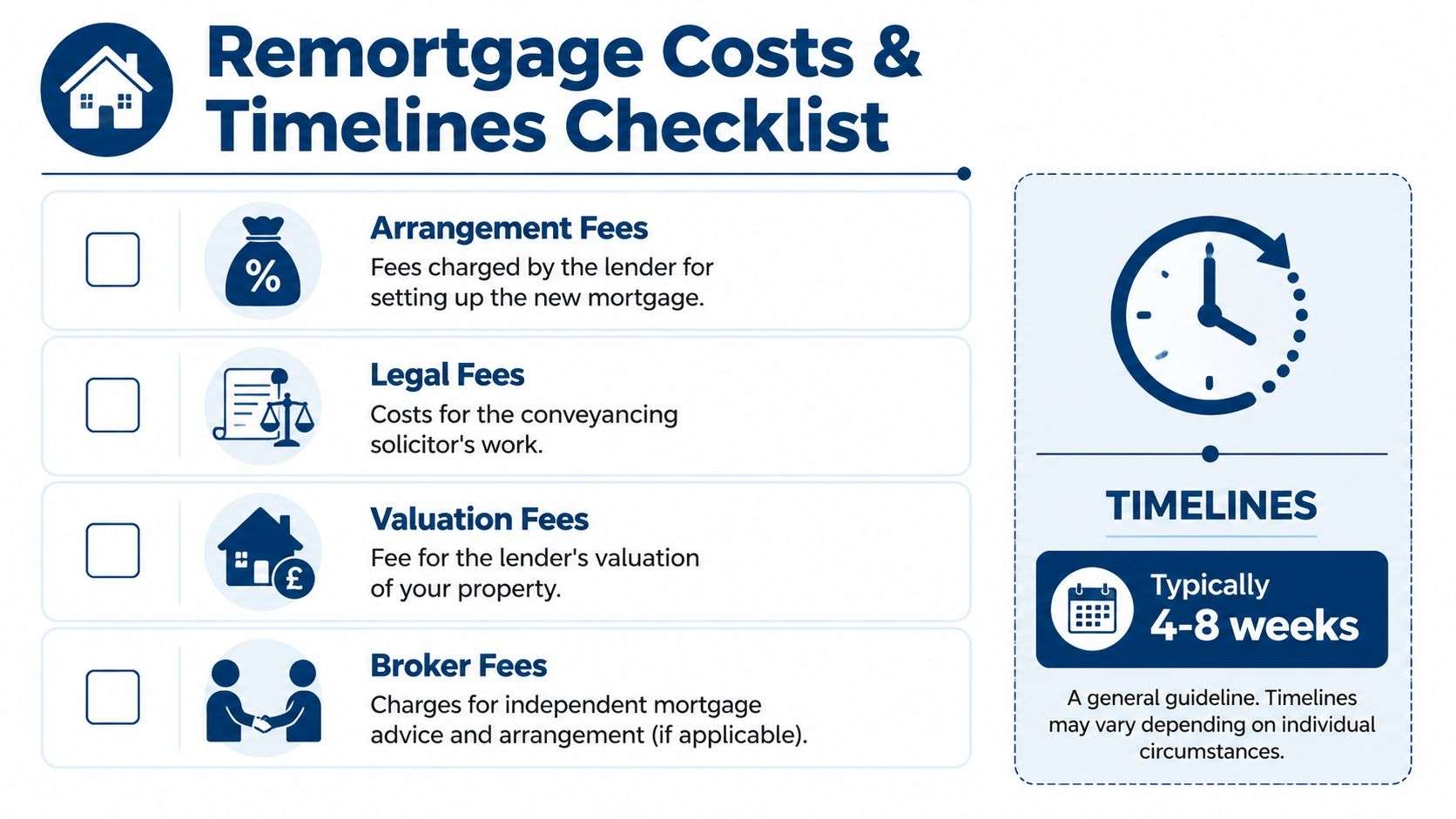
The charges people most often need to review are:
Early repayment charges if you leave during a fixed period
Arrangement fees for setting up the new product
Valuation fees if the lender does not cover them
Legal fees for conveyancing work
Broker fees where advice and arrangement are charged separately
Exit administration fees from the outgoing lender to release its charge
The content owner’s practical note is good. Some lenders offer free valuation or legal support, sometimes through cashback. That can materially change the true cost, so don’t judge the deal on the headline rate alone.
A simple way to weigh value
Use a plain comparison like this:
| Option | Likely costs | Potential benefit | Good fit when | Watch out for |
|---|---|---|---|---|
| Product transfer | Usually fewer moving parts | Convenience | You want speed and simplicity | May not be the strongest deal |
| Remortgage to new lender | Fees may be higher | Wider choice | You want to compare the market | Legal work and timing |
| Early switch before expiry | Can include exit charges | Secures a new deal sooner | Current deal is no longer competitive | Charges can wipe out gains |
If you want a fuller breakdown of the moving parts, this guide on how much remortgaging costs is a useful next read.
For readers trying to understand how mortgage-related charges are treated in other financial contexts, a separate explainer on how to deduct mortgage points can help with the terminology, even though tax treatment depends on your own circumstances and jurisdiction.
Timing matters as much as cost
A remortgage done too early can trigger charges. One done too late can leave you with fewer options and less room to think. The strongest approach is usually to review the deal before the pressure arrives, check the fees on both sides, and compare the true overall cost rather than a single line in an advert.
Can I Remortgage Eligibility and Common Hurdles
Most homeowners can explore remortgaging, but not every case fits a tidy high street box. That is where advice becomes practical rather than optional.

Self-employed applicants
Self-employed borrowers can remortgage, but lenders usually want a clear view of income. That may mean tax calculations, accounts, or both, depending on the lender and business structure.
If you are employed and an underwriter asks for extra confirmation, it helps to understand the basics of requesting an employment letter for loans, because supporting documents can make the application cleaner and quicker.
Adverse credit and complex backgrounds
A missed payment, a history of defaults, or a more complex credit file does not automatically rule out a remortgage. It does mean lender selection matters more.
The biggest mistake here is applying blindly and collecting unnecessary credit checks. A better practice is to understand which lenders are more comfortable with the issue you have, whether that is a historical credit blip, irregular income, or unusual property details.
Some remortgage problems are not really affordability problems. They are lender criteria problems.
Landlords and later-life borrowers
Buy-to-let remortgages often turn on rental calculations, property type and portfolio background. That matters for landlords in places such as Braintree and the wider Essex area, where one lender may view a case very differently from another.
Later-life remortgaging can also be more specialised. For borrowers over 55, options may include standard remortgaging, Retirement Interest-Only lending, or equity release, depending on income, age and long-term plans.
When advice genuinely helps
A whole-of-market broker can be useful when the case is straightforward, but the value is usually clearer when it is not. EHF Mortgages, based in Chelmsford, is one example of a broker that arranges remortgage cases across standard and specialist lending, including self-employed, adverse credit, buy-to-let and later-life borrowing.
Is Remortgaging Right for You? Your Next Steps
Your next step is to compare two routes before your current deal ends. Switch lender with a remortgage, or stay with your existing lender on a product transfer. People often treat them as the same thing, but the cost, paperwork and flexibility can be very different.
Start with the reason for the review. If the priority is speed and minimal admin, a product transfer may do the job. If the priority is a better rate, raising funds, changing the term, or finding a lender that better suits your circumstances, a full remortgage is usually the option to consider.
Timing matters. In practice, I tell homeowners in Chelmsford, Braintree, Colchester and across Essex to review options a few months before the current fixed rate ends, so there is time to compare the wider market without being pushed onto a higher follow-on rate.
A sensible comparison is not just about the headline rate. Check the fees, any early repayment charge, whether the lender will cover legal work or valuation, how much paperwork is involved, and how well the option fits your plans for the next few years. That is often where the difference between a decent-looking deal and the right deal becomes clear.
Get Your Free Remortgage Consultation
Frequently Asked Questions About Remortgaging
Does remortgaging affect my credit score
In a minor way, because a new lender will usually conduct credit checks as part of the application process. That said, the bigger concern is usually not the check itself but making unnecessary applications with lenders that do not fit your circumstances. A well-targeted application is generally better than multiple speculative ones.
Can I remortgage to consolidate debts?
Yes, in some cases. Remortgaging can be used to consolidate debts, but that decision needs care because unsecured debts may end up secured against your home. Lower monthly payments can look attractive while the total borrowing cost over a longer mortgage term may tell a different story.
What is a rate switch, and when is it better
People use different phrases, but a rate switch usually means taking a new deal with your current lender rather than moving elsewhere. It can be better when speed, simplicity and minimal paperwork matter more than exploring the wider market. It may be less suitable if you need extra borrowing, a major change to the mortgage structure, or a more competitive option than your current lender is offering.
If you want clear, practical advice on your remortgage options, speak to EHF Mortgages. If this article has helped you understand the difference between a remortgage and a product transfer, and you’re ready to work out what fits your own circumstances, the next step is to get personalised advice and compare the actual costs properly.





