
💡 Top Tip: Timing is everything! Starting your remortgage application 3-6 months before your current deal ends is the secret to avoiding costly variable rates. We’ll explain why this simple step is so crucial later in the article.

When your current fixed-rate mortgage is coming to an end, it is the perfect time to start looking at your options. If you do nothing, your lender will likely move you to their Standard Variable Rate (SVR), which is almost always much more expensive.
This is where remortgaging comes in. It lets you switch to a new lender or a new deal, hopefully locking in a lower interest rate and bringing down your monthly payments.
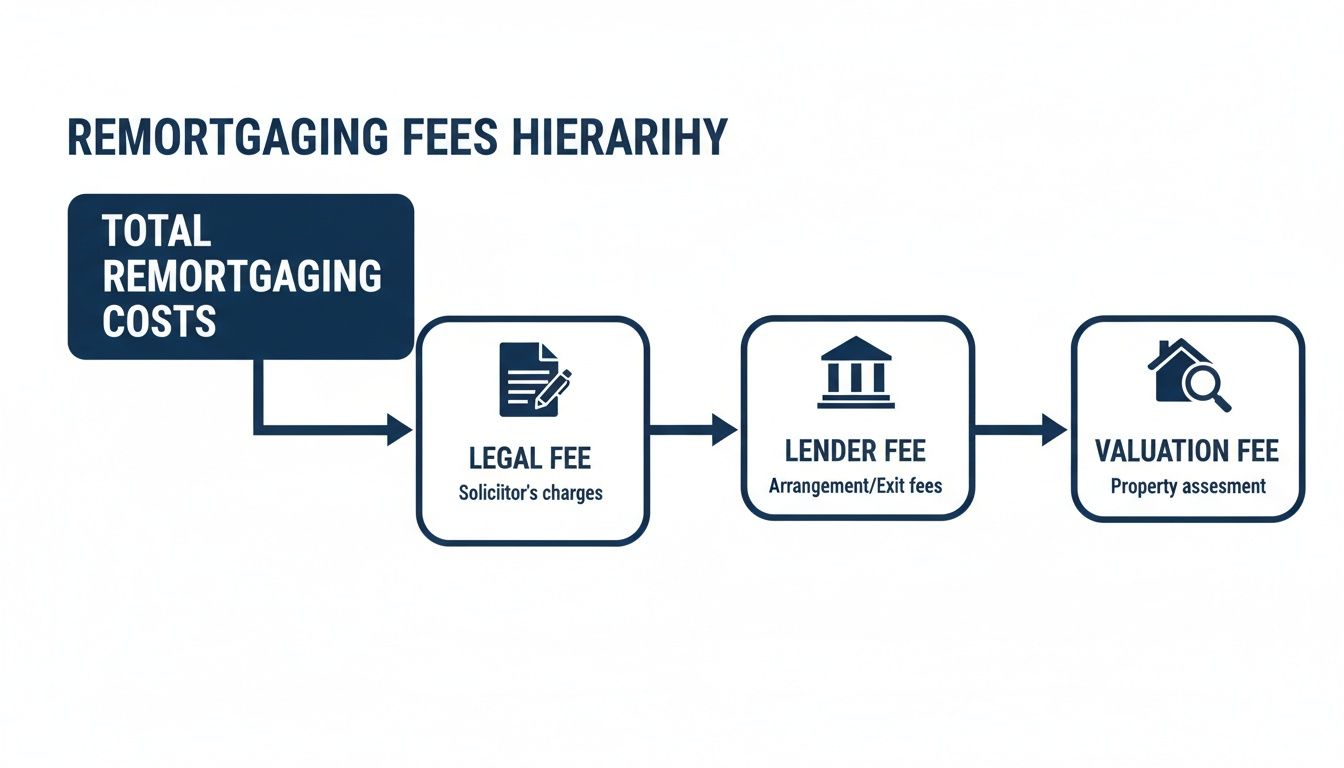
But the big question on every homeowner’s mind is: how much does it actually cost to do this? The short answer is that remortgaging can cost anything from £0 to over £3,000, depending on the deal you choose and the fees involved. Getting a handle on these potential charges is the first, most crucial step to making a smart financial move. This guide demystifies the process, giving you a clear, no-nonsense overview of every potential cost you might encounter.
Table of Contents
- A Detailed Breakdown of Remortgaging Fees
- Understanding Exit Fees and Early Repayment Charges
- Calculating Your Break-Even Point
- How Different Borrower Types Affect Remortgaging Costs
- Actionable Ways to Reduce Your Remortgaging Costs
“The goal isn’t just to find a lower interest rate; it’s to ensure the total cost of the switch makes financial sense over the term of the new deal. That means looking beyond the headline rate.”
We have designed this article to be your complete resource, whether you are a homeowner in Chelmsford or anywhere else in Essex. We will walk you through all the essentials to help you budget properly and weigh up the costs against the potential savings. For a clearer picture of the basics, take a look at our guide on how to remortgage a house.
Right then, let’s dive in and start with the specific fees you are likely to encounter.
A Detailed Breakdown of Remortgaging Fees
Securing a better mortgage deal is an exciting prospect, but the path is often paved with a series of small costs that can catch you by surprise. Understanding these fees is the first step to creating an accurate budget and avoiding any nasty shocks down the line. Think of this as your complete checklist of remortgaging costs.
Our goal here is to cut through the jargon. We will break down the main costs you are likely to encounter, explain what they are for, and give you a typical price range so you know exactly where your money is going.
Lender and Product Fees
When you take out a new mortgage, the lender will almost always charge a few fees to set up the loan. These are some of the most common costs you will see when asking, How much does remortgaging cost?
- Arrangement Fee: This is the big one – the lender’s charge for setting up your mortgage. It can range from £0 to over £2,000. You often get a choice: pay it up front or add it to the loan. Just be aware that adding it to the mortgage means you will be paying interest on it for years to come.
- Booking Fee: A smaller, non-refundable fee you pay when you apply. It’s designed to secure the interest rate you have been offered and is typically between £99 and £250. Normally payable with specialist lender cases, so it is rare to see these days.
- Telegraphic Transfer Fee: A small admin charge, usually around £25 to £50, that covers the cost of the lender sending the mortgage funds over to your solicitor. Normally added to the mortgage by default.
‘Fee-Free’ Deals Are Not Always Free
You have probably seen lenders advertising ‘fee-free’ mortgages, and they sound incredibly appealing. While they can be a great option, they are not automatically the cheapest choice.
What often happens is that these deals come with a higher interest rate than products without a fee. For smaller mortgages, a fee-free deal with a higher rate can definitely work out cheaper. But for larger loans, paying a one-off arrangement fee to lock in a lower interest rate can save you a significant amount of money in the long run.
It all comes down to doing the maths. You need to work out which option offers the best value over the initial fixed-rate period. This is where a good mortgage broker becomes invaluable, as they can run all the calculations for you.
“Always calculate the total cost over the initial fixed term, not just the headline interest rate. A deal with a £999 fee but a lower rate can easily save you more than a ‘fee-free’ alternative on a larger mortgage.”
Legal and Valuation Costs
Alongside the lender’s charges, you will need other professional services to get your remortgage over the line. These are crucial steps that protect both you and your new lender.
Legal and Conveyancing Fees
You will need a solicitor or a licensed conveyancer to handle the legal paperwork for switching your mortgage. Their job includes verifying your identity, conducting property searches (if needed), and officially registering the new lender’s interest with the Land Registry.
The cost for this usually ranges from £300 to £1,500. The good news? Many remortgage deals come with a ‘free legals’ package where the lender covers this cost using one of their approved solicitors. It is a great incentive, but just be mindful that it might not be the best fit if your situation is complex or you are in a hurry.
Valuation Fees
Before any lender agrees to give you a mortgage, they need to be sure the property is worth what you say it is. To do this, they will arrange for a valuation. When you are adding up the fees, understanding what house valuation costs are is essential, as it is a standard part of the process.
This can cost anywhere from £150 to over £1,500, depending on your property’s value and the level of survey required. Much like the legal fees, however, many lenders offer a free standard valuation as part of their remortgage package, which is perfectly fine for most straightforward cases for homeowners in areas like Colchester.
Typical Remortgaging Costs at a Glance
To make things a bit clearer, here is a quick summary of the common fees you may encounter when remortgaging in the UK. This table should give you a good idea of what to budget for.
| Fee Type | Typical Cost Range (£) | Paid To | Is It Always Applicable? |
|---|---|---|---|
| Arrangement Fee | £0 – £2,000+ | New Lender | No |
| Booking Fee | £99 – £250 | New Lender | Sometimes |
| Legal Fees | £300 – £1,500 | Solicitor | Yes (often free) |
| Valuation Fee | £150 – £1,500+ | Surveyor | Yes (often free) |
| Telegraphic Transfer | £25 – £50 | New Lender | Usually |
Navigating these costs can feel a bit overwhelming at first, but getting your head around them is the key to making a smart financial decision. Next, we will look at the potential fees for leaving your current lender.
Understanding Exit Fees and Early Repayment Charges
One of the biggest financial hurdles when switching your mortgage is not always the cost of the new deal, but the price of leaving your old one. These penalties, known as exit fees and Early Repayment Charges (ERCs), can really stack up and sometimes make switching impractical.
It’s all about timing. Remortgage just a few weeks too early, and you could be stung with thousands in ERCs. Wait too long, and you might slip onto your lender’s expensive Standard Variable Rate (SVR). The trick is to dig out your current mortgage terms and find that perfect sweet spot.
What Are Early Repayment Charges?
An Early Repayment Charge, or ERC, is a fee your current lender will hit you with if you repay your mortgage – or a big chunk of it – during a special deal period. Think of your 2, 3, or 5-year fixed rate. Lenders apply these charges to make up for the interest they would have earned if you had stuck around for the full term.
ERCs are almost always a percentage of your outstanding mortgage balance. This percentage usually drops each year you are in the deal. For example, a 5-year fixed-rate mortgage might have an ERC of 5% in the first year, 4% in the second, and so on, down to 1% in the final year.
Let’s put that into perspective:
- You have an outstanding mortgage of £ 200,000.
- You are in year three of a 5-year fix, and the ERC for that year is 3%.
- The charge for leaving early would be a hefty £6,000 (0.03 × £200,000).
That’s a serious cost to factor into your sums. You can find the exact details of any ERCs you might face on your original mortgage offer or your latest annual statement.
How to Avoid Early Repayment Charges
The most straightforward way to avoid an ERC is to wait until your initial deal period ends before you make your move. Most homeowners get the ball rolling on their remortgage about three to six months before their current rate expires. This gives you plenty of time to lock in a new offer, which can often be held for you and kick in the day after your old deal ends.
Of course, sometimes waiting is not the smartest move, especially if interest rates are climbing fast. In those situations, you need to do the maths: weigh up the cost of the ERC against the potential long-term savings of grabbing a new, lower rate sooner rather than later. For a deeper dive, check out our guide on whether you can remortgage early.
“Checking your mortgage offer for ERC details is the single most important first step in the remortgage process. It dictates your timeline and is the foundation of an accurate cost-benefit analysis.”
Mortgage Exit Fees Explained
A Mortgage Exit Fee, sometimes called a deeds release fee, is a small administrative charge for closing your mortgage account. This fee covers the lender’s paperwork, such as preparing the final redemption statement and sending your property deeds to your solicitor.
Unlike an ERC, this fee is much smaller, usually between £50 and £300. It’s important to remember that you will have to pay this fee whenever you fully pay off your mortgage, whether you are remortgaging or have reached the end of the loan. It’s a closing cost, not a penalty for leaving early.
Weighing Up the Costs and Savings
The savings from a well-timed remortgage can be massive, especially if you’re moving off a high SVR. While remortgaging in the UK comes with upfront costs, the monthly savings often make it a no-brainer.
For a homeowner with a £200,000 mortgage over 30 years, sitting on an average SVR of 7.27% means monthly payments of £1,367. Switching to a 5-year average fixed rate of 4.34% could reduce that payment to just £994 a month. That’s a huge saving of £373 every single month – or over £4,476 a year.
These numbers show just how crucial it is to get off an SVR. But to get the full picture, you have to add up all the fees – lender fees, legal costs, and of course, any ERCs – and see if the switch still makes financial sense for you.
Calculating Your Break-Even Point

This is the most important part of the puzzle. Is remortgaging actually worth it for you? The answer is not just about nabbing a lower interest rate; it’s about understanding the real-world financial impact. This is where we calculate your break-even point.
Think of the break-even point as the moment the money you have saved each month officially covers all the upfront costs of switching. From that day forward, every single penny you save is pure gain, going straight back into your pocket.
The Break-Even Formula
Knowing the costs is one thing, but the real magic happens when you weigh those costs against your potential savings.
The calculation itself is refreshingly simple:
Total Remortgage Costs ÷ Monthly Savings = Months to Break Even
Let’s quickly unpack what this means for you:
- Total Remortgage Costs: The total of all the fees you will pay to get the new deal over the line. It includes any arrangement fees, legal work, the valuation, and broker fees.
- Monthly Savings: The difference between what you are paying now and your new, lower monthly payment.
- Months to Break Even: And here is your answer – how long it will take for the new mortgage to pay for itself essentially.
“A good rule of thumb is that if your break-even point is well within your new fixed-rate term, the remortgage is likely a very smart financial move.”
A Practical Example in Braintree
Let’s put this into action with a realistic example for a homeowner in Braintree, Essex. This shows you exactly how the formula works in the real world.
The Current Situation
Imagine you have a £250,000 mortgage, and your two-year fixed rate just came to an end. Your lender has automatically shunted you onto their pricey Standard Variable Rate (SVR) of 8.0%.
- Your monthly payment has suddenly shot up to a painful £1,834.
The New Deal
After a chat with a broker, you find a great five-year fixed-rate deal at 4.5%.
- On this new deal, your monthly payment would drop to a much more manageable £1,390.
That’s a monthly saving of £444 (£1,834 – £1,390) – an incredible £5,328 back in your bank account over the year.
Tallying Up the Costs
Now, let’s add up the fees that come with this new deal. For this scenario, we will use some pretty standard costs.
| Fee Type | Cost (£) |
|---|---|
| Arrangement Fee | £999 |
| Legal Fees (Conveyancer) | £400 |
| Broker Fee | £0-£199 |
| Valuation Fee | £0 (Free with deal) |
| Total Costs | £1,399 |
Finding the Break-Even Point
With all our figures ready, we can finally calculate the break-even point.
- Total Remortgage Costs: £1,399
- Monthly Savings: £444
£1,399 (Total Costs) ÷ £444 (Monthly Savings) = 3.15 Months
It would take just over three months for the new mortgage to have paid for itself. Because you have locked in for five years (60 months), you are looking at almost 57 months of pure savings. In this case, remortgaging is not just a good idea – it is a no-brainer.
This simple sum gives you the power to analyse any mortgage offer like a pro. It helps you make a decision based on solid numbers, not just a flashy headline rate. If you fancy running some numbers for your own situation, have a play with our free mortgage calculators to see how different rates could affect your payments.
Deciding to switch is a big financial step, but calculating your break-even point is key to making a confident, informed choice.
How Different Borrower Types Affect Remortgaging Costs
Your personal and financial circumstances are a major factor in shaping your remortgaging journey. The costs, the products you can access, and even the process itself can vary wildly depending on whether you are a landlord, approaching retirement, or have a less-than-standard income. Lenders assess risk differently for each type of borrower, and that directly affects what your remortgage will cost.
Let’s break down the unique hurdles and cost implications for three common borrower profiles. Whether you are managing a buy-to-let portfolio in Colchester or have a credit file that has seen better days, understanding these differences is the key to finding the right deal for you.
Costs for Buy-to-Let Landlords
For any landlord, a buy-to-let (BTL) remortgage is a powerful tool for managing an investment property. But the costs and hoops you need to jump through are quite distinct from those of a standard residential mortgage. Lenders see BTL as a business transaction, not a personal one, which changes everything from the fee structure to the affordability checks.
One of the biggest differences you will notice is the arrangement fee. A typical residential remortgage might have a fee of around £999, but BTL arrangement fees are often much higher. It is common for them to be calculated as a percentage of the loan amount, say 1.5% to 3.5%. On a £200,000 loan, a 2% fee suddenly becomes £4,000 – a far cry from the usual residential fee.
On top of that, affordability is not based on your salary. It is all about the property’s rental income. Lenders will apply a stress test, demanding that the monthly rent covers the mortgage payments by a healthy margin (often 125% to 145%) at a hypothetical, higher ‘stressed’ interest rate. This can sometimes restrict how much you can borrow or limit your choice of lenders.
“Landlords often face a trade-off: swallow a higher arrangement fee to secure a lower interest rate, or vice-versa. The key is doing the sums to see which combination delivers the best return on your investment over the fixed term.”
Challenges for Later-Life Borrowers
Remortgaging when you are over 55 brings its own unique set of considerations. Many mainstream lenders have strict upper age limits, which can immediately rule out their standard mortgage products. The good news is that the market has evolved, and there are now specific products designed for older borrowers.
Two of the most common options are:
- Retirement Interest-Only (RIO) Mortgages: With these, you pay the interest each month, keeping payments low. The loan capital is repaid only when the property is eventually sold. You will still need to prove you have a sustainable retirement income to pass the affordability checks.
- Equity Release (Lifetime Mortgages): This lets you unlock tax-free cash from your home without making any monthly payments at all. Instead, the interest “rolls up” and is paid back, along with the original loan, when the house is sold. While there are no monthly outgoings, the effect of compound interest can cause the total debt to grow quickly.
The costs for these products are also specialised. Equity release, for example, comes with higher setup fees that include a valuation, legal advice, and an arrangement fee, which can easily total £2,000 to £3,000. Because it is such a significant financial step, getting independent advice from a qualified adviser is not just a good idea – it is mandatory.
Navigating Complex Financial Histories
Let’s be honest, not everyone has a straightforward PAYE job and a squeaky-clean credit score. If you are self-employed, a contractor, or have had a few credit hiccups in the past, you might find high-street lenders get a bit nervous. This is where specialist lenders and experienced brokers really prove their worth.
For these borrowers, the question of how much remortgaging costs is directly tied to the lender’s perception of risk.
- Self-Employed: Lenders will want to see solid proof of income, usually one to three years of accounts or tax returns (your SA302s). It can mean a bit more paperwork, and you might see slightly higher interest rates than employed applicants, but a good broker can often hunt down very competitive deals.
- Adverse Credit: If you have past blips such as missed payments, CCJs, or defaults on your credit record, you will almost certainly need a specialist lender. These lenders price their products for higher risk, which means you should expect higher interest rates and fees. The upside is that they provide a vital stepping stone back towards mainstream lending once your credit profile is back in good shape.
This is where working with an experienced broker is non-negotiable. They have access to the entire market, including those niche lenders who specialise in complex cases and do not deal with the public directly. Their expertise can be the crucial difference between a frustrating rejection and a successful approval, ensuring you land the most suitable deal for your unique situation.
Actionable Ways to Reduce Your Remortgaging Costs

Knowing what you might have to pay is one thing; actively cutting down those costs is where you really start to win. With a bit of strategic thinking, you can shave a significant amount off the upfront bill and boost your long-term savings. It all comes down to knowing where to look and how to play the game.
This final section is your game plan. We’ll cover smart tactics for picking the right deal, the huge value of getting proper advice, and why getting your timing spot-on can save you thousands.
Hunt for Deals with Added Incentives
Lenders are all competing for your business, and many will sweeten the pot with packages that absorb some of the main costs. These perks are designed to make switching to them as painless and cheap as possible, and they can make a real dent in your total outlay.
Keep an eye out for these valuable extras:
- Free Standard Valuation: The lender covers the cost of a basic property valuation. This is a common incentive that could save you £150-£500 right off the bat.
- Free Legal Work (‘Free Legals’) or Cashback: The lender pays a solicitor from its approved panel to handle the legal side. This can easily save you another £300-£1,000+.
These deals are brilliant if your priority is keeping upfront costs to an absolute minimum. Just remember always to check the interest rate alongside the perks to make sure the whole package truly offers the best value.
Weigh Up Arrangement Fees vs Interest Rates
It’s easy to see a mortgage with no arrangement fee and assume it’s the cheapest option. While it can be, especially on smaller mortgages, that is not always the full story. Products with zero fees often have a slightly higher interest rate to compensate.
The right choice really hangs on the size of your loan. For instance:
- On a £100,000 mortgage, a no-fee deal with a slightly higher rate might work out cheaper over two years than a deal with a £999 fee and a lower rate.
- But for a £400,000 mortgage, paying that £999 fee to lock in the lowest possible rate will almost certainly save you far more in the long run.
The only way to be certain is to crunch the numbers and calculate the total cost over the fixed-rate period for each deal. This is where an independent mortgage broker earns their stripes, as they can run these comparisons for you in minutes.
“Don’t let a headline-grabbing ‘no fee’ deal distract you. The most important number is the total amount you will pay over your initial term, including both the fee and the interest.”
Plan to Avoid the SVR Trap
The single most expensive mistake you can make is letting your current mortgage deal expire without a new one ready to go. When that happens, your lender will automatically shunt you onto their Standard Variable Rate (SVR), which is almost always significantly higher than any fixed-rate deal on the market.
This is exactly why timing is everything. Get the ball rolling on your remortgage three to six months before your current term ends. That gives you plenty of breathing room to:
- Shop around properly without feeling pressured.
- Secure a new mortgage offer, which is usually valid for several months.
- Get all the legal work done at a comfortable pace.
By planning, you can make sure your new, cheaper mortgage clicks into place on the very day your old one finishes. This guarantees a seamless switch and means you will not spend a single day paying an expensive SVR. It’s one of the most powerful cost-control tactics you have.
Use a Whole-of-Market Broker
Trying to navigate the thousands of mortgage products out there is a massive undertaking. A whole-of-market broker is not just a convenience; they’re a strategic financial asset. Unlike brokers tied to a small panel of lenders, an independent broker has access to deals from across the entire market, including specialist lenders you cannot approach directly.
For homeowners in areas like Braintree, this expertise can uncover more competitive rates and deals with lower fees, saving you a significant amount of money. A good broker provides personalised advice, handles all the complex paperwork, and ensures you avoid hidden charges, making the entire process smoother and more cost-effective.
At EHF Mortgages, we provide that whole-of-market expertise, helping you navigate every cost and find the most efficient deal for your circumstances. Ready to find out how much you could save?





