
You can have a strong block on paper and still get knocked back by the lender because the file is weak where it matters. Top tip: document achievable market rents before you apply. That one move can save you weeks of wasted effort, and I'll explain why later.
I see this all the time with investors in Chelmsford, Braintree and Colchester. They spot a neat block of flats, assume it will be treated like a larger buy-to-let, then find out the lender is really judging the whole income stream, the block structure, and the strength of the borrower's wider portfolio. A multi-unit property mortgage is not a bigger version of a standard case; it's a different animal.
If you want a broader primer on investor borrowing first, the real estate investor financing guide is a useful companion read. In a UK buy-to-let context, EHF Mortgages also has a straightforward guide to buy-to-let mortgages, which helps lay out the basics before you get into specialist underwriting.
Why Multi Unit Finance Is Different From Standard Buy To Let
A standard buy-to-let case usually lives or dies on one property, one rent, one borrower profile. A multi-unit property mortgage is harder to place because the lender is judging the block as an income-producing asset, not just a building with a postcode. If one unit is empty, the other units still have to carry the stress. That is the point many investors miss.
The lender is pricing risk across the whole block
The primary problem is vacancy risk. A lender will stress the rent across the full block, then test what happens if one flat sits empty or one unit pays less than expected. If the remaining income cannot support the loan on its own, the case starts to wobble even when the property looks strong on paper.
A headline valuation can also mislead. Two blocks can look similar on asking price, yet be treated very differently if one has weak rental spread, awkward unit mix, or a valuation method that comes in lower than the purchase price. That is why the number on the brochure matters less than the income the valuer can defend and the lender can stress.
Practical rule: if the rent roll does not hold up when one unit is vacant, the deal is fragile.
Borrowers often come in expecting a standard buy-to-let conversation. That is the wrong frame. A lender wants to know how the block performs, what happens if a unit turns over, and whether the wider portfolio can absorb the pressure if the income dips.
Top tip that saves deals
🔔 Top tip, bring your achievable market rents, not just your current rents. If one flat is under-let or vacant, the lender still wants a credible case for what it can produce once the flat is occupied. A solid file shows both the present income and the rent the block should achieve under normal conditions. That is the sort of file I want on my desk before I send anything to a specialist underwriter.
Defining Multi-Unit Properties In The UK Market
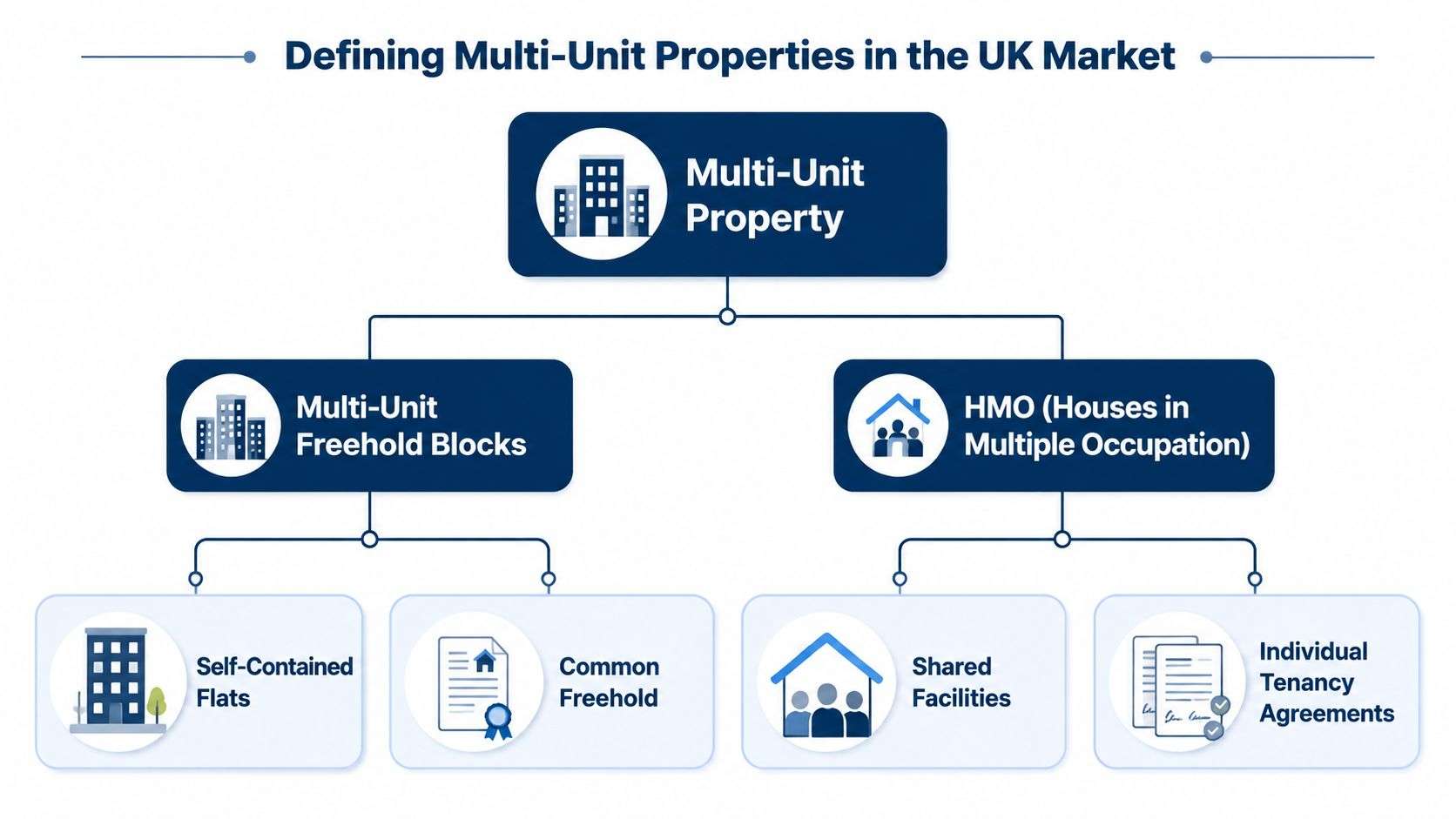
A lot of confusion starts because people use “multi unit” as a catch-all. Lenders don't. They separate the property by use, legal structure, and the source of income. If you call the case wrong, you waste time with the wrong lender.
The main categories lenders care about
A multi-unit freehold block (MUFB) is typically a single freehold title with two or more self-contained residential units. That's the classic specialist-rental case where the lender underwrites the block income as a single asset. An HMO is different, because the rooms or units may share facilities and the lending criteria move into a separate specialist lane.
An owner-occupied multi-unit property sits in a different bracket again. If you live in one unit and let the others, the lender may treat it as a residential case with rental-income support, or it may still drift into specialist territory depending on structure and occupancy. That distinction is not academic. It changes the lender pool.
The practical point is simple: use the right label from day one. If the property is a block of self-contained flats, don't pitch it like a standard semi-detached with a lodger. If it's an HMO, don't expect a high-street residential underwriter to understand shared-facility risk.
For a UK lender-facing comparison of these structures, the HMO mortgage rates page is useful, as it shows where specialist pricing and criteria typically sit. If you're also thinking about access control, rent protection, and building management, the multifamily gate access control resource is a practical reminder that physical security often matters in the underwriting conversation too.
Why classification changes the loan route
The same building can be treated very differently depending on who lives there and how the units are arranged. That's why an owner-occupied case with rental support is not the same as a pure investment MUFB. One fits a residential mindset, the other fits specialist buy-to-let or semi-commercial lending.
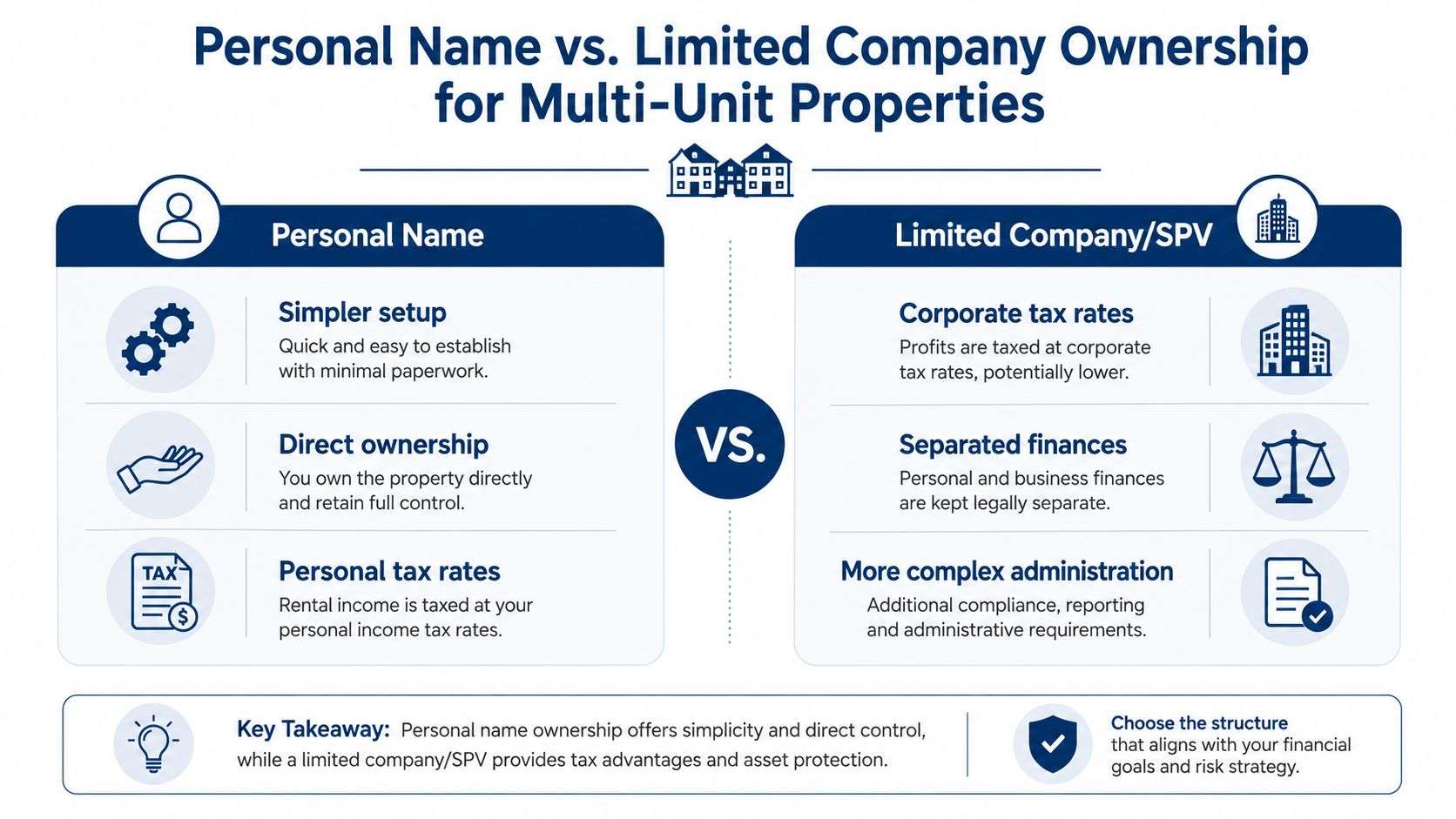
Personal Name Versus Limited Company Ownership
The ownership wrapper matters, but not in the lazy way people assume. A lot of investors leap straight to SPV because they've heard it's “better”. Sometimes it is. Sometimes it just adds friction and narrows the lender field.
Personal name works when simplicity matters
Holding a multi-unit in your own name can be cleaner on administration. Some lenders are comfortable with that route, especially where the case is straightforward and the borrower doesn't need company structures for wider portfolio planning. If the file is strong and the income is clear, personal name can be the easier path.
The downside is tax planning and scale. Once a portfolio starts growing, direct ownership can become awkward, especially if you're trying to ring-fence properties or build a larger lending strategy. That's where many investors move towards company structures.
SPV suits portfolio thinking, but it isn't a free pass
A limited company or SPV can make sense when you want cleaner separation and a structure that supports long-term expansion. It can also suit landlords who already know they're building a portfolio rather than buying a single block. The trade-off is obvious: the lender pool narrows, and the application tends to become more specialist.
The valuation angle also changes. Some lenders assess a block on an investment basis; others aggregate unit values; and the borrowing limit can vary depending on the method used. That means the same building can produce very different outcomes. The property value on the brochure is not the number that matters most.
Broker rule: choose the ownership structure after the tax and lending conversation, not before it.
If you're weighing company ownership against personal ownership, the limited company buy to let page is a sensible UK reference point. For a visual comparison of the trade-offs, the choice usually comes down to simplicity now versus scale later. I'd only push someone into SPV if the long-term portfolio plan is real, not theoretical.
Lender Criteria And Rental Coverage Tests
A strong-looking block can still fail underwriting. The lender does not care that the viewing felt convincing. It cares whether the rent holds up under stress, whether the valuation supports the loan, and whether the borrower can carry a void without the whole structure becoming fragile.
The Key Numbers That Shape the Decision
In the active UK criteria for MUFB lending, 75% LTV is a common ceiling, implying a 25% deposit requirement. Lenders also commonly want gross rent to cover 125% to 145% of the stressed mortgage payment. Some lenders apply a stressed interest-coverage ratio like 145% at an assumed rate around 5.5% on 5-year fixes source.
That is where many applications break down. A block can look fine at the asking price, but the stress test cuts the usable borrowing limit. If one unit is vacant, the remaining rent must still meet the lender's coverage rule.
| Criteria | Typical Requirement | Impact on Borrowing |
|---|---|---|
| Loan-to-value | 75% LTV | Sets the maximum leverage and deposit needed source |
| Rental coverage | 125% to 145% of stressed payment | Controls whether the income is high enough |
| Stress rate | Around 5.5% on some 5-year fixes | Can cut the loan size even when headline rent looks healthy |
For investors who want to sanity-check yields before they apply, a guide to rental yield calculations is a useful starting point. It will not replace underwriting, but it will show you quickly whether the income profile is too thin before the lender reaches the same conclusion.
The Overlooked Impact of Vacant Units
A vacant flat does more than remove rent. It can pull the whole case below coverage, especially when the lender treats the block as a single cash-flow stream. That is why serious landlords keep headroom in the numbers, not just a target yield.
Real-world takeaway: the best-looking block is useless if the stressed rent does not survive one unit going dark.
If the deal only works with perfect occupancy, it is too tight. I would rather see a borrower cut the loan, increase the deposit, or walk away than force a fragile file through a lender that is already cautious. For cases where income is being scrutinised more closely, the buy-to-let mortgage no-income page is a useful reference on how lenders handle income-led borrowing.
Common Obstacles That Derail Applications
A strong block can still fail once it hits valuation or underwriting. I see it all the time. The brochure looks fine, the numbers look neat, then the surveyor prices the property cautiously, or the rental evidence falls apart under stress testing.

Valuation mismatch is the quiet killer
The purchase price is not the valuation. Buyers still get caught by that because they anchor on the agreed figure and assume the lender will follow it. If the surveyor comes in lower, the loan amount can drop straight away, even where the building has clear upside.
Method matters too. Some lenders assess the block on an investment basis, others focus more closely on the individual units and how they perform as a whole. If your case depends on the headline price instead of the income model, the file is exposed the moment the valuer takes a conservative view.
Rent evidence has to be clean, not just optimistic
Lenders want documents that support the story. They want tenancy agreements, current rent rolls, and a believable plan for any vacant units. They do not want guesswork dressed up as a forecast. If the file claims a flat should achieve a higher rent, the evidence has to show why that figure is realistic.
Straight answer: weak paperwork is a common reason a good asset gets declined.
High portfolio gearing causes a second type of failure. Once a borrower already owns several properties, the underwriter starts looking more closely at overall exposure, how the debt is spread, and whether the broader portfolio is carrying too much pressure. That is not box ticking; it is a risk check, and lenders use it to decide whether the new loan adds to a problem they can already see.
How to keep the application alive
Challenge low valuations quickly: Ask your broker whether comparable evidence, tenancy detail, or a stronger rental picture can support a review.
Show the rent roll properly: Include current contracts and make the vacant-unit story believable.
Map the portfolio clearly: List every property, every loan, and the income profile, so the lender sees the full picture rather than fragments.
Be realistic on timing: In a higher-rate market, tighter affordability means some cases that once passed now need more equity or a different lender.
That last point matters in 2025 and 2026 because lenders' appetite has become more conservative, and borrowers cannot rely on old assumptions. If the numbers only worked in a low-rate environment, the case probably needs reworking before it goes in. For related specialist routes, the mortgage advisor guide is a sensible read.
Preparing Your Application For Success
The strongest multi-unit files look plain on paper because the risk has already been dealt with. Every figure lines up, every tenancy is accounted for, and every weak point is explained before the lender spots it. That is the standard to aim for.
A lender will not be impressed by a glossy presentation if the rental story falls apart under stress testing. Vacant units, under-rented flats, and optimistic refurbishment assumptions are where these cases get caught, so the file needs to answer those questions upfront.
Build the file the way an underwriter thinks
Start with the rent roll and make sure it matches the tenancy agreements. Then deal with any unit that is vacant or producing less than it should, because that is where the underwriter will focus first. If the building has upside after refurbishment, set out the plan clearly and keep the numbers conservative.
A tidy submission is more than a stack of PDFs. It needs order.
Assemble rent rolls: show current rents, occupiers, and lease dates.
Verify tenancy agreements: ensure every unit has supporting documentation.
Gather property valuations: include anything that helps explain the income model and the method used to arrive at value.
Compile personal financials to show your overall position, especially if you already own other property.
Prepare a business plan: keep it short, practical, and specific to the block.
The borrower's track record matters too. If you have run similar properties before, say it plainly. Lenders respond better to a proven pattern than to big talk.
Timing and presentation matter more than people admit
Good timing can save a case. If criteria are tightening, do not push a borderline file into a lender that is already nervous. If the property is stronger than the paperwork, make sure the valuation approach and rental presentation do not leave money on the table.
For preparation for cases without traditional income, the right paperwork discipline matters even more, because the lender will lean harder on the asset and the rent. That means the submission has to show the vacant-unit risk, the rent cover, and the valuation method in a way that makes sense at first glance. EHF Mortgages can handle the mortgage side alongside protection and insurance, keeping the advice joined up rather than piecemeal.
If you've got the information you need and you're ready to test a real case, speak to a broker who knows how specialist lenders read multi-unit blocks. The right prep now can prevent valuation and rental-cover issues from leading to a rejection.
Why Specialist Broker Advice Is Essential
A multi-unit case can look straightforward on the surface and still fall apart in underwriting. That usually happens because the lender is not pricing the headline value; it is stress-testing the rent, the vacant units, and the way the valuation report supports the deal. A specialist broker spots those weak points before the file goes in, which is where its true value sits.
The right lender is usually not obvious
A whole-of-market broker can compare specialist buy-to-let lenders, portfolio lenders, and providers that are comfortable with MUFB or HMO-style structures. EHF Mortgages in Chelmsford operates across that kind of market and has access to over 100 lenders, so the search is not limited to one bank's narrow view of the deal. That matters when the case is complex, and the obvious lender on paper is the wrong fit in practice.
The point is not just access. It is interpretation. A broker who understands the criteria will spot whether the issue is valuation, rental stress, borrower experience, or ownership structure, then shape the file accordingly. That saves time and cuts the chance of a needless decline.
Advice should cover more than the mortgage
Multi-unit finance rarely sits alone. Insurance, landlord protection, and the wider borrowing structure all affect how comfortable a lender feels with the case. Joined-up advice handles those parts together rather than treating the mortgage as a one-off transaction.
A broker who understands the whole picture gives you better odds of approval and fewer surprises after completion.
While you can try to place a multi-unit case direct, the lender will not coach you through the gaps in the file. If you want a blunt answer on whether advice is worth it, read the guide on whether you need a mortgage advisor, then compare it with a specialist block purchase. On anything involving vacant units, complex valuation, or high portfolio gearing, I would call it necessary rather than optional.
If you are buying or refinancing a multi-unit property mortgage in Chelmsford, Braintree, Colchester or anywhere else in Essex, speak to EHF Mortgages. They can look at the rent, the structure, the valuation angle, and the lender appetite before you commit to a deal that is too tight to pass.





