Here’s a crucial tip for any landlord considering this path: open your company bank account on the same day you form your Company. This one small step can save you a world of pain and prevent serious delays later. We’ll dig into exactly why this is so important in our step-by-step guide below.

The world of property investment has changed, and it has changed fast. More landlords in areas like Chelmsford, Braintree and Colchester are now choosing to hold their properties inside a Special Purpose Vehicle (SPV) limited Company. This is not just a passing trend. It is a smart strategic move in response to major tax reforms that have completely reshaped the buy-to-let market.

To make life easier, we have condensed this article into a handy one-pager for you to download for free.
Table of Contents
- Weighing the Pros and Cons of a Corporate Structure
- Navigating the Tax and Legal Landscape
- How to Secure Your Limited Company BTL Mortgage
- A Step-By-Step Guide to Setting Up Your SPV Company
- Your Path to Smarter Property Investment
- Frequently Asked Questions
The Shift Towards Corporate’ Landlording’
The move towards incorporation is not just anecdotal; the numbers tell a compelling story. In 2025, the number of limited companies set up specifically for property investment in the UK shot past 400,000. That’s a massive 332% surge in just nine years, a statistic highlighted by research from BuyAssociation.
This dramatic rise points to a clear professionalisation of the rental sector. In fact, a staggering 70-75% of all new buy-to-let purchases are now happening through these company structures. For many landlords, this is no longer some niche alternative. It has become the new standard for building a sustainable and tax-efficient portfolio. If you need a refresher on the basics, you can read our general guide on buy-to-let mortgages.
So what exactly is an SPV? It is a limited company used only for buying and letting out property. Lenders often prefer this clean structure because it comes with no prior trading history, debts, or other business complications, making it much easier for them to assess the risk.
The core reason for this entire shift boils down to one thing: tax efficiency. A limited company pays Corporation Tax on its profits. An individual landlord, on the other hand, pays Income Tax on their rental income. For anyone in the higher-rate tax bracket, that difference can be enormous.
We’ve created this guide to bring all the information you need together in one place. We’ll explore the real-world advantages and disadvantages, get into the nitty-gritty of taxes, and lay out the practical steps to get your Company set up and financed.
Weighing the Pros and Cons of a Corporate Structure

Deciding whether to run your buy-to-let portfolio through a limited company is a significant strategic move. It is not a simple choice, and it comes with significant trade-offs. You need to look at it from all angles, understanding both the powerful advantages and the practical drawbacks, before you commit.
This single decision will shape everything from your tax bill and admin workload to the mortgage deals you can get for years to come. For many landlords in Braintree and across Essex, the benefits are compelling enough to make the switch. Let’s dig into why a corporate structure has become such a hot topic.
Key Advantages of a Limited Company Structure
Without a doubt, the most significant driver of setting up a limited company for buy-to-let is tax efficiency. Since the introduction of Section 24, individual landlords have seen their profits squeezed. They can no longer deduct their full mortgage interest costs from rental income before working out their tax bill; instead, they receive a less generous basic-rate tax credit. This change hit higher-rate taxpayers particularly hard.
A limited company, on the other hand, is not affected by Section 24. This means it can deduct 100% of the mortgage interest as a legitimate business expense. This directly lowers its taxable profit and ultimately its Corporation Tax bill. For a landlord with a decent-sized portfolio, this difference alone can mean savings of thousands of pounds every single year.
Another major plus is the protection of your personal assets. Holding property within a company creates a legal firewall between your business and personal finances. If the Company ever ran into financial trouble, your own home savings and other assets are generally kept safe.
Finally, a company offers clear benefits for long-term planning. It can be a much more effective vehicle for inheritance tax planning, as you can pass on shares in the Company to family members over time. It also presents a more professional front to lenders and partners, marking you out as a serious property investor.
The ability to offset full mortgage interest costs against profit is the cornerstone of the limited company buy-to-let strategy. For higher-rate taxpayers, this advantage often outweighs all potential drawbacks.
Understanding the Potential Disadvantages
Of course, it is not all plain sailing. One of the first hurdles investors used to face was the mortgage market. Historically, lenders charged higher interest rates and fees for limited company mortgages because they considered them more complex.
Fortunately, the market has matured significantly. Recent data shows a vast improvement with the number of available two-year fixed deals jumping to 776 from just 295 in October 2023. This 160% increase gives landlords far more choice and is helping to drive down costs.
Beyond the mortgage, there is the undeniable admin. Running a limited company makes you a company director, and that comes with legal duties. You’ll need to file annual accounts, a confirmation statement, and a separate Corporation Tax return with HMRC and Companies House. While an accountant can handle this, it is an extra annual cost and requires you to be on top of your record-keeping.
Getting money out of the Company also needs careful thought. You cannot just treat the rental income as your own cash. Profits must be extracted through official channels, such as salary or dividends, and each has its own tax implications to manage. To get a fuller picture, it is well worth exploring the wider pros and cons of a corporate structure.
To lay it all out clearly, here’s a direct comparison of the two approaches.
Comparing Personal vs Limited Company Buy To Let
The table below breaks down the key differences to help you see which structure might better suit your goals as a landlord.
| Feature | Personal Buy To Let | Limited Company (SPV) | Key Consideration |
|---|---|---|---|
| Mortgage Interest Relief | Restricted to a 20% tax credit | Fully tax-deductible | The primary tax driver |
| Tax on Profits | Income Tax (20%-45%) | Corporation Tax (19%-25%) | Often lower rates |
| Liability | Personal assets are at risk | Limited to company assets | Protects personal wealth |
| Administration | Simple self-assessment | Annual accounts required | Increased complexity |
| Extracting Profits | Rental income is personal | Via salary, or dividends | Needs tax planning |
Ultimately, the right path depends on your personal financial situation, your long-term ambitions, and how comfortable you are with the extra responsibilities of running a company. For many investors in Chelmsford and Colchester looking to scale their portfolios, the tax savings and liability protection often make a compelling case for a limited company buy-to-let mortgage.

Navigating the Tax and Legal Landscape
This is where the numbers really start to talk. The decision to use a limited company for your buy-to-let portfolio is not just about creating a corporate structure. It is about understanding the financial engine that drives the whole strategy. For landlords, especially those in the higher-rate tax bracket, the differences are not subtle. They are massive and can completely reshape the profitability of your investments.
The game-changer was Section 24 of the Finance Act 2015. Before this rule came in, landlords could deduct all their mortgage interest from rental income before the taxman came knocking. Now they only get a basic-rate tax credit of 20%, a shift that has seriously squeezed profits for many.
But here’s the crucial part: this rule does not apply to limited companies. A limited company can still offset 100% of its mortgage interest as a legitimate business expense. This single difference is the main reason why so many experienced landlords in Chelmsford, Braintree, and Colchester are making the switch.
Corporation Tax vs Income Tax
Let’s look at the core tax benefit with a straightforward example. Imagine you are a higher-rate taxpayer and you receive rental income personally. On your profits after that limited mortgage interest relief, you would be paying 40% or even 45% in Income Tax.
Now, picture that same property held inside a limited company. The Company pays Corporation Tax on its profits instead. Current Corporation Tax rates range from 19% to 25%, depending on the level of profit. For most landlords, this is a massive drop from their personal tax rate, leaving more money in the business to reinvest and grow their portfolio.
The market is definitely reacting to these benefits. Buy-to-let lending through limited companies is booming across the UK. Standard buy-to-let mortgages rose by 13% in Q3 compared with last year, and remortgages soared by an impressive 23%. This rebound, the strongest we have seen since 2022, is creating fantastic opportunities in buy-to-let and portfolio finance for investors right here in Essex.
Other Key Tax Considerations
Beyond the headline-grabbing mortgage interest relief, there are other necessary tax and legal points to get your head around when running a limited company buy-to-let. Each one needs proper planning and professional advice.
- Stamp Duty Land Tax (SDLT): When a company buys a residential property, it pays SDLT just as an individual would. The catch is that it is always hit with the 3% surcharge for second homes on every single purchase, even if it is the Company’s first property.
- Capital Gains Tax (CGT): If you sell a property personally, any profit is hit with Capital Gains Tax. When a limited company sells, the profit is subject to Corporation Tax. The downside is that you lose your personal annual CGT allowance, which could mean a larger tax bill on the sale, depending on your situation.
- Getting Profits Out: This is a big one. You cannot just dip into the company bank account for personal use. Profits must be withdrawn formally, usually through a mix of a director’s salary and dividends. Both have different tax implications that need to be carefully managed with an accountant.
Crucial Takeaway: The tax landscape for property investment is complex and constantly evolving. While a limited company offers powerful tax advantages, it also entails a different set of rules and responsibilities. Working with a qualified tax advisor is not just a good idea. It is an essential part of a successful limited company property strategy.
To get a better grip on what this could mean for you, it is worth using a real estate tax calculator to run some numbers and model different scenarios. This can help you see the financial impact clearly before you commit.
Ultimately, getting this right means balancing the obvious tax benefits against the extra admin. A solid understanding of these financial mechanics is the first step towards building a property business that is both robust and profitable.
How to Secure Your Limited Company BTL Mortgage
Getting a mortgage for your limited Company is not quite the same as a personal buy-to-let application. You are dealing with a different set of hurdles because lenders are not just underwriting you as an individual. They are assessing a business. It is a more detailed process, but understanding what they are looking for is key to a smooth, successful application.
The whole point of the limited Company buy-to-let mortgage process is to check two things: the viability of your Company as a property investment vehicle and the credibility of the people running it. For landlords across Essex, from Chelmsford to Braintree and Colchester, this means getting both your Company and your personal finances ready for close inspection. The good news? With proper preparation and guidance, the path to approval is straightforward.
The Role of the Personal Guarantee
One of the first things lenders will almost always ask for is a personal guarantee from all company directors. This might seem to defeat the purpose of the ‘limited liability’ that comes with a company structure, but it is a standard, non-negotiable part of the deal.
A personal guarantee is a legally binding promise. It means that if the Company cannot make its mortgage payments, the directors become personally liable to repay the debt. Think of it as a crucial layer of security for the lender. While the company structure shields you from other business liabilities, the mortgage debt is one area where your personal assets could still be on the line.
Lenders see the personal guarantee as a sign of your commitment. It proves you have personal ‘skin in the game’ which reassures them that you are fully motivated to make the property investment a success.
Every director must understand the weight of this commitment before signing. It creates a direct link between your personal financial health and the Company’s mortgage performance.
Passing the Affordability Test
When it comes to a limited company, buy-to-let mortgage affordability is not based on your personal salary. Instead, lenders use a calculation called the Interest Coverage Ratio (ICR). The ICR is a simple yet powerful test that determines whether the expected rental income comfortably covers the mortgage interest payments.
Lenders also apply a ‘stress test’ to this calculation using a hypothetical interest rate that is higher than your actual product rate. This is to ensure the loan stays affordable even if interest rates rise in the future.
- What is the ICR? It is the ratio of the property’s gross monthly rental income to the monthly mortgage interest payment.
- What’s a typical requirement? Lenders usually look for an ICR of 125% to 145%, though this can vary by product and your tax bracket.
- How does it work in practice? An ICR of 125% means your expected rent must be at least 1.25 times the ‘stressed’ mortgage payment.
Because of this focus on rental income, the property’s potential is often more important than your personal earnings. That said, your overall financial stability still matters. You can check our guide on the latest buy-to-let mortgage rates to get a feel for current market conditions.
Deposit and Director Requirements
You’ll find that deposit requirements for limited company mortgages are generally higher than for a standard residential loan. Be prepared to put down a deposit of at least 25% of the property’s value. Some lenders might ask for more depending on the type of property and your specific situation.
On top of that, lenders will run thorough credit checks on all the Company’s directors. A clean credit history for every single director is non-negotiable. Any issues, such as CCJs or defaults, on a director’s record could put the entire application at risk. Everyone involved must have their financial affairs in order before you apply.
This is where partnering with a whole-of-market broker like EHF Mortgages really pays off. Many of the most competitive lenders in the limited company space are specialists who you will not find on the high street. We have access to these lenders and know their specific criteria inside out, ensuring your application is put forward in the best possible light.
A Step-By-Step Guide to Setting Up Your SPV Company
Let’s get down to the practical side of things. Setting up your Company is the first real step on your limited Company buy-to-let journey, and you really want to get it right from the very beginning. Think of this as your roadmap for company formation. Thankfully, it is pretty straightforward, but the details matter.
The formation of a Limited Company specifically for Buy to Let Mortgages is typically through an SPV (special purpose vehicle) used solely for the buying and letting of property. Lenders love this clean structure because there are no other business activities or complicated financial histories to muddy the waters when they assess the risk. A company bank account can take some time to set up, so ensuring you have one at the same time as company formation will save time.
The whole process kicks off with registering your new Company at Companies House, which can be done online. One absolutely critical detail here is selecting the correct Standard Industrial Classification (SIC) code. This little number tells lenders, HMRC, and the world precisely what your Company does.
For property investors, the codes you’ll need are usually:
- 68100: Buying and selling of own real estate
- 68209: Other letting and operating of own or leased real estate
- 68320: Management of real estate on a fee or contract basis
Nailing the correct code from the outset means lenders can immediately see your Company for what it is, a legitimate property investment business. No confusion, no delays.
Your Role as a Company Director
Once the Company is officially formed, ‘congratulations’, you are now a company director. This new title comes with a few legal responsibilities that you need to keep on top of to ensure everything stays above board. They are not overwhelming, but they are non-negotiable.
Your primary duties revolve around ongoing compliance. This means filing annual accounts with Companies House and submitting a Corporation Tax return to HMRC. You’ll also need to file a Confirmation Statement each year, which is just a quick check to confirm all the details held by Companies House about your Company are still correct. While we always recommend getting a good accountant to handle the nuts and bolts, the legal responsibility ultimately lands on your shoulders as the director.
Top Tip Revisited: Remember our advice from earlier? The moment your company is formed open its business bank account. Do not wait. A new account can take weeks to get fully up and running and finding this out when you have a mortgage offer on the table can cause incredibly frustrating and costly delays.
Once your SPV is established, you can start the mortgage journey. This flowchart gives you a bird’s-eye view of the key stages you’ll go through.
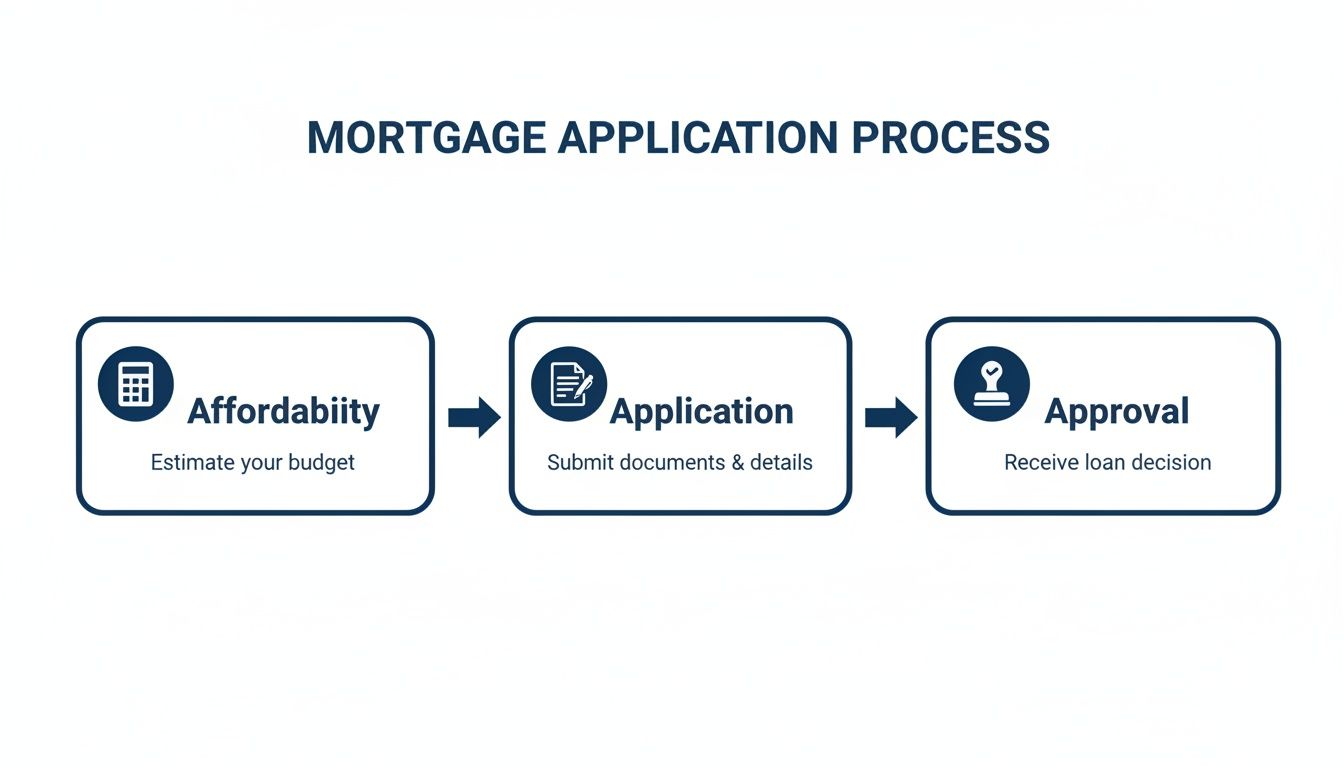
As you can see, the path from checking what you can borrow to getting that final approval starts once the Company is appropriately set up.
An Actionable Setup Checklist
To make this as simple as possible, here’s a checklist for landlords across Essex, from Chelmsford to Braintree and Colchester, to follow when getting an SPV off the ground. For the most detailed official instructions, refer to the step-by-step guide on the government’s website.
SPV Limited Company Setup Checklist
This table breaks down the entire process into five clear, manageable steps to ensure nothing gets missed.
| Step | Action Required | Key Detail | EHF Mortgages Tip |
|---|---|---|---|
| 1. Choose a Name | Select a unique professional name | Check that the name is not already taken | Keep it simple and relevant |
| 2. Appoint Directors | Decide who the director(s) will be | All must provide a personal guarantee | All directors must have clean credit |
| 3. Define Shareholders | Allocate shares to the owners | Defines ownership percentages | Discuss structure with an accountant |
| 4. Register Company | Complete online incorporation | Need a UK address & SIC code | The fee is only around £12 online |
| 5. Open Bank Account | Apply for account in the Company’s name | Non-negotiable for mortgage/rent | Do this on day one. Do not wait |
Following these steps methodically will put you in a fantastic position to move forward with your property investment plans with confidence and efficiency.
Your Path to Smarter Property Investment
Let’s pull all of this together. On paper, setting up a limited company for your buy-to-let properties offers some fantastic tax advantages and protects your personal liability. But it is vital to see this for what it is: a serious business decision, not a one-size-fits-all fix. This path introduces extra layers of admin and complexity that need to be handled carefully.
Ultimately, the best way forward is unique to you. It all comes down to your personal circumstances. Your current tax bracket,t, how many properties you own or plan to own,n and what your long-term ambitions are. What is a brilliant move for a higher-rate taxpayer with a growing portfolio could be an unnecessary headache for a landlord with a single rental.
Making the Right Choice for Your Portfolio
For landlords across Chelmsford, Braintree, Colchester, and the wider Essex region, getting the structure right is the cornerstone of a successful portfolio. The choice between holding property in your own name or through a company has financial ripples that spread far beyond your annual tax bill. It shapes your mortgage options, your day-to-day responsibilities, and how efficiently you can grow your investment pot.
That is why the most critical step you can take is to get expert personalised advice. With a clear picture of the financial landscape, you will be in a much stronger position to build a professional property business that is both profitable and built to last. Our team lives and breathes this specialist market and can give you the clear guidance you need. For more general insights, you might find our buy-to-let mortgage tips helpful.
The question is not just “Is a limited company better?” It is “Is a limited company the right vehicle for my specific investment strategy and financial situation?” Answering that properly means looking at the whole picture.
Frequently Asked Questions
Here are quick answers to some of the most common questions we hear from landlords about setting up a limited company buy-to-let, helping you clarify the final key points.
Can I Transfer My Existing Rental Properties Into a Limited Company?
Yes, you can, but it is a complex move that needs careful thought. When you legally move personal property into your Company, the transaction is treated as a sale by you and a purchase by the Company. Simple as that sounds, it comes with strings attached.
This process can trigger both a Capital Gains Tax bill for you personally on any profit the property has made and a Stamp Duty Land Tax bill for your Company on its “purchase”. While certain tax reliefs do exist, the qualifying conditions are often stringent.
We strongly advise seeking professional tax and legal guidance from a specialist before you even think about proceeding with a transfer. The costs of getting this wrong can be significant so it is essential to map out all the financial implications with an expert first.
What Is an SPV and Why Do Lenders Prefer It?
An SPV, or Special Purpose Vehicle, is a limited company set up for one specific purpose: to buy, sell, and let property. Lenders much prefer SPVs over standard trading companies for a straightforward reason. They are clean and easy to understand.
Because an SPV has no previous trading history, no old debts, and no other business complications, it presents a much lower risk. For a lender, the underwriting process is straightforward, as the Company’s only activities relate to its property portfolio and financing. Trying to get a mortgage through an existing trading company can add severe delays and complexity to your application.
Do I Need an Accountant for My Property Company?
While it is not a legal requirement to have an accountant, it is highly recommended. A limited company has formal reporting duties to both HMRC and Companies House that must be met annually, including filing accounts and tax returns.
An experienced accountant does much more than keep you compliant. They’ll help structure your finances in the most tax-efficient way possible and provide invaluable advice on the best methods for taking profits out of the business. The fee is a tax-deductible expense that often saves you far more money in the long run.
Are Mortgage Rates Higher for a Limited Company?
Historically yes. Limited company mortgage rates were often higher than personal buy-to-let rates, reflecting lenders’ greater administrative burden and perceived risk.
However, as the limited company buy-to-let market has grown and become more mainstream, fierce competition among lenders has significantly narrowed this gap. While you might still find a small premium, the potential tax savings on mortgage interest relief often far outweigh any slightly higher rate. A specialist broker is key here as they can find the most competitive deals available from both high-street and specialist lenders.
If you are ready to explore your options and set up your property investments for the best possible growth,h our experienced broker team is here to help. At EHF Mortgages, we provide expert whole-of-market advice to landlords in Chelmsford, Braintree, Colchester and across Essex, ensuring you have the clarity and support needed to make the right decision.
Ready to build a more professional and tax-efficient property portfolio?