
Broker fees in the UK can range from ‘Free’ to a fixed fee, and some firms charge more for specialist cases. A practical example with EHF Mortgages is a £149 fee for a straightforward residential mortgage and up to £499 for some more complex cases, while some specialist mortgage brokers can charge in the region of £1,500 to £3,500.
You’re probably here because you want a simple answer to one question. How much is a mortgage broker, really? The honest answer is that it depends on how the broker is paid, how straightforward your case is, and whether you judge value by the headline fee or by the mortgage deal you end up with.
💡Top Tip: The cheapest broker fee doesn’t always mean the cheapest mortgage deal. I’ll explain why later in the article.
If you’re buying, remortgaging, or investing in places like Chelmsford, Braintree, Colchester or elsewhere in Essex, the pricing can look confusing at first. Some brokers say they are free. Some charge a flat fee. Others charge more when the case is more involved. That’s why it helps to understand who is paying the broker, what work is included, and when a low fee can end up costing more in the long run.
If you’re still deciding whether advice is worth it, this guide on whether you need a mortgage advisor is a useful companion read.
Introduction
Those asking how much a mortgage broker isn’t just looking for a number. They want to know whether the fee is fair, whether it’s avoidable, and whether paying it improves the result.
That’s a sensible way to look at it. A mortgage isn’t a small purchase, and a broker’s charges in the UK don’t always work the way people expect. You might not get a separate bill at all. You might pay a fixed fee on offer. Or you might find that a specialist case costs more because it requires more work, more lender expertise, and more back-and-forth.
Practical rule: Judge a broker on the total outcome, not just the advertised fee.
There are also plenty of borrowed ideas from the US market online, which can muddy the waters for UK borrowers. If you’re a first-time buyer, a home mover, a landlord, a self-employed applicant, or someone dealing with adverse credit, the advice model matters. The wrong fee structure can be a poor fit for the sort of mortgage you need.
What tends to work best is clarity from the start. You should know whether the broker is paid by the lender, whether you are paying a fee as well, and what happens if your case becomes more complicated than it first looked.
How Mortgage Brokers Get Paid
The first thing to understand is that UK mortgage brokers are often not paid in the same way as estate agents or solicitors.
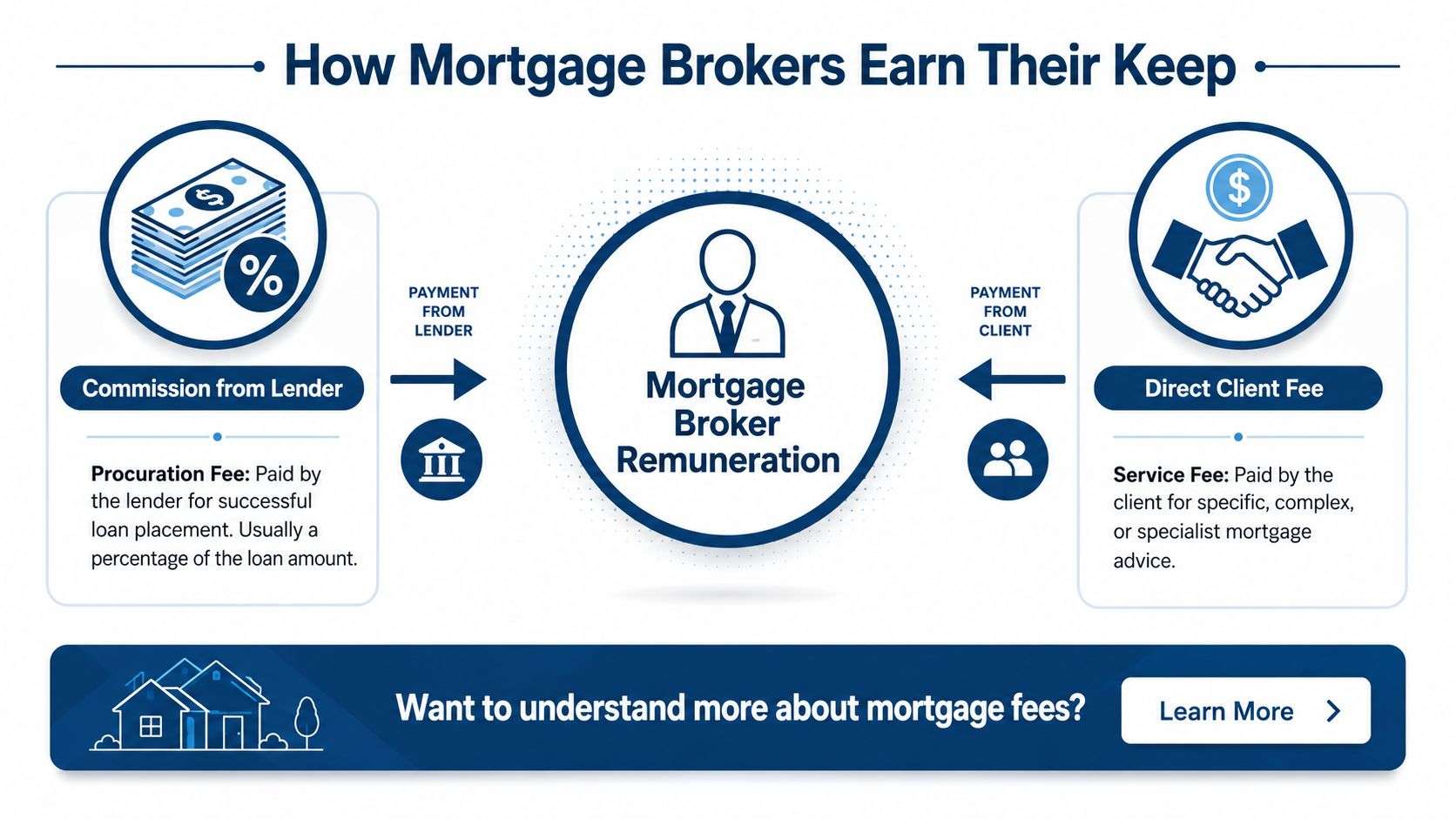
In many cases, the broker receives a procurement fee from the lender when the mortgage completes. The practical effect for the borrower is that the broker’s cost may be built into the mortgage arrangement rather than appearing as a separate headline charge. The FCA also requires firms to disclose any fees or commissions and to ensure the customer understands the total cost of advice before proceeding, as noted in this UK mortgage broker fee explanation.
The two main ways payment happens
Most broker payments fall into two broad categories:
Lender commission. The lender pays the broker for introducing and placing the mortgage.
Client fee. The borrower pays a direct advice or arrangement fee, usually for the work involved in advice, research, packaging and administration.
Sometimes it is one or the other. Sometimes it is both.
A simple way to think about it is this. The lender pays for distribution, and the client may pay for advice. Those are not the same thing. If your case is straightforward, the lender payment may be enough for the broker to cover the work. If your case is a specialist case, the lender payment alone may not reflect the time required.
Why lenders pay brokers
Lenders pay brokers because brokers bring them suitable business and help package cases properly. That saves the lender some of the direct customer acquisition work and can improve application quality.
From the borrower’s side, that can be useful. A good broker doesn’t just find a rate. They filter lenders by criteria, documentation, policy fit and speed. That matters a lot more when the borrower is self-employed, has multiple properties, or sits outside standard underwriting.
A broker fee makes more sense when you understand what work sits behind a clean mortgage offer.
What transparency should look like
You should be told:
Whether a fee is charged
When that fee becomes payable
Whether the broker receives commission
What service is included for that fee
If any of that is vague, slow down. The pricing itself may still be fair, but the explanation should be clear.

Typical Mortgage Broker Costs and Fee Models
There isn’t a single universal answer to how much a mortgage broker charges because brokers use different pricing models. The key is to compare the model, not just the headline.
The broad UK picture is that over 75% of UK mortgage brokers now charge £0 upfront fees, with costs absorbed by lender commissions. That’s one reason so many borrowers assume all brokers are free. But that same market pattern has created what some call the Zero-Fee Paradox, in which a free service might not yield the best overall deal for complex borrowers.
Comparison of Mortgage Broker Fee Models
| Fee Model | How It Works | Typical Cost | Best For |
|---|---|---|---|
| Fee-free | Broker is paid by lender commission only | £0 upfront | Straightforward borrowers who want no direct advice fee |
| Fixed fee | Broker charges a set amount for advice and admin | A set fee agreed in advance | Borrowers who want clear pricing |
| Percentage-based | Broker fee is linked to loan size | Varies by case and firm | More specialist or bespoke arrangements |
What works well and what often doesn’t
A fee-free broker can work well for a standard residential purchase or remortgage. If the case is clean and fits mainstream lending, this can be a perfectly sensible option.
A fixed-fee broker often suits borrowers who want transparency. You know the charge upfront, and you can weigh it against the service, communication and lender access on offer.
A percentage-based model can make sense in niche situations, but borrowers should take extra care. The larger the loan, the more important it is to understand what added value the percentage fee provides.
“Free” is only cheap if the advice and lender choice still fit your case.
The zero-fee trade-off
The biggest mistake I see is assuming that the absence of an upfront fee automatically means the best value. For a borrower in Colchester with straightforward employed income, that may be fine. For a borrower with adverse credit, portfolio buy-to-let, or unusual income, the cheapest visible fee can be the wrong test.
That’s why it helps to compare the fee model alongside lender access, service scope, and the broker’s handling of specialist scenarios. If you want to see how another UK firm lays out pricing and service structure, our agency fees offer a useful example of how firms present charges clearly. It’s also worth comparing advice routes more broadly in this guide on mortgage broker vs bank in the UK.
How Broker Fees Change for Different Mortgages
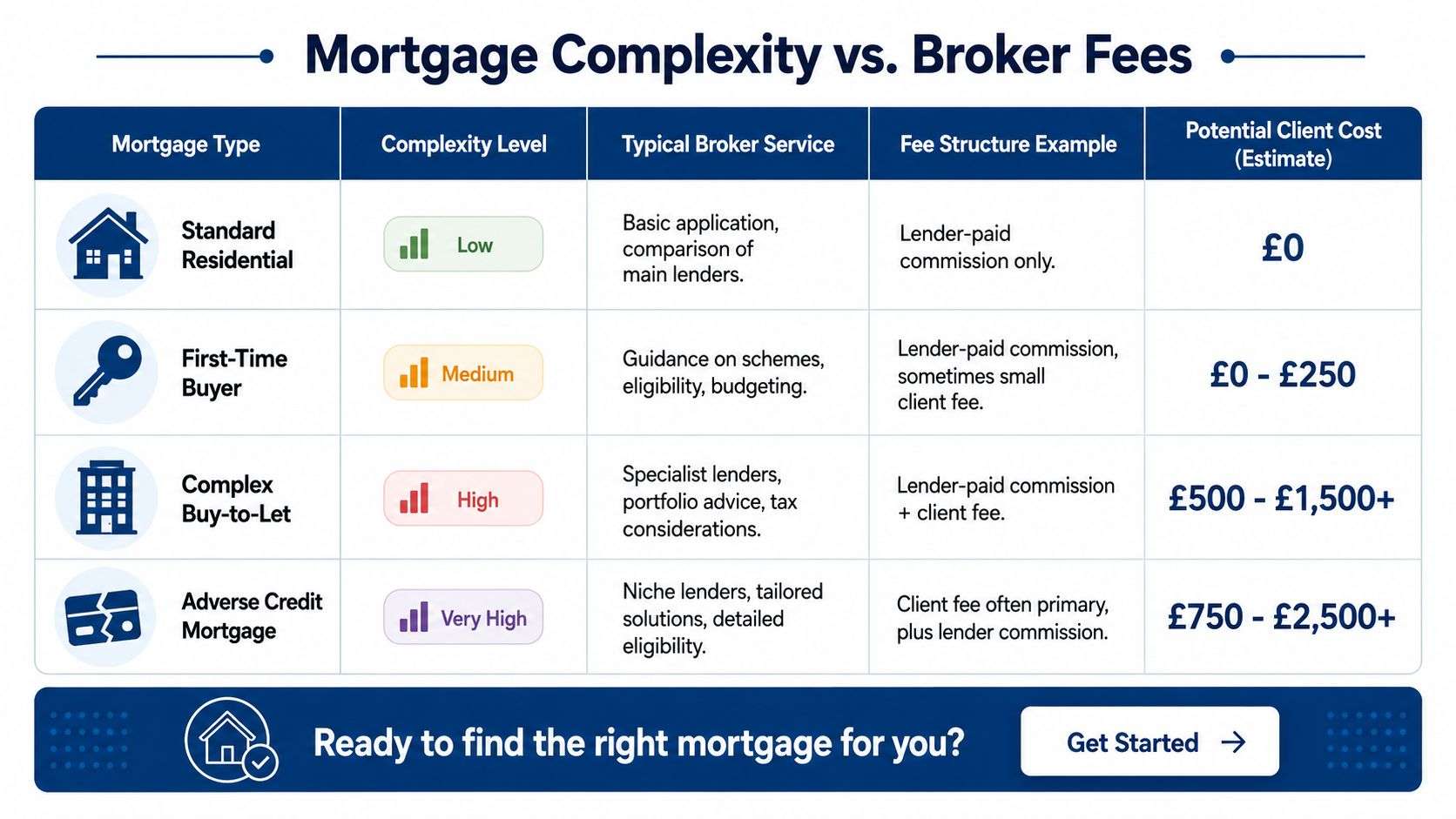
The fee usually changes when the work changes. That sounds obvious, but it’s the bit that many borrowers miss.
A clean employed applicant buying a standard home is usually far simpler than a landlord with multiple properties or a self-employed borrower with irregular drawings. The broker may need to place the case with a specialist lender, package more evidence, explain the story behind the income, and manage more conditions after submission.
A straightforward residential case
For a standard mortgage, a transparent fixed fee can be modest. A practical example is £149 for a standard mortgage, payable on offer. That structure is easy for clients to understand because it avoids surprises and ties payment to progress.
For a first-time buyer in Chelmsford, that sort of setup is often enough. The work still includes advice, lender comparison, application handling and follow-up, but the case may not need specialist packaging.
A remortgage or home move
Remortgages can look easier from the outside, but they still need careful handling. Product choice, timing, early repayment charges, and lender criteria all matter.
Some firms keep the same low fixed fee for this type of case. Others may be fee-free if the lender’s commission covers the work. The important point is whether the broker is proactive and checks whether the selected product still stacks up as rates move.
Buy-to-let and specialist cases
Costs tend to be higher for certain mortgage types. The content owner’s pricing example is that some buy-to-let, specialist lending, and bad-credit mortgages are charged a higher fee, typically no more than £499.
That is still far below the upper end of some specialist market pricing. UK-specific data show that complex case fees can range from £1,500 to £3,500, and specialist mortgage fees are reported to be 40% higher than those for standard retail loans in some parts of the market. That gives useful context for why complexity carries a premium.
Why complexity pushes fees up
Complex cases usually involve one or more of the following:
More lender filtering because many mainstream lenders won’t fit the case
More paperwork, such as company accounts, SA302s, portfolio schedules or credit explanations
More underwriter contact to position the case correctly
More risk of rework if criteria shift or valuation issues arise
For landlords building a strategy, the finance structure matters as much as the property itself. If you’re looking at recycling capital or staged investing, Action Accountants’ BRRRR strategy is a useful read alongside mortgage planning because it shows how funding decisions connect to the wider investment model.
If this blog has helped you understand your options and you are ready to take the next step, click below to speak to EHF today.
The True Value of a Broker Goes Beyond the Fee
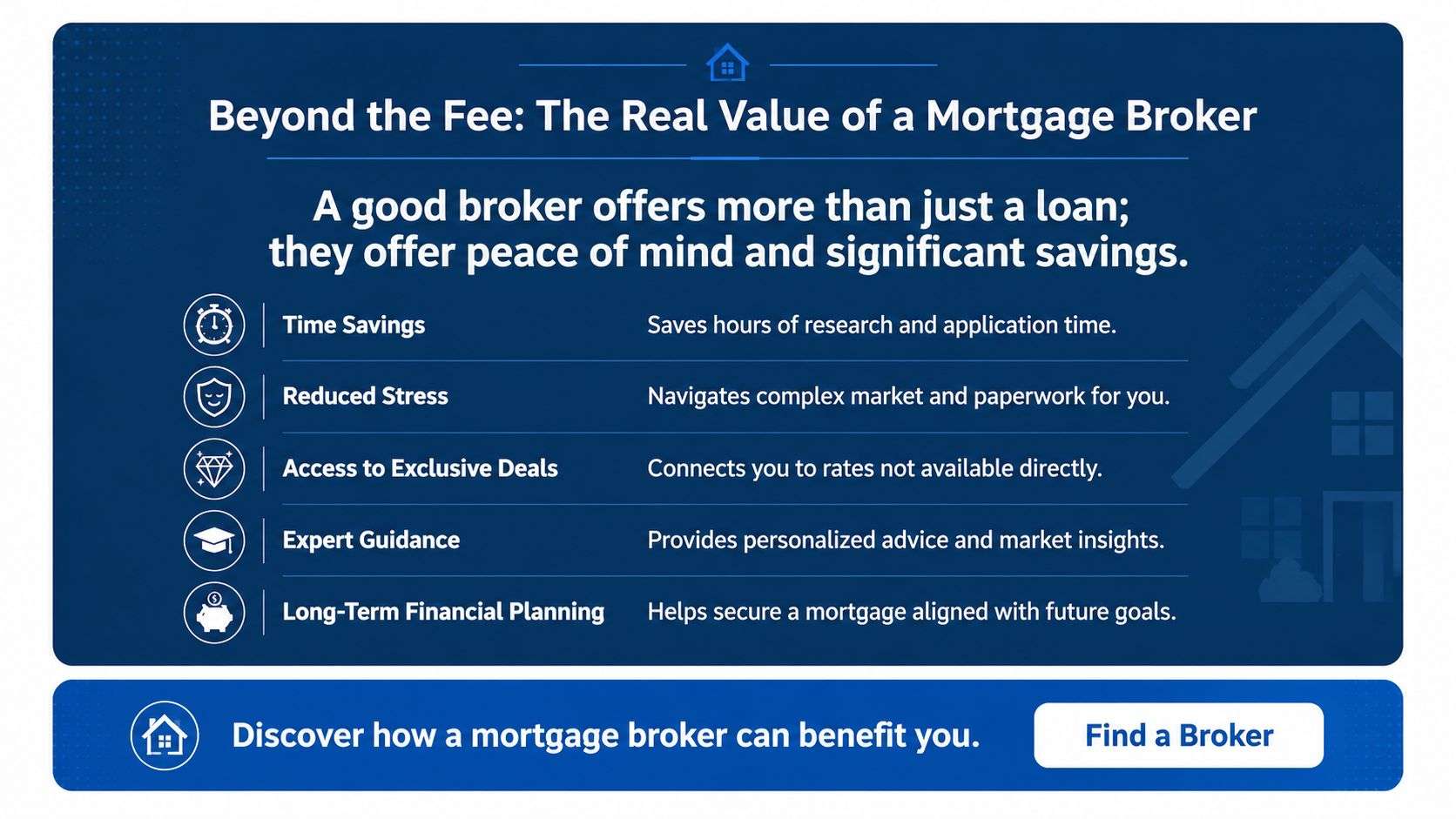
A broker’s value isn’t just in getting an application submitted. It’s about improving the quality of the decision before you commit.
That includes product fit, lender fit, timing, paperwork quality, and early issue spotting. Those things don’t always show up on a fee sheet, but they affect whether the mortgage goes through cleanly and whether the deal still looks good a few weeks later.
Time, admin and fewer mistakes
Most borrowers underestimate how much time gets lost comparing products that were never suitable in the first place. A broker narrows that down quickly.
They also reduce avoidable mistakes. Missing details, wrong lender choice, and poor packaging can slow a case down or knock it out altogether. That matters whether you’re buying a family home in Braintree or refinancing an investment property elsewhere in Essex.
Value after the application
A good adviser often earns their fee. A practical example involves a proactive rate checking service. If rates decrease and the broker is informed of a better option, they can request the cheaper deal for the client before completion. In real life, that can save more than the advice fee without needing any exaggerated promises.
Another added-value service some firms include is support beyond the mortgage itself. One example is free wills for clients, which reflects the fact that buying property should sit alongside estate planning.
Worth remembering: The right broker can save money by preventing a poor choice, not only by finding a lower rate.
What to look for in real terms
Good value usually looks like this:
Clear charging so you know what you’ll pay and when
Whole-of-market or broad lender access for a better fit
Solid communication with updates that are helpful
Follow through after submission rather than disappearing once the form is sent
Long-term thinking including reviews, protection and related planning where appropriate
A cheap broker who is hard to reach can become expensive very quickly. A slightly higher fee with better lender matching and cleaner case handling often produces a better result.
Essential Questions to Ask Your Mortgage Broker
The best way to judge cost is to ask direct questions. A decent broker won’t be uncomfortable with any of them.
Ask these before you proceed
Do you charge a fee, and if so, how much is it?
When is the fee payable?
Do you also receive commission from the lender?
Is your fee different for buy-to-let, adverse credit, self-employed, or specialist cases?
What happens if my case becomes more complex halfway through?
Do you have access to the whole market or a limited panel?
What support do you provide after submission and before completion?
Will you review the rates if the market changes before my mortgage is completed?
What a good answer sounds like
You want clear wording, not sales talk. The broker should be able to explain the fee structure in plain English, tell you whether lender commission is involved, and show you the practical difference between a standard and specialist case.
They should also be comfortable if you compare them against other advice options. This guide on how to choose a mortgage broker is a sensible checklist if you’re still weighing up who to speak to.
“How much is a mortgage broker?” is the right opening question, but it shouldn’t be the last one.
If the answers are transparent, the fee is clear, and the advice model fits your situation, you’re in a much stronger position to make the right choice.
If you’ve got what you needed from this guide and want clear, straightforward advice on your own mortgage options, the next step is to speak to EHF Mortgages. Whether you’re buying, remortgaging, investing, or dealing with a more complex case in Chelmsford, Braintree, Colchester, or across Essex, direct advice can help you understand the actual cost and value before you commit.





