
You’re probably here because a direct lender has looked more appealing than paying a broker fee, especially if you’ve already had a few knock-backs and you don’t fancy another round of paperwork.
Lightbulb tip: don’t chase the cheapest headline rate first; chase the route that you can get through underwriting. That point matters more than people realise, and I’ll unpack it properly later.
If you’re in Chelmsford, Braintree or Colchester, you’ll know the pattern. Someone has a CCJ on file, maybe a default from a rough patch, and they want a straight answer without paying for unnecessary middlemen. That’s a fair instinct, but a bad credit loan no broker search only works if you understand what you’re giving up: price discovery, eligibility sorting, and sometimes a cleaner route to approval.
One sensible starting point is to get your own numbers straight before you click anything. If you want a simple way to track what’s leaving your account while you tidy things up, visualise debt payoff progress can help you see whether a direct loan is worth it or whether you should pause and improve the file first. If you also want to understand what a broker charge can cover, the breakdown on how much a mortgage broker costs is worth a look once you’ve finished here.
Why Some Borrowers in Essex Want a Direct Route in 2026
A borrower in Braintree with a two-year-old CCJ and a broker quote they’d rather not pay is not being unreasonable. They’re usually asking a simple question: can I deal straight with a lender, keep the process tight, and avoid paying for help I might not need?
The honest answer is yes, sometimes you can. But a bad credit loan no broker route is not a magic bypass; it’s just a direct application path. UK guidance still pushes borrowers to work out what they can comfortably afford to repay each month before comparing offers, and that advice is still the right place to start because affordability is what lenders are really testing. Experian UK’s bad credit guidance also points people towards guarantor loans, debt-consolidation loans, credit-union loans and budgeting loans as common routes for weaker credit profiles.
What the direct route really changes
A direct lender can reduce noise. You speak to the firm that sets the terms, not an intermediary trying to place the case somewhere in the market, and that can suit borrowers who already know they want to consolidate debt or test a specialist product. A public-policy example is the UK Budgeting Loan, which was described as interest-free and could be used for essentials, with a maximum of up to £812 in the cited update from May 2022, which shows there are formal lending routes outside mainstream brokered credit. Experian UK
That said, direct doesn’t mean easy. The lender still underwrites the case, and that matters more than the marketing headline. In practical terms, if you want to keep the process under control, use a simple plan, map the debt, check the monthly surplus, and avoid firing applications into the dark. If you need a practical way to organise that, a basic tracker is more useful than a pile of screenshots and guesswork.
Practical rule: If you can’t explain your income, outgoings and repayment plan in one clean conversation, you’re not ready to apply yet.
For local borrowers in Essex, that usually means being realistic about timing as well as cost. A direct route can be the right move, but only when the lender’s criteria are aligned with your file, and you’re not paying for a broker to do simple matching that you could handle yourself. If you’re unsure where you sit, it’s better to speak to a specialist team early than to guess and burn searches.
What a Bad Credit Loan With No Broker Really Means

A direct loan means you go straight to the lender through its own website, branch or phone line. No broker picks the lender for you, no intermediary runs the search, and no third party sits between you and the credit decision. That is the core difference, and it matters whether you are in Chelmsford looking at consolidation or anywhere else in the UK.
The phrase does not mean the loan is a special type of finance that skips normal checks. It can still be an unsecured specialist loan, a guarantor loan, or a secured borrowing route. The channel changes, the underwriting does not disappear. A genuine lender still carries out a creditworthiness assessment, so a real no-credit-check loan is not a mainstream borrowing route. Cashlady makes that point clearly, and Cockle Finance says lenders still rely on credit and affordability checks.
Direct route, direct responsibility
A no-broker loan also does not mean the lender has stopped making money from the deal. Commission can still sit inside the lender’s own model, so the borrower should focus on who controls the terms and how the case is underwritten. That is why FCA authorisation matters. It shows the firm is allowed to lend or arrange regulated credit, but it does not promise approval.
If you want a straight comparison of lender types, the EHF Mortgages guide to bad credit loan banks is a useful place to start. It helps separate lenders that will look at adverse credit from those that market themselves well.
A Chelmsford applicant going direct to a specialist lender for a consolidation loan is choosing a faster route into underwriting, not a shortcut around it. The lender still checks income, bank conduct and the credit record. If the file is weak, a direct application can fail just as quickly as one placed through a broker.
That is the point borrowers in Essex need to hear. No broker means no intermediary in the application flow, not no risk assessment. If a website suggests you can borrow without proper checks, treat that as a warning sign and not a selling point.
How to Check Your Credit File Before You Apply
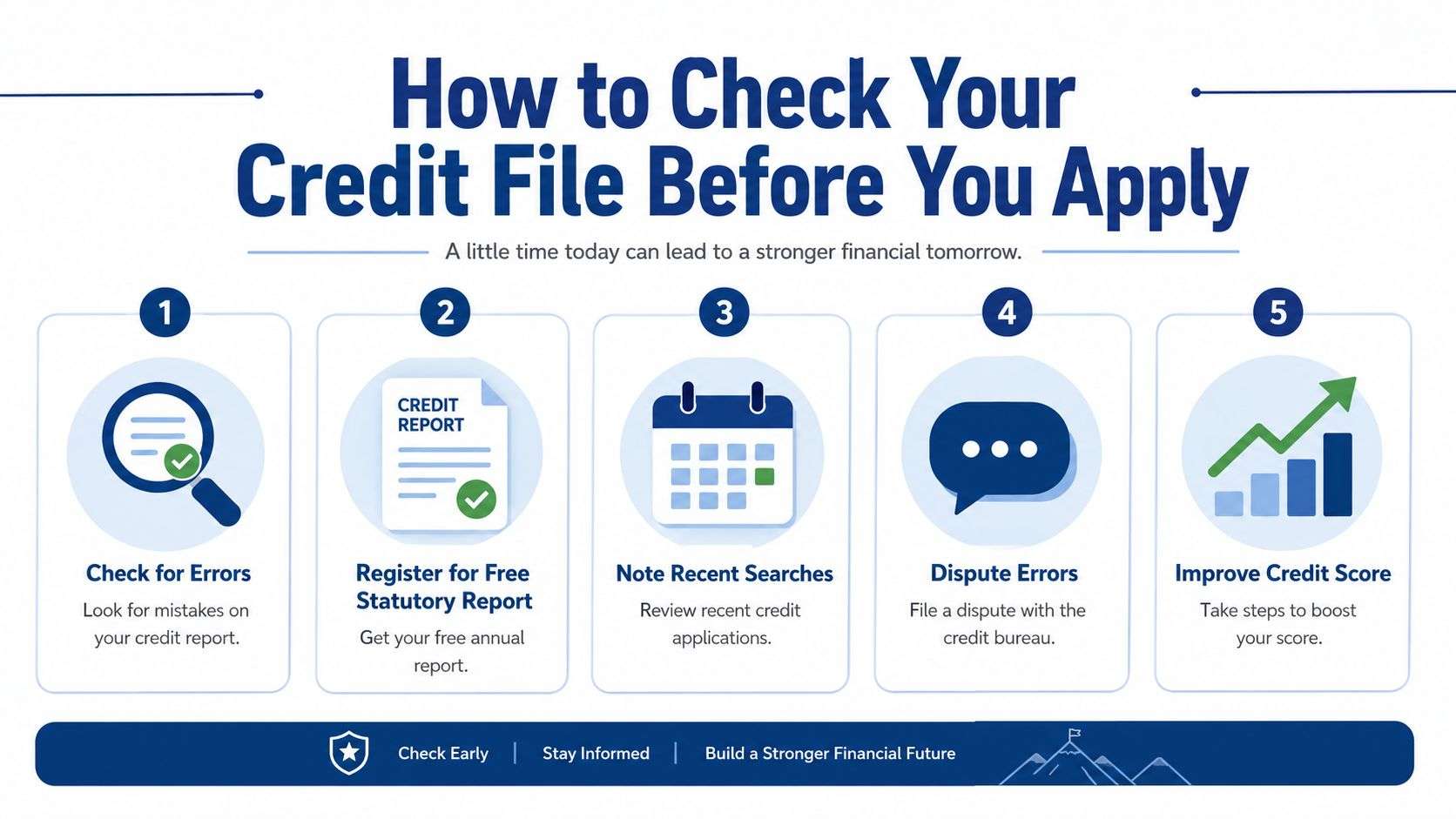
A direct application fails fast when you guess at your credit file. Pull the report first, read every line, and look for anything that can trigger an avoidable decline, especially old addresses, accounts that do not belong to you, or defaults recorded wrongly. A Colchester remortgage client who corrected an address error before applying is a clear example of why this matters, because matching issues can put a lender off even when the borrower has enough income.
Why a soft-search mindset helps
Start with a soft-search or quote-only check before you commit to a full application. Bankrate says many lenders let applicants prequalify without harming credit, with the hard check usually coming only when the full application is submitted. Use that sequence for a direct application, because it lets you compare terms without piling unnecessary searches onto a file that already has adverse marks.
Useful rule: One hard search is manageable. A cluster of them in a short period can make a weak file look worse.
Do the practical checks before you click apply. Bank statements show how you run your account, and lenders care about that conduct as much as the score. Payslips or SA302 forms help if you are employed or self-employed; proof of address must be current, and evidence of any settled defaults should be ready if the lender asks for context. Experian UK’s advice also points borrowers towards working out what they can comfortably repay before they compare offers, because the lender is checking the same basic question: whether the loan fits the monthly budget.
Use the right tools while you do it. If you want a quick way to sense whether a case is likely to pass a lender’s first filter, the EHF Mortgages bad credit loan eligibility checker gives you a direct place to start before you submit anything. It is far better to spot a problem there than to waste a hard search on a file that still has an obvious issue.
Check the details that trip people up most often. Look for old addresses that have not been linked properly, closed accounts that still show a balance, defaults marked as outstanding when they were settled, and any financial links to an ex-partner that should have been removed. A borrower in Essex who sorts those points before applying has a cleaner file and a better chance of getting a sensible yes, rather than an automatic rejection based on stale data.
If you want the direct route to work, treat the credit file like a pre-flight check, not a formality. The more you can explain up front, the less chance there is of an automated decline caused by mismatched records, outdated entries, or poor recent conduct. For a borrower with adverse credit, that is often the difference between a blunt rejection and a proper lending conversation.
Comparing Secured, Unsecured and Guarantor Routes
A borrower who wants to avoid a broker usually still has three real paths, and each one carries a different trade-off. For homeowners in Essex, the biggest mistake is assuming the direct route is always the cheapest. It isn’t. It’s only the cheapest if the structure fits your file and your purpose.
| Route | Typical Size | Security | Speed | Best For |
|---|---|---|---|---|
| Secured second charge | Larger borrowing against home equity | Property at risk | Can be quicker than remortgaging | Homeowners who want stronger terms and can accept security |
| Unsecured specialist loan | Often smaller sums for consolidation or urgent use | No property security | Usually fast | Borrowers needing direct access and no collateral |
| Guarantor loan | Varies by lender and guarantor strength | A family member backs the deal | Decision can be quick | Applicants whose own profile needs support |
The secured route is the one homeowners often underestimate. If you own property and want lower pricing than an unsecured specialist loan might offer, a second charge can make sense, but only if you are comfortable with the risk to the home. If you want to read the broader borrowing context around security, Coveredly’s guide to collateral assignments is a useful reminder that once an asset is tied to borrowing, the structure matters as much as the rate.
Which route suits which borrower
Unsecured specialist loans are usually the cleaner fit when the balance is modest and you need speed. The UK bad-credit market often works around specialist criteria rather than broad mainstream approval, and the borrowing limit can be constrained. UK guidance from Express Finance notes a £2,000 ceiling for a UK-based online lender serving bad-credit borrowers, which is a good reminder that smaller-balance direct lending is often tightly controlled.
Guarantor borrowing is the wildcard. If a family member is prepared to stand behind the deal, the application can tip into approval even when the borrower’s own file is weak. That can be useful for a Braintree landlord with a small IVA record who needs a straightforward answer, but it doesn’t remove underwriting. It just gives the lender more comfort.
For a homeowner seeking a specialist mortgage instead of a plain personal loan, the structure is different again. EHF Mortgages’ second charge mortgage information is the sort of thing borrowers should read when they realise the loan question is a secured borrowing question. The right route depends on whether you need lower pricing, lower risk, or the most accessible approval path.
How to Vet a Direct Lender and Avoid Scams
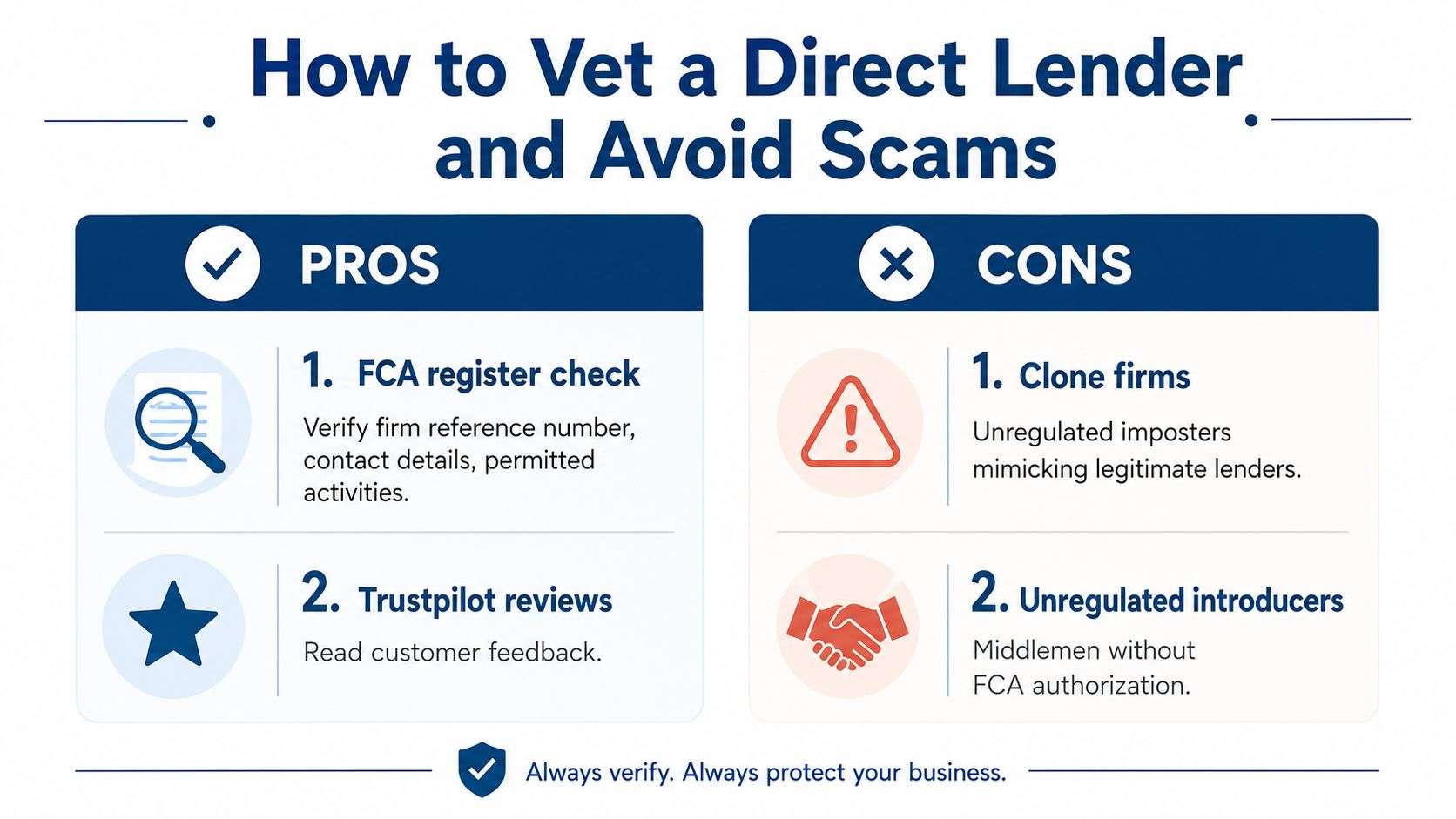
A direct lender should be easy to verify. Start with the FCA register, check the firm reference number, match the contact details and check the exact permissions the firm holds. If the website name, email domain and register entry don’t line up, stop there. Clone firms are built to look convincing, and they rely on borrowers rushing.
Red flags that should end the application
| Red Flag | Why It Matters | What To Do |
|---|---|---|
| Upfront fee before underwriting | You should not be paying before the lender has even assessed you | Walk away |
| Pressure tactics | Rushed decisions hide bad terms | Slow the process down |
| Vague company details | Legitimate firms name themselves clearly | Verify on the FCA register |
| Gift card payment demand | This is a classic scam pattern | Refuse immediately |
The reason this matters in a bad credit loan no broker search is simple. The more desperate the borrower feels, the more attractive a fake promise sounds. That is exactly why legitimate UK lenders still carry out a creditworthiness assessment and do not offer a true no-check shortcut. Cashlady and Cockle Finance both make the point that no genuine product is really a no-credit-check product, and that’s the standard you should hold every lender to.
If a lender sounds too quick, too easy, or too secretive, it usually is.
If you’re dealing with a broker or adviser instead of a lender, they should be FCA authorised for regulated credit broking or lending, and the same level of care applies. EHF Mortgages, for example, operates under FCA No. 940123, but the bigger point is that authorisation should be checkable, not just claimed in a footer. A clean register match and a sensible affordability process beat a flashy landing page every time.
When a Broker or Specialist Adviser Still Beats DIY
A direct route sounds sensible until the case stops being simple. If your income is layered, your credit file is messy, or you need specialist borrowing rather than a plain personal loan, a solo application can turn into a string of wasted searches. That is not broker sales talk; it is how lenders read risk.
A contractor in Chelmsford with a default and irregular bank credits may still get a result, but the file has to be presented properly. A portfolio landlord in Colchester often needs even more structure, because property strategy, income evidence and lender rules do not fit a quick online form. In Essex, where borrowers often want to skip broker fees and keep control of the process, the key question is whether you are buying price discovery or asking the lender to carry too much underwriting risk on its own.

Where DIY falls short
A direct lender still uses Open Banking or another bank-account affordability check, credit file data and income evidence. The borrower has to prove stability, not just ask for money. The bad-credit lending guide from Bargain Loans makes the point plainly: approval can depend on regular income, stable employment, repayment ability, payment history over the previous six months, proof of address and a debt-to-income check, with borrowing limits varying by case.
That is where a specialist adviser earns the fee. They can frame the file, decide whether a secured route is more realistic, and stop you spraying hard searches across lenders who were never going to say yes. If you want a practical guide to choosing advice, how to choose a mortgage broker is worth reading before you decide whether to go direct or use support.
There are also cases where the issue is not just lending criteria, but missing people, missing records, or a file that needs proper groundwork before it can move. That is where UK tracing agents can matter if a lender, insurer or legal process needs someone located or verified before the case can progress.
A direct route works best when the case is simple, the amount is modest, and the lender’s criteria are obvious. A broker earns the fee when the case needs interpretation, packaging or access to lenders you will not find on your own. If you are carrying a recent IVA, multiple CCJs, or a mortgage-style borrowing need, do not guess. Choose the route that fits the file you have now, not the one you wish you had.
Your Next Steps and How EHF Mortgages Can Help
The decision comes down to five things, and they’re all within your control. Check your credit file, decide whether you want secured, unsecured or guarantor borrowing, verify the lender’s FCA status, use soft-search tools where possible, and only submit a hard application when you’re confident the offer is real.
If you’re in Chelmsford, Braintree, Colchester or wider Essex, that process can be handled with local context and remote support where needed. EHF Mortgages is an independent brokerage based in Chelmsford, and it works across residential, buy-to-let and specialist lending, including cases with credit impairments. The firm states FCA No. 940123, more than 35 years of experience, and whole-of-market access, so if your case needs a direct lender comparison rather than a blind online application, that matters.
Keep the decision simple
You do not need to apply everywhere. You need one route that fits the file you’ve got now, not the file you wish you had. If the direct option is clearly suitable, use it. If the case is awkward, let a specialist adviser map it properly before you risk a string of declines.
The quickest approval is usually the one that matches the borrower’s profile first time.
Stop second-guessing and get a proper answer from someone who works with adverse credit every day. A quick conversation can tell you whether a direct lender makes sense or whether a broker is the cheaper mistake to avoid.
If you want straight advice on a bad credit loan, or you need help deciding whether to go direct or use a specialist adviser, speak to EHF Mortgages about the route that fits your file. They handle adverse credit, secured borrowing and specialist lending for borrowers across Essex and beyond, and you can start that conversation now at EHF Mortgages.





