
Buying home insurance often feels like a box-ticking exercise until something goes wrong.
💡 Top tip: don’t guess your contents value. That single mistake causes more problems than commonly understood, and I’ll show you a practical way to get it right later in the article.
For most homeowners in Chelmsford, Braintree, Colchester, and across Essex, insurance for home and contents isn’t really a single product. It’s two separate types of protection that need to fit together properly. Get that right, and you protect both the building itself and the things that make it a home. Get it wrong, and you can end up paying for cover that still leaves awkward gaps.
That matters because ordinary claims can become expensive very quickly. The Association of British Insurers noted that the average UK claim for a burst pipe was £12,100 in 2022, while the average claim for theft from the home was £3,600, according to this ABI-linked summary. Those aren’t rare, dramatic headline losses. They’re the sort of events that can happen in normal homes.
Your Guide to Home and Contents Insurance
A simple question often arises: Do I need buildings insurance, contents insurance, or both?
The short answer is that homeowners often need both. Mortgage lenders usually require buildings insurance, and contents cover protects the movable belongings inside the property, such as furniture, electronics and clothing. If you’re buying your first place, moving house, remortgaging, or reviewing cover that has rolled on for years, it’s worth checking the details rather than assuming the policy still fits.
Insurance jargon also puts people off. Terms like sum insured, single item limits, accidental damage, and average clause can make a straightforward job sound far more complicated than it is. In practice, the key questions are simple. What exactly are you protecting? What events are covered, and where are the weak spots in the policy?
Practical rule: If you could turn the house upside down and shake it, whatever falls out is usually contents. What stays put is usually part of the building.
That rule won’t answer every edge case, but it helps with immediate understanding of the split.
A good policy isn’t just about price. It’s about whether the cover matches how you live. A furnished rental property, a family home with expensive tech, and a later-life borrower downsizing in Essex all need slightly different thinking. The strongest policies are those that have been pressure-tested before a claim ever occurs.
What This Guide Covers
Buildings Versus Contents Insurance Explained
Get this split wrong, and a claim can become an expensive surprise.
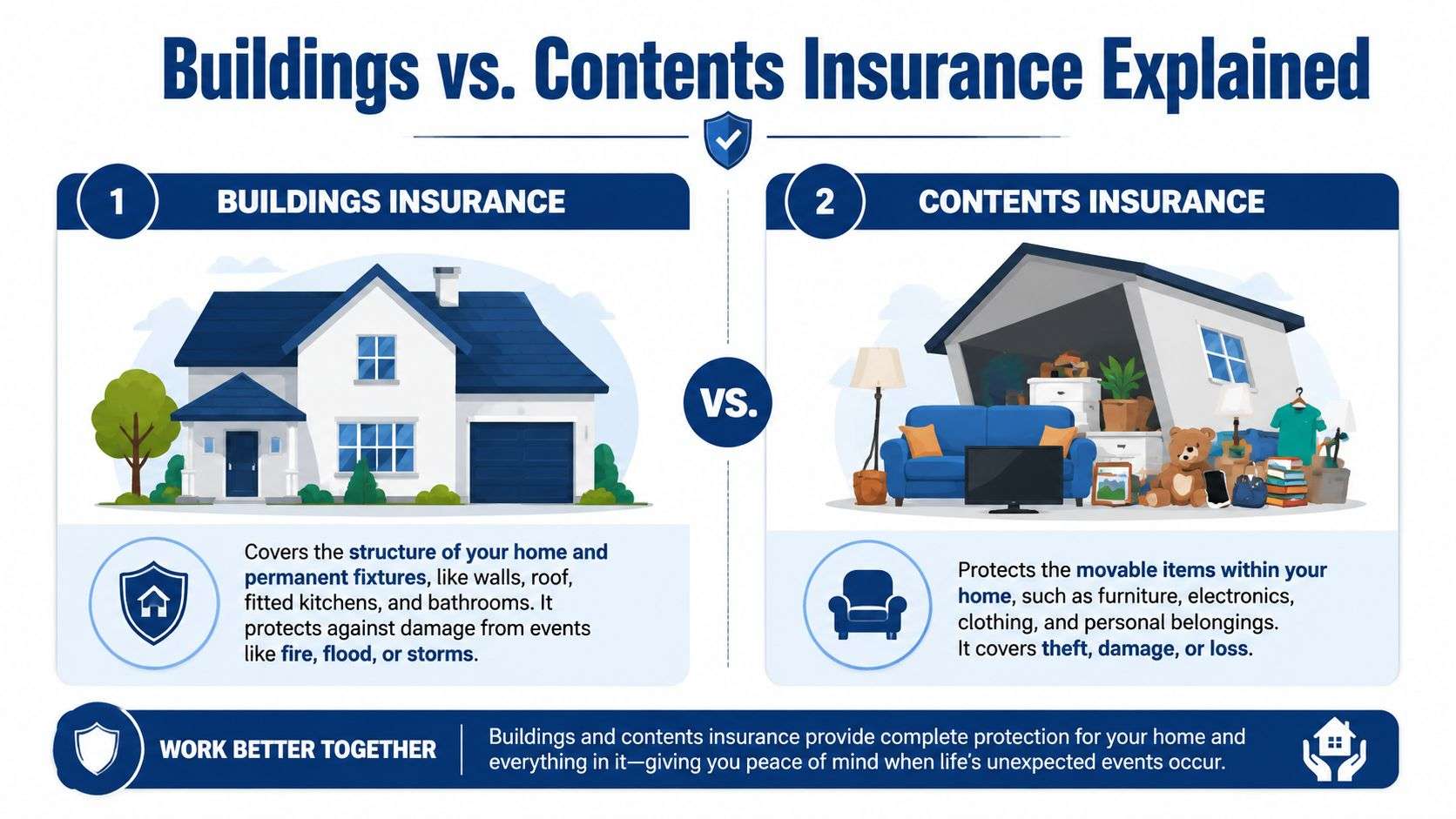
Buildings insurance and contents insurance deal with different parts of the same loss. In plain terms, building cover protects the structure and permanent fixtures. The contents cover protects the belongings you would take with you if you moved.
That sounds straightforward, but the grey areas are where clients get caught. A fitted kitchen is usually part of the building. A freestanding fridge usually contains. Laminate flooring may be treated differently depending on how it was installed and how the insurer defines fixtures. I always tell clients in Chelmsford and across Essex to check the wording before there is a claim, not after.
What buildings insurance usually covers
Building insurance usually covers the main structure of the property and the parts attached to it. That normally includes the roof, walls, ceilings, floors, windows, pipes, wiring, fitted kitchens and bathroom suites.
If you have a mortgage, your lender will usually require buildings cover. Their concern is simple. If the property suffers major damage from fire, flood, or water damage, the home still needs to be repaired or rebuilt. For a practical overview of available cover, this guide to home insurance protection is a useful place to start.
Garages, sheds, gates and fences may also fall under the building’s cover, but not always to the same limit as the main house. That detail matters with older Essex properties, listed homes, and houses with larger outbuildings.
What contents insurance usually covers
Contents insurance usually covers the items you own and use in daily life. Furniture, clothes, rugs, televisions, laptops, toys, artwork, jewellery and small kitchen appliances usually sit here.
Underinsurance shows up fastest. People remember the large items and forget the ordinary ones. Curtains, bedding, shoes, pans, tools, sports kit, toys, home office equipment, and the contents of a loft or shed can add up far more quickly than expected.
Renters often assume contents cover is optional until they price up the cost of replacing everything after a fire or a major leak. Landlords should also be careful here. A landlord policy may cover the building and the landlord’s own items, but not a tenant’s belongings.
| Item | Typically Covered By Buildings Insurance? | Typically Covered By Contents Insurance? |
|---|---|---|
| Roof and walls | Yes | No |
| Fitted kitchen units | Yes | No |
| Freestanding sofa | No | Yes |
| Television | No | Yes |
| Built-in bathroom suite | Yes | No |
Where people get caught out
Difficult claims often concern items that fall between the two categories. Carpets are often treated as contents. Built-in wardrobes are usually buildings. Curtains and blinds can vary by insurer. If you have made improvements, keep receipts and photos so there is less room for argument later.
Policy wording decides these points. The summary page helps, but the definitions section usually carries the definitive answer. The Restore Heroes insurance policy guide provides a useful explanation of how to read policy wording.
Why the split matters
A burst pipe can damage plaster, flooring, fitted units and the belongings in the same room. One incident can trigger both sections of the policy, each with its own terms and limits. If only one part is in place, the shortfall can be significant.
For owner-occupiers, the right answer is often to arrange both covers together. For leaseholders, flat owners and renters, the answer depends on who is responsible for the structure and what the lease says. That is why the best policy is not always the cheapest one. It is the one that matches how the property is built, who lives there, and what would need to be replaced after a loss.
Understanding Policy Exclusions and Optional Add-ons
A policy schedule can look reassuring until you get to the exclusions. That’s where many misunderstandings start.
Most standard policies are designed to cover sudden insured events, not every problem a property can have. General wear and tear, poor maintenance, deliberate damage and issues that build up slowly often sit outside normal cover. If a roof has been deteriorating for years, an insurer may view it very differently from storm damage that occurs in a single event.

The exclusions people miss most often
One common issue is unoccupancy. If a property is empty for too long, the cover can change or become more restricted. That matters for probate properties, second homes, landlords between tenants, or anyone doing major works before moving in.
Another missed area is policy limits. A standard policy might include contents cover, but that doesn’t mean every item is fully protected. As this overview of policy wording in the Restore Heroes insurance policy guide shows, the detail in the wording matters just as much as the headline cover summary.
“The real challenge isn’t asking whether you have contents cover. It’s checking whether the things you value most actually fit within the limits and definitions in the policy.”
That becomes more important with expensive electronics, jewellery, watches, bikes, collections, musical instruments, or works of art. We’ve seen paintings and sculptures that required specialist valuations because standard limits weren’t sufficient to provide the right level of cover.
Add-ons that can make a real difference
Optional extras aren’t always necessary, but some are worth considering because they solve very specific problems:
Accidental damage cover helps where the loss isn’t theft or a major insured peril, such as paint spilt on a carpet or a television knocked over.
Home emergency cover can help with urgent situations such as heating failure or plumbing issues, depending on the policy wording.
Legal expenses cover may be useful if you want help with certain disputes connected to the home.
Personal possessions cover is worth checking if you want protection for items away from home, not just inside it.
A standard policy won’t be enough for every household. The bigger issue is understanding which belongings need to be itemised, such as expensive electronics or jewellery, and recognising that inflation has made underinsurance easier to slip into, as explained in this guide to high-value contents and cover limits.

How to Choose the Right Level of Cover
The biggest mistakes usually occur when people underinsure. People don’t tend to underinsure because they are careless. They underinsure because they estimate quickly, miss whole categories of belongings, and assume the insurer will work it out generously later.
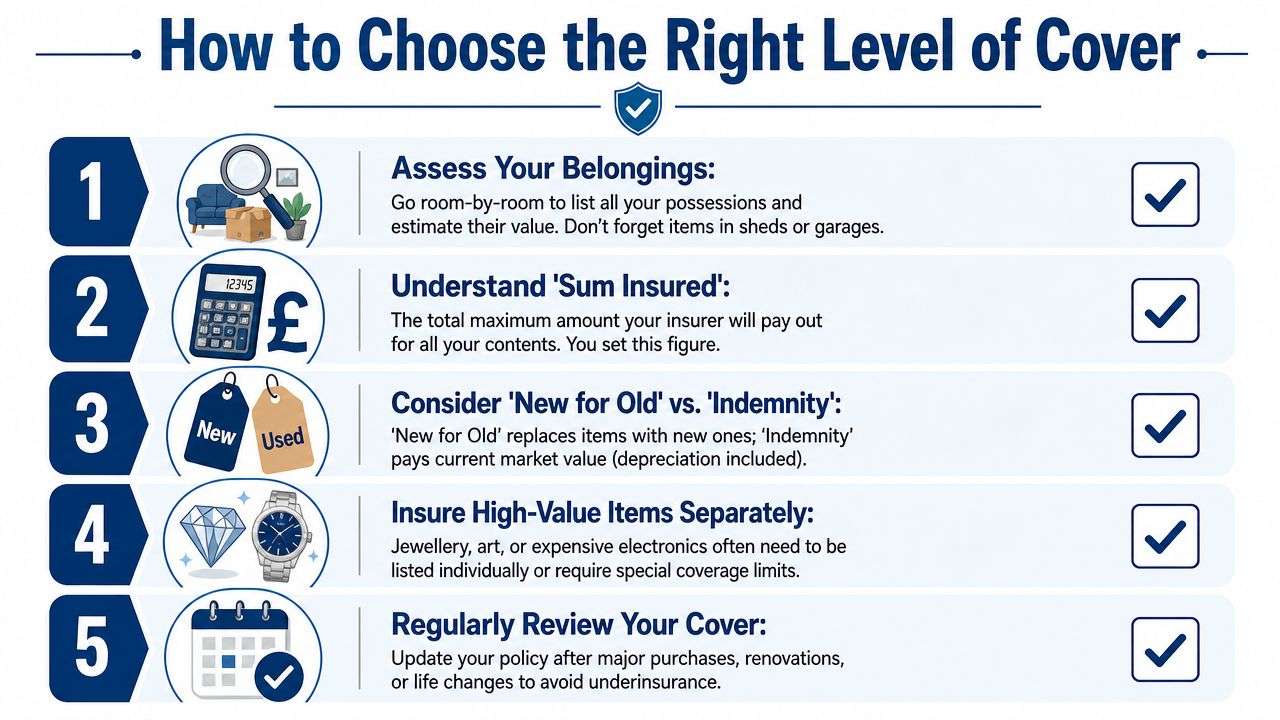
That’s risky. It’s important to calculate the total replacement cost of all movable possessions. If the declared sum insured is too low, insurers can apply an average clause during a claim, reducing the payout proportionally. That’s why accurate room-by-room inventories matter, as set out in this guidance on replacement cost and underinsurance.
Start with replacement cost, not what you paid years ago
Contents insurance is usually about replacement value, not sentimental value and not what you might get by selling items second-hand. If your laptop, sofa or dining table had to be replaced today, the relevant question is what it would cost to buy an equivalent replacement now.
That catches people out after price rises. Items bought a few years ago may cost noticeably more today, especially electronics, furniture and specialist equipment.
“Clients often undervalue their belongings, leaving them underinsured when a claim arises. Think about all the items you can pick up and carry out of the property. That usually gives you a much more realistic contents figure.”
Use a room-by-room method
Don’t try to total everything from memory. Walk through the property and list contents by room.
Lounge first: sofa, armchairs, television, speakers, lamps, rugs, coffee table, books, games consoles.
Main bedroom next: bed, mattress, wardrobes, drawers, jewellery, watches, clothing, shoes, handbags.
Kitchen and utility: small appliances, crockery, cookware, food processor, microwave if freestanding.
Don’t forget storage spaces: loft items, garage tools, bicycles, garden furniture, and anything kept in a shed.
Photos help. Receipts help. Serial numbers for electronics help. If you’re renovating, moving items into temporary storage, or clearing rooms before work, this article on a secret weapon for home renovations is a useful reminder that possessions often become more vulnerable when the house is in transition.
Watch out for special items
Some homes need more than broad-brush contents cover. Art, antiques, collectables, designer jewellery and specialist hobby equipment often need separate listing or valuation. If you own paintings or sculptures, getting a specialist valuation is usually the sensible route because guessing their worth can create problems both at the application stage and the claim stage.
Many households also need to think beyond home insurance alone. If you’re reviewing wider financial protection at the same time, it can help to understand how cover fits alongside mortgages and family finances through this guide to mortgage protection insurance explained.
How Premiums Are Calculated and Ways to Save
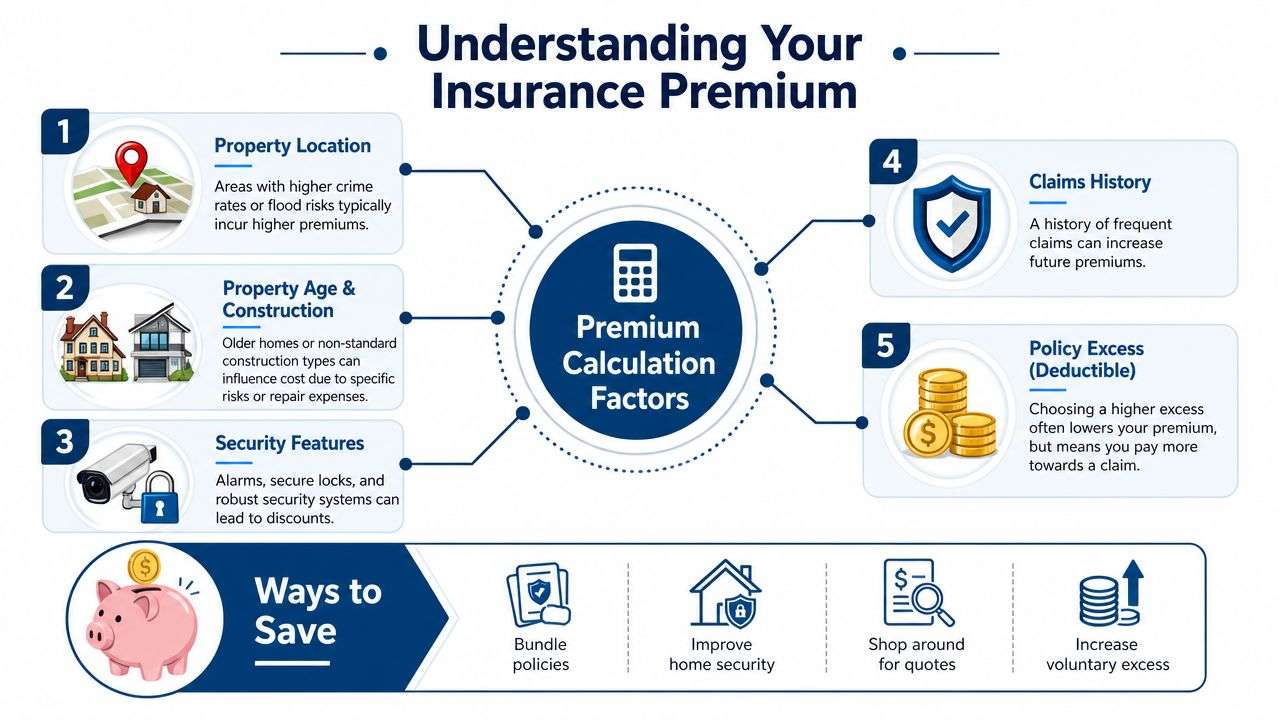
Insurance pricing isn’t random. Premiums usually reflect the property, the location, the claims risk, and the choices you make on the policy.
That wider scale matters. In 2022, UK insurers paid out £2.5 billion in home insurance claims, underscoring the risk insurers are carrying across the market, as highlighted in this Treasury-linked summary of ABI home claims data. Your premium is your share of that risk pool, adjusted for your own circumstances.
What insurers tend to look at
A modern flat in one part of Chelmsford won’t be assessed in the same way as an older property in a village outside Braintree or a period home near Colchester.
Here are some of the main rating factors:
Property characteristics: age, build type, size, rebuild profile, and whether the construction is standard or unusual.
Location: local claims patterns, postcode factors, and environmental issues.
Security: approved locks, alarms, and visible deterrents can all help.
Claims history: frequent past claims can affect pricing and terms.
Excess choice: a higher voluntary excess can reduce the premium, but only if you could comfortably pay it in a claim.
Essex-specific practical points
Essex doesn’t suffer equally from every risk in every area, but local conditions still matter. In East Anglia, clay soil can become more relevant where long dry spells and more extreme weather affect ground movement. That means subsidence risk may become a more important pricing factor for some properties over time, particularly in and around areas such as Colchester, where soil conditions can be a concern.
Security also matters in a very practical way. If you’re improving home protection, a buyer-focused resource such as this UK home CCTV buyer’s guide can help you compare key features before you spend money on equipment that doesn’t suit your property.
Worth checking: The cheapest quote often strips out extras, raises the excess, or leaves tighter item limits in place. Lower premium and better value are not always the same thing.
Sensible ways to reduce cost
Try these before accepting a renewal blindly:
| Action | Why it can help | Trade-off |
|---|---|---|
| Increase voluntary excess | May lower the premium | You pay more if you claim |
| Improve locks or alarms | Can reduce risk profile | Upfront installation cost |
| Review contents total carefully | Avoids overinsuring and underinsuring | Takes time to do properly |
| Pay annually if affordable | Can simplify overall cost | Larger single payment |
| Compare policy wording, not just price | Helps spot weak cover | More reading required |
Tailored Insurance Advice for Your Situation
The right answer depends on where you are in the property journey. A first-time buyer in Chelmsford has different priorities from a landlord in Colchester or someone reviewing cover later in life.
First-time buyers
Buildings insurance is usually needed because the lender expects the structure to be protected. Contents insurance is where first-time buyers often cut corners because they think they don’t own much yet.
That’s rarely true. Add up furniture, clothing, phones, laptops, kitchen equipment and all the small items that make daily life work, and the figure climbs faster than expected. Start with the essentials and review the cover after the first few months in the property.
Landlords
Landlords need to think beyond a normal owner-occupier policy. The property type, whether it’s furnished, and the tenancy arrangement all affect what cover makes sense. If you own rental property, specialist landlord insurance options are worth looking at because standard home insurance may not reflect tenant-related risks properly.
A furnished let also raises a separate question of contents. The landlord’s sofa, white goods, curtains and carpets may all need protecting, while the tenant’s personal possessions usually won’t be covered under the landlord’s policy.
Home movers
Moving home creates timing issues. People focus on removals and completions, then realise too late that they need cover to start on the right date.
Don’t assume your old policy will simply transfer cleanly to the next property. New address, new rebuild profile, new contents mix, and sometimes a very different risk picture.
If you’re carrying out works before fully moving in, check any unoccupancy conditions and tell the insurer what’s happening.
Later-life borrowers
Later-life borrowers often have a different asset mix. The home may contain accumulated valuables, family jewellery, art, or specialist possessions collected over many years. That makes accurate content listing even more important.
The priority here is clarity. Make sure the insurer understands the property’s use, occupancy patterns, and any high-value items that require separate treatment. A long-standing policy isn’t automatically the right one because it has been in place for years.
Navigating the Home Insurance Claims Process
When something goes wrong, speed and evidence matter.
First, make the situation safe and stop further damage if you can. Turn off the water if there’s a leak, secure broken windows, and arrange urgent temporary repairs where needed. Keep receipts for emergency spending because insurers often want a clear record.
Next, contact the insurer as soon as possible and give a straightforward account of what happened. Don’t tidy away the evidence before you’ve documented it properly. Take photographs, record damaged rooms and items, and prepare a list of what has been affected.
A simple claims file helps a lot:
Photos and video: capture damage from several angles.
Item list: note make, model and approximate purchase timing where possible.
Receipts and invoices: keep both emergency repair costs and proof of ownership if you have it.
Notes of calls: write down who you spoke to and what was agreed.
The smoother claims tend to be the ones where the paperwork is organised before the loss ever happens.
Conclusion: Secure Your Home and Your Peace of Mind
Home and contents insurance works best when it’s treated as a practical planning job, not a last-minute comparison exercise. The important points are straightforward. Know the difference between buildings and contents cover, value your possessions properly, and check limits, exclusions and itemised valuables before you need to claim.
For homeowners across Chelmsford, Braintree, Colchester and wider Essex, the biggest avoidable mistake is still underinsurance. A quick estimate might save time today, but it can create an expensive problem later. A proper inventory, realistic replacement values and policy wording that matches your household are what usually make the difference.
If you want personalised help reviewing your options, speak to a broker who can look at the details with you.
If you’d like personalised guidance on home and contents insurance, mortgages, or broader protection needs, contact EHF Mortgages for specific advice.





