
Mortgage Protection Insurance Explained: A Complete UK Guide for 2026
💡 Top Tip: Linking your mortgage protection policy to shrink alongside your mortgage balance can significantly lower your monthly payments.
We will explain exactly how this works later in the article.
Mortgage protection insurance is designed to pay off your outstanding mortgage if you pass away or, in some cases, become critically ill. It is best to think of it not as a complicated financial product, but as your family’s dedicated safety net for your home. Its core job is to keep your loved ones from worrying about mortgage debt during an already incredibly difficult time.
Table of Contents
- What Is Mortgage Protection Insurance and How Does It Work in 2026?
- Comparing the Two Main Types of Cover
- Who Should Consider Mortgage Protection
- Understanding Policy Costs and Key Features
- Exploring Alternatives to Mortgage Protection
- Finding the Right Cover for Your Family
- Common Questions About Mortgage Protection
What Is Mortgage Protection Insurance and How Does It Work in 2026?
At its heart, mortgage protection insurance gives you peace of mind. It is a specific type of life insurance policy that lasts for the same length as your mortgage. If the worst should happen while the policy is active, the insurer pays out a lump sum intended to clear the remaining loan on your property. This means your family can stay in their home without the stress of finding the monthly payments.
For homeowners all over Essex, from first-time buyers in Chelmsford to families moving up the ladder in Braintree, understanding this cover is a vital part of responsible financial planning. Unlike other insurance that protects your telly and your laptop, this protects the roof over your family’s head.
The Purpose of Mortgage Protection
The primary goal is simple: to make sure your mortgage gets paid off. This is what makes it different from a standard life insurance policy. While you can learn more about life insurance in our detailed article, its payout can be used for anything. Mortgage protection, on the other hand, is specifically tied to your property loan.
This focused approach makes it a straightforward solution for many homeowners in areas like Colchester who want to isolate and eliminate their family’s biggest debt. This guide will walk you through the different types, costs, and crucial decisions ahead in a clear, jargon-free way.
Comparing the Two Main Types of Cover
When you start looking into mortgage protection insurance, you will quickly find two main options on the table: Decreasing Term and Level Term Assurance. Getting your head around the difference is key to picking the right policy for your home and family, as each one works differently and is designed for specific types of mortgages and financial goals.
Let’s break them down.
Decreasing Term Assurance: The Shortening Safety Rope
Imagine your mortgage is a mountain you are climbing down over 25 years. Decreasing Term Assurance is like a safety rope that shortens as you get closer to the bottom. It always matches the remaining distance, so it is never longer or more expensive than you need.
This type of cover is designed to mirror a standard repayment mortgage. As you chip away at your loan each month, the amount you owe goes down, and so does the potential payout from the insurance policy. Because the insurer’s risk declines over time, premiums for decreasing term cover are usually much lower than for level term, making it a very cost-effective choice for many homeowners.
Level Term Assurance: The Fixed Safety Net
Now, picture a fixed safety net stretched across a canyon. This is Level Term Assurance. The size of that net never changes, offering the same level of protection from day one right through to the end of the policy term. The potential payout stays constant throughout.
This makes it the ideal choice for interest-only mortgages, where the capital loan amount does not decrease until the very end. It is also a great fit for families who want to leave a specific lump sum for their loved ones. This fixed amount could not only pay off the mortgage but also cover other costs, such as funeral expenses, or provide an inheritance, giving you an extra layer of financial security.
This decision tree infographic helps visualise whether you might need mortgage protection.
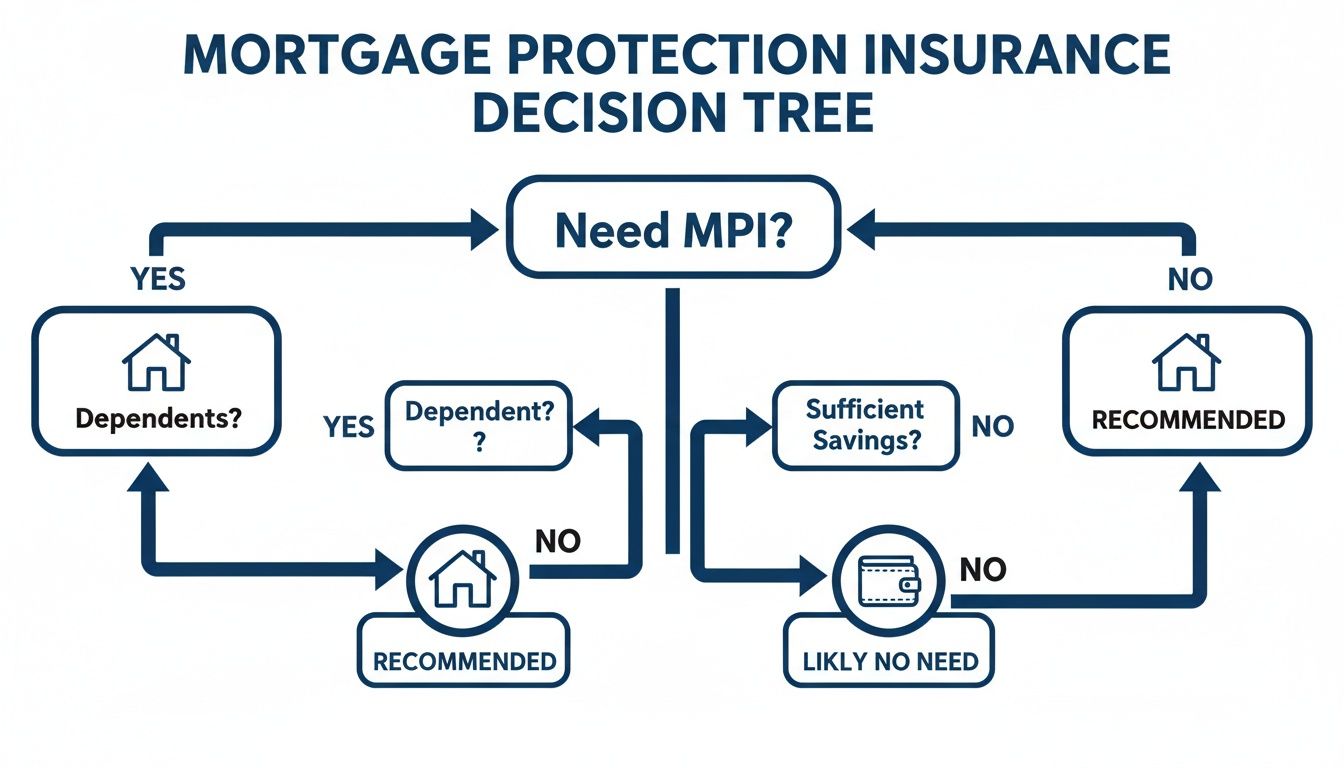
As you can see, having dependants who rely on your home makes protection a critical consideration.
To help you decide which path is right for your financial goals, here is a clear, at-a-glance summary.
Decreasing Term vs Level Term Insurance: A Quick Comparison
This table compares the key features of Decreasing Term and Level Term mortgage protection insurance to help you decide which is right for your circumstances.
| Feature | Decreasing Term Assurance | Level Term Assurance |
|---|---|---|
| Payout Amount | Reduces over time, in line with your mortgage | Stays the same throughout the policy term |
| Best For | Standard repayment mortgages | Interest-only mortgages or leaving a fixed legacy |
| Primary Goal | To clear the outstanding mortgage balance | To provide a fixed lump sum for any purpose |
| Cost | More affordable due to decreasing risk | Generally has a higher premium |
Ultimately, Decreasing Term is about paying off the loan, plain and simple. Level Term offers the same protection while providing a fixed financial safety net for your family, which can be used for more than just the mortgage. The right one for you depends entirely on what you need that protection to do.
Who Should Consider Mortgage Protection
It is easy to dismiss mortgage protection as just another monthly expense, but for many homeowners, it is a cornerstone of responsible financial planning. At its heart, the question is simple: would your death leave someone you care about struggling to pay the mortgage? If the answer is yes, this cover is worth a very serious look.
Certain stages of life and specific property situations make this protection particularly vital. Let’s break down the key groups who stand to benefit the most.
First-Time Buyers Taking the Plunge
For first-time buyers in places like Chelmsford, getting the keys to your first home is a massive milestone. But it also marks the start of your first major debt. With savings often depleted by the deposit and a long mortgage term stretching ahead, the financial shock of losing an income could be devastating.
Mortgage protection acts as a financial backstop, ensuring a partner or family member is not left facing a huge loan they cannot afford. It provides a solid foundation, letting you enjoy your new home without that nagging “what if?” worry. This is especially true for young couples who might be thinking about starting a family, where one income may eventually need to support everyone.
Growing Families and Remortgaging Homeowners
As your life changes, so do your financial responsibilities. For established homeowners in Braintree moving to a larger property or remortgaging to release equity, there are often children and other dependants who rely completely on the stability of the family home. With kids, school commitments, and higher living costs, the need for a safety net becomes even more critical.
Remortgaging is the perfect time to review any protection you already have. Your original policy might not be enough to cover your new, larger loan, leaving a dangerous gap in your family’s financial security.
Property Investors and Later-Life Borrowers
This is not just about protecting the home you live in. For buy-to-let investors in Colchester, a mortgage on an investment property is still a major liability. Anyone who owns property, whether it is their own home or a rental, needs to consider all aspects of protecting their property investment. This cover ensures that the asset is not lost if the worst happens, safeguarding the income stream or inheritance it represents.
Likewise, those borrowing later in life need to think about protecting their estate. A policy can clear the mortgage debt, ensuring the full value of the property is passed on to beneficiaries without any strings attached.
The need is far more common than you might think. A shocking 2.3 million mortgage holders in the UK have no cover at all. According to Lifesearch’s 2025 HomeOwner Survey, over a third (36%) of UK mortgage holders lack life insurance, income protection, or critical illness cover, leaving their families completely exposed. You can read more about these important findings for homeowners.
Understanding Policy Costs and Key Features
The monthly premium for your mortgage protection insurance is not just a number plucked out of thin air. It is a carefully calculated figure based on you and your unique circumstances. Getting to grips with what drives these costs is the first step toward finding an affordable policy that protects your family and home.
Insurers are in the business of assessing risk, so it is no surprise that your personal details play a big part in determining what you will pay.

What Determines Your Premiums
The final cost of your policy is shaped by a mix of personal factors and the specifics of the cover you choose. While you cannot turn back the clock on your age, other elements are very much within your control.
- Your Age and Health: It is simple, really. Younger, healthier applicants almost always secure lower premiums. Insurers will want to know about your medical history and might even ask for a quick medical check.
- Lifestyle Choices: How you live your life has a direct impact on your life. Smokers, for instance, or those with high-risk hobbies can expect to pay a fair bit more for their cover.
- Occupation: A riskier job, such as working at heights or with hazardous materials, will likely result in a higher premium because of the increased risk.
- Mortgage and Policy Details: The big ones. The size of your mortgage, how long the policy needs to run, and whether you opt for decreasing or level cover are all major cost drivers.
To give you an idea, a 35-year-old non-smoker in Essex with a £300,000 repayment mortgage over 30 years might find a decreasing term policy surprisingly affordable. For a smoker of the same age, that premium could easily double. Likewise, if your job carries significant risks, you might want to consider safeguarding your income in uncertain times with other forms of protection.
Crucial Features You Should Not Overlook
Beyond just the price tag, a couple of key features can make a world of difference to how your policy serves your family when they need it most. One of the first decisions couples face is whether to get a joint policy or two separate ones.
A joint policy is often cheaper, but there is a catch: it pays out only once, usually on the first death, after which the cover stops. Two single policies create two separate pots of money. This means if both partners were to pass away, two lump sums would be paid out, providing far greater financial security for any children left behind.
Another vital feature, and one that is often missed, is writing your policy ‘in trust’. This is a simple legal arrangement that ensures the insurance payout goes directly to your beneficiaries without becoming part of your estate or getting tangled up in the lengthy probate process.
Exploring Alternatives to Mortgage Protection
While mortgage protection insurance is a brilliant, specialised tool designed for one job, it is not the only way to build a financial safety net. To put together a truly robust plan, it helps to understand the wider family of protection policies – those that can cover all sorts of life’s curveballs, not just the mortgage.
Think of it like a toolkit. Mortgage protection is the precision screwdriver, perfect for that one specific task. But other policies are more like versatile multi-tools that protect your income and overall financial well-being. This gives your family much more flexibility right when they need it most.

Key Protection Policies to Consider
Several types of insurance can work alongside mortgage protection or even replace it. Each one serves a slightly different purpose, offering a unique kind of support.
- Standard Life Insurance: This is by far the most flexible alternative. Unlike mortgage protection, the payout is a fixed lump sum that is not tied directly to your mortgage balance. Your loved ones receive the full amount and can decide how best to use it – whether that is paying off the mortgage, covering funeral costs, or handling day-to-day living expenses.
- Critical Illness Cover: This type of policy pays out a tax-free lump sum if you are diagnosed with a serious condition specified in the policy terms. The money can be a lifeline, helping manage medical bills, pay for home adaptations, or cover lost income while you focus on getting better.
- Income Protection: If you are unable to work due to illness or injury, this insurance provides a regular, tax-free income stream. It is designed to cover your monthly outgoings (including your mortgage) until you are back on your feet, so your lifestyle does not have to take a hit.
Making an Informed Choice
Choosing the right mix of protection is a big decision, and too many people put it off. Shockingly, research from the Association of Mortgage Intermediaries reveals that 36% of mortgage holders in the UK have no life insurance, critical illness cover, or income protection whatsoever. You can read the comprehensive research on the UK’s protection gap to see just how big the issue is.
To help you get your head around the options, the table below provides a simple comparison of these key policies.
Protection Policy Options at a Glance
Comparing different types of insurance policies to help you understand what is best for protecting your mortgage and your family’s financial future.
| Policy Type | What It Covers | How It Pays Out | Best For |
|---|---|---|---|
| Mortgage Protection | Pays off the remaining mortgage on death | Lump sum to lender | Clearing mortgage debt affordably |
| Life Insurance | Provides a payout upon death | Fixed lump sum to beneficiaries | Flexible support for loved ones |
| Critical Illness | Diagnosis of a serious illness | Tax-free lump sum to you | Covering costs during recovery |
| Income Protection | Inability to work due to illness/injury | Regular, tax-free income | Replacing lost salary |
Ultimately, deciding on the right protection means weighing your budget against your family’s needs. Getting expert advice can be invaluable, helping you navigate your options and secure your financial future with confidence.
Finding the Right Cover for Your Family
Trying to navigate the insurance market on your own can feel overwhelming. As we have covered, choosing the right type of policy and getting the details right—such as drafting it in trust—are absolutely vital. This is not just a case where professional advice is helpful; it is essential to ensuring your family is properly protected.
At EHF Mortgages, we act as your expert guide. With over 35 years of experience, our team has access to the entire market, so we can find a policy that genuinely fits your life and budget.
Our Chelmsford-based advisers offer a free, no-obligation chat to map out a protection plan that secures your home and your family’s future. It is also important to remember that financial protection is not one-size-fits-all. For instance, knowing how to find appropriate travel insurance for cancer patients really brings home the importance of getting tailored advice for specific circumstances.
Take the next step and secure that all-important peace of mind today.
Common Questions About Mortgage Protection
We have covered a lot of ground in this guide, but it is completely normal to have still a few questions buzzing around. To address any final uncertainties, we have compiled the top questions we hear from our clients across Chelmsford, Braintree, and Colchester. Here are some straightforward answers to help you move forward with confidence.
Is Mortgage Protection Insurance Compulsory in the UK?
In short, no. There is no legal requirement forcing you to take out mortgage protection insurance in the UK.
However, most mortgage lenders and financial advisers will strongly recommend it. It is the simplest and most effective way to ensure your mortgage debt is cleared if you were to pass away, protecting your family from the risk of losing their home.
What Is the Difference Between Mortgage Protection and Home Insurance?
This is a common point of confusion, but the two policies cover completely different risks. It is easiest to think of it this way:
- Mortgage Protection Insurance: This is a life or critical illness policy. It is there to pay off your mortgage debt for your family’s benefit if you can no longer earn.
- Home Insurance: This policy protects the physical property—the bricks and mortar (buildings insurance) and your belongings inside (contents insurance)—against things like fire, flooding, or theft.
Essentially, one protects your family from the mortgage debt, while the other protects the building itself from physical damage.
Can I Get Cover If I Have a Pre-existing Medical Condition?
Yes, it is often still possible to get mortgage protection insurance even with a pre-existing medical condition. The key is to be completely honest and declare any conditions you have during the application process.
An insurer might ask for more information from your GP or require a medical examination to get the full picture. Depending on the condition, this could lead to a higher premium or specific exclusions on the policy. This is exactly why using an expert whole-of-market broker is so important—we know which insurers are more accommodating for different circumstances. We can find you the most suitable cover.
Navigating the world of mortgage protection can feel complex, but you do not have to do it alone. The team at EHF Mortgages has the experience to find the right solution for your family. If you’re ready to secure your family’s home and future, our expert advisers are here to help.





