
TOP TIP: Paying half your monthly mortgage payment every two weeks could help you clear your loan faster and save thousands.
We’ll explain exactly how later in this guide. A capital repayment mortgage is by far the most common, and secure way, to buy a property in the UK. With every monthly payment, a portion clears the interest charged by the lender, while another part chips away at the original loan amount known as the capital. Put simply this means your debt shrinks month by month.
Table of Contents
- How a Capital Repayment Mortgage Really Works
- Comparing Capital Repayment and Interest-Only Mortgages
- Understanding the Pros and Cons
- Is a Capital Repayment Mortgage Right for You?
- Your Common Questions Answered
- Take the Next Step to Your Financial Future
Your Path to Owning Your Home
Ever wondered how a long series of mortgage payments eventually leads to you owning your home outright? The answer lies in the capital repayment structure. It’s a straightforward guaranteed path to becoming completely debt-free.
This approach isn’t just popular, it’s the bedrock of the UK housing market favoured by lenders and homeowners alike. The latest statistics show new mortgage commitments hit a massive £79.4 billion in late 2025 with capital repayment products making up over 80% of these deals. You can explore the full Bank of England mortgage data to see these trends for yourself.
Whether you’re a first-time buyer in Chelmsford, looking to remortgage in Colchester, or a long-time homeowner in Braintree, getting your head around how this works is the essential first step. It’s the foundation for making smart financial decisions for your future. You can learn more about the basics in our complete guide to understanding home loans, but this article will break down exactly what you need to know.
How a Capital Repayment Mortgage Really Works
Think of your mortgage like a mountain you’re climbing. With a capital repayment mortgage every single step you take gets you closer to the summit. It’s a straightforward path to the top.
Each month your payment is split into two parts. The first bit covers the interest – that’s the fee the lender charges for loaning you the money. But the second, and arguably more important part, is what chips away at the original loan amount the capital.
This steady predictable process is known as amortisation. It’s the mechanism that ensures your mortgage balance gets smaller with every payment you make, giving you a clear finish line for your homeownership journey.
The Shifting Balance of Your Payments
At the start of your mortgage term, a larger chunk of your payment goes towards paying off the interest. That’s simply because your outstanding loan is at its biggest. Over time, however, a subtle but powerful shift begins to happen.
As you pay down the capital, the amount of interest charged each month also drops. This means more and more of your monthly payment goes directly towards clearing the actual debt. It’s like a snowball effect, that gathers momentum helping you pay off your loan faster as the years go by.
This reliable structure gives you the peace of mind that once you’ve made that final scheduled payment,, your home whether it’s in Chelmsford, Braintre,e or Colchester, is all yours. It’s no surprise that this secure method is the go-to choice for most UK homeowners.
The infographic below paints a clear picture of the current mortgage market, showing just how dominant this type of lending is, especially with the popularity of fixed-rate deals which almost always use a capital repayment structure.
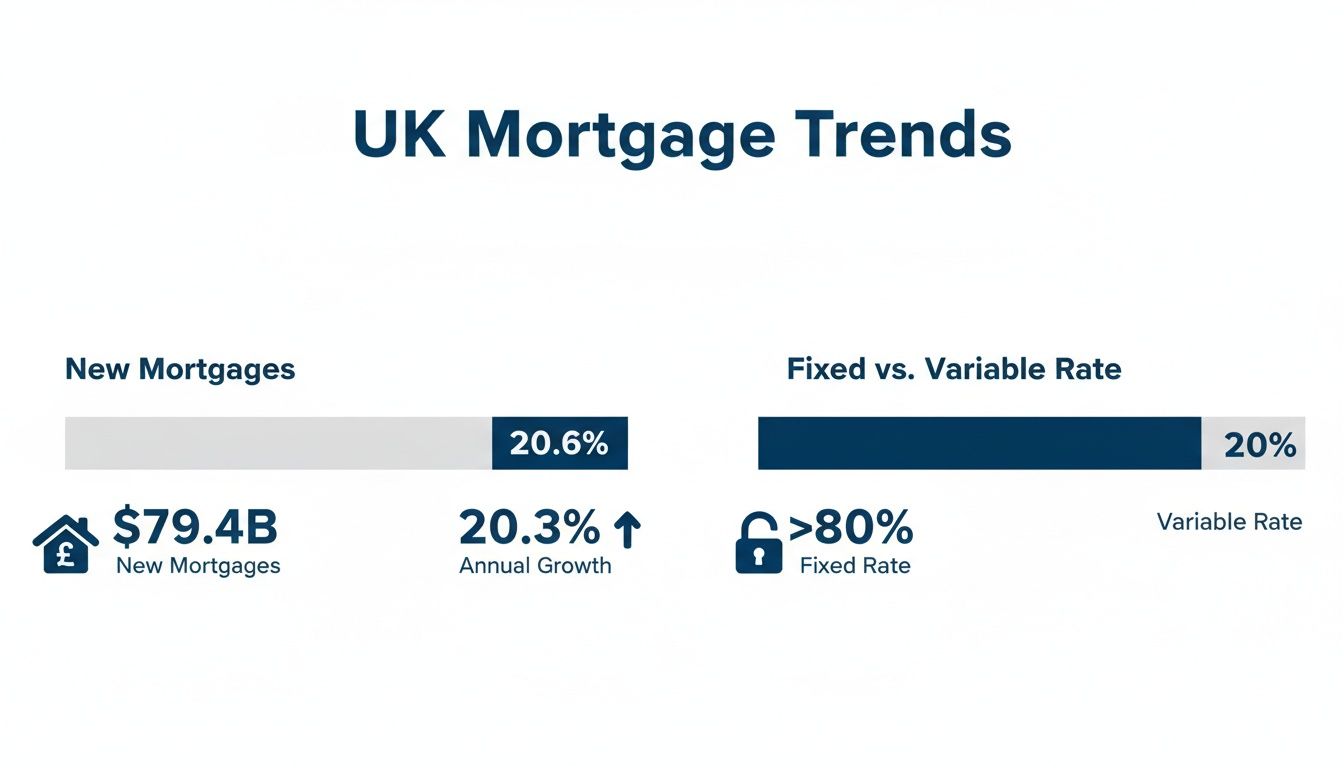
The data speaks for itself: the overwhelming majority of borrowers are opting for the stability that fixed-rate capital repayment mortgages provide. Getting your head around how rates influence your payments is a key part of the puzzle and you can learn more about UK interest rates in our guide.
Comparing Capital Repayment and Interest-Only Mortgages
To really get your head around what a capital repayment mortgage is, it’s useful to see it side-by-side with its main alternative: the ‘interest-only mortgage’.
Think of it like this. A capital repayment mortgage is a direct route to owning your home outright,free and clear. An interest-only mortgage, on the other hand, is a bit like renting your home from the bank – you pay every month, but the big debt doesn’t actually go anywhere.
With an interest-only mortgage, your monthly payments are just that – they only cover the interest being charged by the lender. This means the original loan amount, the capital, never shrinks. You’re simply paying the bank for the privilege of borrowing the money without ever chipping away at the loan itself.
When the mortgage term ends you’re left with the entire loan balance still to pay. You’ll need to settle this in one huge lump sum which usually means having a separate repayment plan ready to go, like selling the property or cashing in a long-term investment.

Key Differences at a Glance
The choice between these two types of mortgages has massive long-term consequences for your financial security, and how much you’ll pay in total. For homeowners across Chelmsford, Braintree, and Colchester; the safer, more predictable option, is almost always a capital repayment mortgage.
To make things clearer, here’s a straightforward table breaking down the crucial differences.
Capital Repayment vs Interest-Only Mortgages
| Feature | Capital Repayment Mortgage | Interest-Only Mortgage | Risk Level | Suitability |
|---|---|---|---|---|
| Monthly Payments | Higher including capital and interest | Lower only covering interest | Low risk | Residential homeowners |
| Loan Balance | Shrinks with every payment | Stays the same throughout the term | High risk | Buy-to-let investors |
| End of Term | Loan is fully paid off | Full loan must be repaid | Guaranteed outcome | Requires repayment strategy |
As you can see the two products are worlds apart in how they work, and who they are designed for.
Why Capital Repayment Is the Default Choice
The fundamental security of a capital repayment mortgage is exactly why it’s the standard for residential lending. It gives you a clear structured plan to eliminate your largest debt, and build equity in your property month by month. Peace of mind is built-in.
This preference for security is clear even when homeowners hit a rough patch financially. Data from the FCA’s Mortgage Charter shows that while some borrowers temporarily switched to interest-only to lower their outgoings, the vast majority planned to return to a capital repayment path as soon as they could. You can discover more insights about these homeowner trends from the FCA.
While interest-only mortgages have their place especially for savvy buy-to-let investors,, looking to maximise cash flow they bring a level of risk and uncertainty that just isn’t right for most families. The guarantee that you will own your property at the end of the term is what makes understanding a capital repayment mortgage so essential for your financial future.
Understanding the Pros and Cons
Like any big financial commitment, choosing a mortgage means weighing up the trade-offs. A capital repayment mortgage is seen as the safest route for most homeowners, but it’s crucial to look at both sides of the coin before you jump in.
Getting a balanced view helps you figure out what really matters for your own financial future.

Whether you’re in Chelmsford, Braintree, or Colchester, knowing the good and the bad will put you in a much stronger position when you sit down with an adviser. It’s all about making a properly informed choice.
Advantages of a Capital Repayment Mortgage
The real appeal of this type of mortgage comes down to security, and the steady process of building personal wealth. It gives you a clear structured path towards owning your home outright.
- Guaranteed Ownership: This is the big one. When you make that final payment the house is yours. No ifs, no buts. There’s no surprise lump sum you need to find at the end of the term.
- A Form of Forced Savings: Every single month part of your payment builds your equity the slice of the property you actually own. Think of it as a disciplined savings plan, that steadily increases your net worth over time.
- Easier to Remortgage: As you chip away at the mortgage balance your loan-to-value (LTV) ratio drops. A lower LTV is a great thing to have as it often opens the door to much better interest rates when you come to remortgage, a point backed up by consumer advice from MoneyHelper.
Disadvantages of a Capital Repayment Mortgage
The main drawbacks are all about the money specifically the initial affordability and how slowly you build equity in the early days.
- Higher Monthly Payments: Your monthly outgoings will be higher compared to an interest-only mortgage. That’s because you’re paying back both the loan, and the interest from day one, which can be a stretch for first-time buyers trying to meet affordability checks.
- Slow Initial Equity Growth: In the first few years it can feel like you’re treading water. The vast majority of your payment is swallowed up by interest, meaning your actual ownership stake (equity) grows very slowly at the start. This can be frustrating if you need to sell, or remortgage soon after buying.
Ultimately a capital repayment mortgage is a safe long-term play. It’s a marathon not a sprint. The Citizens Advice Bureau offers some fantastic guides on the different ways to repay a mortgage which really drive this point home.
Is a Capital Repayment Mortgage Right for You?
A capital repayment mortgage is the most common type of mortgage in the UK and for good reason. It provides a clear reliable route to owning your home outright. But is it the best fit for your specific situation and financial ambitions?
For most people buying a home to live in it’s almost always the most sensible path. Let’s break down who this straightforward approach to borrowing works best for.
First-Time Buyers and Home Movers
If you’re a first-time buyer in Chelmsford or Braintree, a capital repayment mortgage is your most direct and secure path onto the property ladder. Every single monthly payment you make builds your equity, giving you a tangible growing stake in your home right from day one. That steady progress brings huge peace of mind.
It’s the same story for those moving home or remortgaging in Colchester. You’re simply continuing on a proven path chipping away at the debt, and ensuring your mortgage balance is always heading in the right direction: down. Lenders love this low-risk structure which often makes it easier to find competitive rates.
Buy-to-Let Investors
Many buy-to-let investors traditionally lean towards interest-only mortgages to keep monthly outgoings low, and maximise cash flow. However choosing a capital repayment strategy offers a completely different and very powerful advantage: it de-risks your property portfolio over the long haul.
By paying down the capital on a rental property you are systematically creating a debt-free asset. This can be an incredibly smart move for landlords looking to build a solid income stream for retirement. You won’t face the pressure of needing to sell properties to clear a large outstanding loan at the end of the mortgage term. It’s all about building a more resilient, and valuable portfolio for the future.
Later-Life Borrowers
A capital repayment mortgage is still a perfectly good option for later-life borrowers as long as the circumstances are right. If you have a sufficient and stable retirement income that passes the lender’s affordability checks, you can find terms that suit your financial situation.
The key is making sure the loan term doesn’t outlast your income. This approach allows older homeowners to borrow, for things like home improvements while still working towards clearing the debt completely. It gives you a clear end date which means certainty, and financial control in your later years.
Ultimately, its adaptability across different borrower types in the Essex area is what makes the capital repayment mortgage such a cornerstone of the UK property market. It provides a structured and reliable solution for almost every homeownership goal.
Your Common Questions Answered
Getting to grips with the details of a capital repayment mortgage is the best way to feel confident about your next move. To help you feel fully prepared, we’ve put together answers to some of the most common questions we hear from our clients across Chelmsford, Braintree, and Colchester.
Can I Make Overpayments on My Mortgage?
Yes in most cases you absolutely can. Making overpayments is one of the smartest things you can do to clear your mortgage faster, and save a huge amount on interest over the years. Even paying a little bit extra each month can shave years off your term.
But there’s a catch. It’s vital to check your mortgage terms for any Early Repayment Charges (ERCs). Most lenders will let you overpay up to 10% of your outstanding balance each year without a penalty but going over that limit could mean facing some hefty fees. A few lenders offer a larger overpayment facility, or products with no ERC’s, if you are concerned about making overpayments beyond that level of facility.
What Should I Do If I Struggle to Make Payments?
If you’re worried you might struggle to meet your monthly payments, the single most important thing is to act fast. Don’t wait. Get in touch with your lender and a mortgage adviser straight away. Lenders have a duty to help borrowers who are in difficulty, and they have several options they can explore with you.
These might include:
- A temporary switch over to interest-only payments.
- A short-term payment holiday to give you some breathing room.
- Extending your mortgage term to bring down your monthly costs.
Whatever you do, don’t ignore the problem. Professional help is there for you.
Is It Possible to Switch From an Interest-Only Mortgage?
Absolutely. Switching from an interest-only product to a capital repayment mortgage is a really common goal for homeowners. Making that change puts you on a clear path to owning your property outright, which gives you far greater security in the long run.
A broker can take a look at your current finances to make sure the higher monthly payments are affordable for you. From there we can help you find the right remortgage deal to make the switch completely seamless.
Ready to Take the Next Step?
A capital repayment mortgage isn’t just a loan, it’s a clear structured path to owning your home outright. We’ve walked through how it works its advantages, and why it remains the go-to choice for the vast majority of homeowners across the UK.
While the idea is straightforward finding the right deal for your specific situation is where things can get tricky. That’s where expert guidance comes in. As mortgage specialists for clients in Chelmsford, Braintree, Colchester, and across Essex, we’re here to cut through the noise and find what works for you.
For added peace of mind it’s also wise to consider how life insurance to cover mortgage debt can protect your family and your biggest asset. If you want to get a rough idea of repayments feel free to play around with our free mortgage calculators.
Ready to get started? Your next move is to book a free no-obligation chat to get advice that’s genuinely built around you. Let us help you secure your financial future.
At EHF Mortgages we provide the expert guidance you need. Contact us today to book your free initial consultation.





