
💡 Top Tip: Proving your diabetes is well-managed over time can significantly reduce your life insurance premiums. We will explain exactly how this works later in the article.
Many people assume a type 2 diabetes diagnosis makes affordable life insurance impossible. The reality is, it is not. This guide will show you that insurers are less concerned with the diagnosis itself and more focused on how well you manage your condition.
Your 2026 Guide to Securing Life Insurance with Type 2 Diabetes
Table of Contents
Getting a life insurance policy with type 2 diabetes is very achievable. Insurers have become increasingly knowledgeable about the condition, focusing on your overall health management rather than just the diagnosis. They want to see a stable history, consistent medication, and healthy lifestyle choices. This guide will help you understand what insurers look for and how to secure the cover you need to protect your mortgage and family.

Navigating Your Application
The process can seem complex, but understanding the key elements gives you control. We will explore everything from the initial questions to how your premiums are calculated. Our goal is to demystify the process and give you the confidence to apply.
Understanding Underwriting: We will explain what insurers analyse, like your HbA1c levels, BMI, and lifestyle.
Choosing Your Policy: We will compare different types of cover to help you find the right fit for your needs.
Improving Your Chances: We will provide actionable steps you can take to present yourself as a lower-risk applicant.
As specialist brokers in Chelmsford, Essex, we help people navigate this every day. We will share our expert insights to empower you throughout your journey. For those interested, exploring ways to make medical weight loss more affordable can indirectly impact your diabetes management and insurability, as covered by Weight Method for affordable weight loss.
While this guide focuses on type 2 diabetes, you may also find our information on life insurance for type 1 diabetes helpful.
Why Insurers Focus on Control and Stability
When you apply for life insurance with type 2 diabetes, it can feel like you are under a microscope. Insurers ask very specific questions about your health, but what are they actually looking for? It all boils down to one thing: control. For them, a stable, well-managed condition is far less risky than one with unpredictable swings.
Think of it this way: an insurer’s job is to predict future risk. A consistent history of good health management makes that prediction much clearer and more favourable. They are often less concerned with the diagnosis itself and more interested in the story your health data tells over time.
The Importance of Your HbA1c Reading
The single most important piece of information for an insurer is your HbA1c level. This simple blood test provides a clear picture of your average blood glucose levels over the past 2 to 3 months. It is like a long-term health report card, not just a snapshot from a single day.
A healthy and consistent HbA1c reading (typically below 7% or 53 mmol/mol) shows an insurer that your diabetes is under control. This is the best evidence you can provide that you are actively managing your condition, which translates directly into a lower perceived risk and, in many cases, a lower premium. Insurers look closely at recent trends, not just a one-off result.
“A stable HbA1c reading is the cornerstone of a successful life insurance application for someone with type 2 diabetes. It tells an underwriter that your condition is managed, predictable, and poses a lower long-term risk.”
Underwriters for Type 2 Diabetes Life Insurance in the UK increasingly focus on this measurable, clinical control. Evidence shows that insurers prefer to see stability over 12 to 24 months, and they often require at least 6 to 12 months of good management before offering their most competitive terms. If you are arranging cover alongside a mortgage, this really highlights the importance of timing; applying after you have built a record of stability is always better than applying right after a diagnosis or a change in your treatment. You can explore a detailed UK guide on this topic to understand how insurers will view your application.
Creating the Full Health Picture
While your HbA1c is a huge piece of the puzzle, it is not the only factor. To assess risk accurately, underwriters build a complete profile of your overall health. Several other key indicators play a big part in their final decision.
An insurer will look at all these factors together to calculate your premium. Keeping these areas well-managed can significantly boost your chances of getting affordable cover.

The Underwriting Process Demystified
The word ‘underwriting’ can sound a bit intimidating, but it is really just the insurer’s way of getting to know you. Think of it as their fact-finding mission to understand your health so they can offer a policy that is fair for everyone.
This whole journey kicks off the moment you fill out your application. You will be asked some detailed questions about your health, lifestyle, and medical history. Since you are applying with type 2 diabetes, the questions will naturally dig a little deeper into your diagnosis date, the medications you take, and your recent HbA1c readings.
Being completely honest here is non-negotiable. If key details are missed or misrepresented, an insurer could void the policy down the line. That could mean a claim is denied, which is the last thing your family needs.
What Happens After You Apply
Once your application is in, the insurer’s assessment begins. This usually goes one of two ways:
A Quick Decision: If your diabetes is well-managed and you are otherwise in good health, some modern insurers can give you a decision almost immediately.
A Request for More Information: More often, the insurer will need a bit more detail. This typically means they will ask for a report from your GP to get the full story of your health and how your diabetes has been managed over time.
To get a clearer idea of how insurers piece together your health profile, it is worth understanding the kind of metrics they use. Some assessments, for instance, look at advanced diabetes biomarkers to build a very detailed picture.
Understanding Premium Loading
Sometimes, an insurer will offer you a policy but at a higher monthly premium than a standard applicant. This is known as ‘premium loading’, and it is not a penalty.
It is simply the insurer’s way of balancing the risk. It works a bit like car insurance—a driver with a history of accidents pays more because they are statistically more likely to make a claim. Similarly, if certain aspects of your health profile indicate a higher risk, your premium will be adjusted accordingly.
How Key Factors Influence Your Premium
This table breaks down the main factors underwriters assess and shows how they can impact your life insurance premium, from best-case to worst-case scenarios.
| Factor | Favourable for Lower Premiums | Unfavourable for Premiums |
|---|---|---|
| HbA1c Reading | Well-controlled (under 59 mmol/mol) | Poorly controlled or fluctuating (over 70 mmol/mol) |
| Time Since Diagnosis | Recently diagnosed with good control | Long-term diagnosis with complications |
| BMI | Within a healthy range (18.5 to 24.9) | High BMI (30+) or significant recent weight gain |
| Complications | No diabetes-related complications (e.g., eye, nerve, or kidney issues) | Presence of neuropathy, retinopathy, or other related conditions |
| Lifestyle | Non-smoker, regular exercise, balanced diet | Smoker, sedentary lifestyle, poor diet |
As you can see, it is not just one number that matters. A holistic view of your health determines the final outcome.
This infographic shows the key factors insurers look at when assessing your health for Type 2 Diabetes Life Insurance.
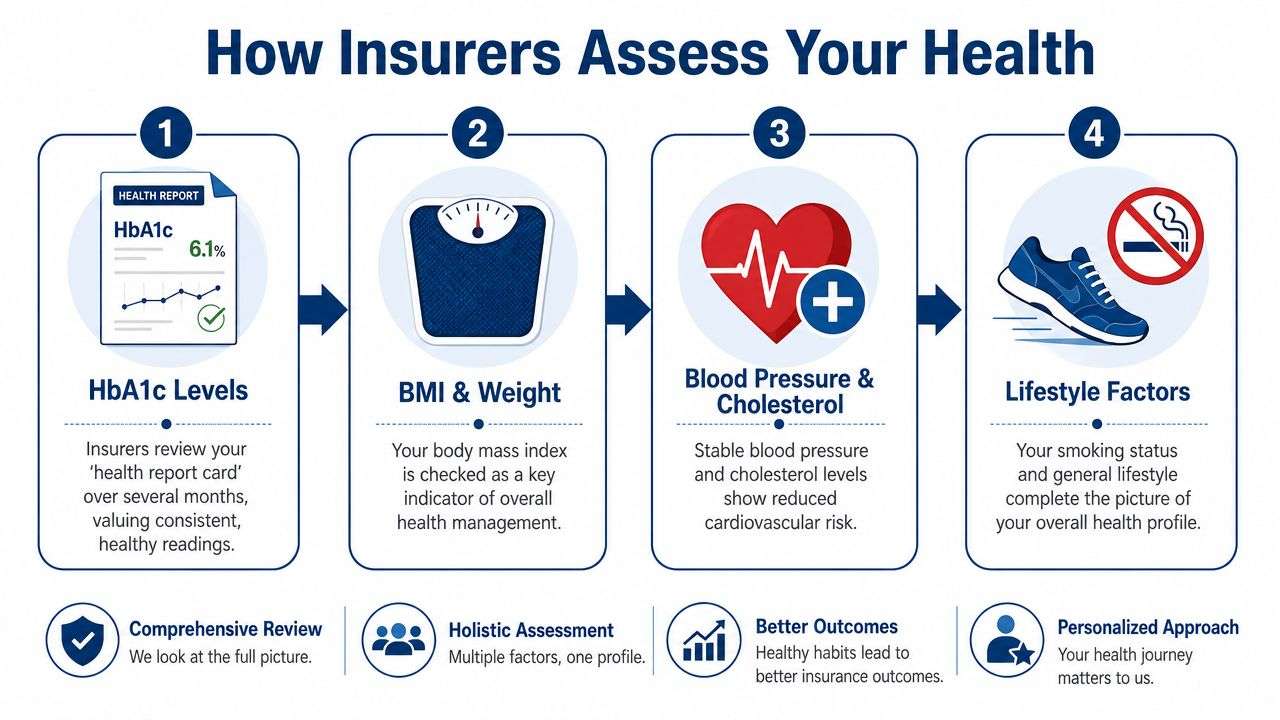
While your HbA1c level is vital, this visual makes it clear that it is just one piece of a larger puzzle. Your weight, blood pressure, and lifestyle choices all play a part. Taking proactive steps to manage all these areas will give you the best possible chance of securing cover at a competitive price.
Choosing the Right Life Insurance Policy for Your Needs
Now that you have a better idea of how insurers look at applications, let’s turn to the policies themselves. Finding the right Type 2 Diabetes Life Insurance is all about matching the cover to what you want to achieve—whether that is clearing your mortgage, giving your family a financial cushion, or leaving something behind.
Each type of policy is built for a different job. Getting to grips with how they work is the best way to make a confident choice that protects what matters most. Let’s break down the main options.
Level Term Life Insurance
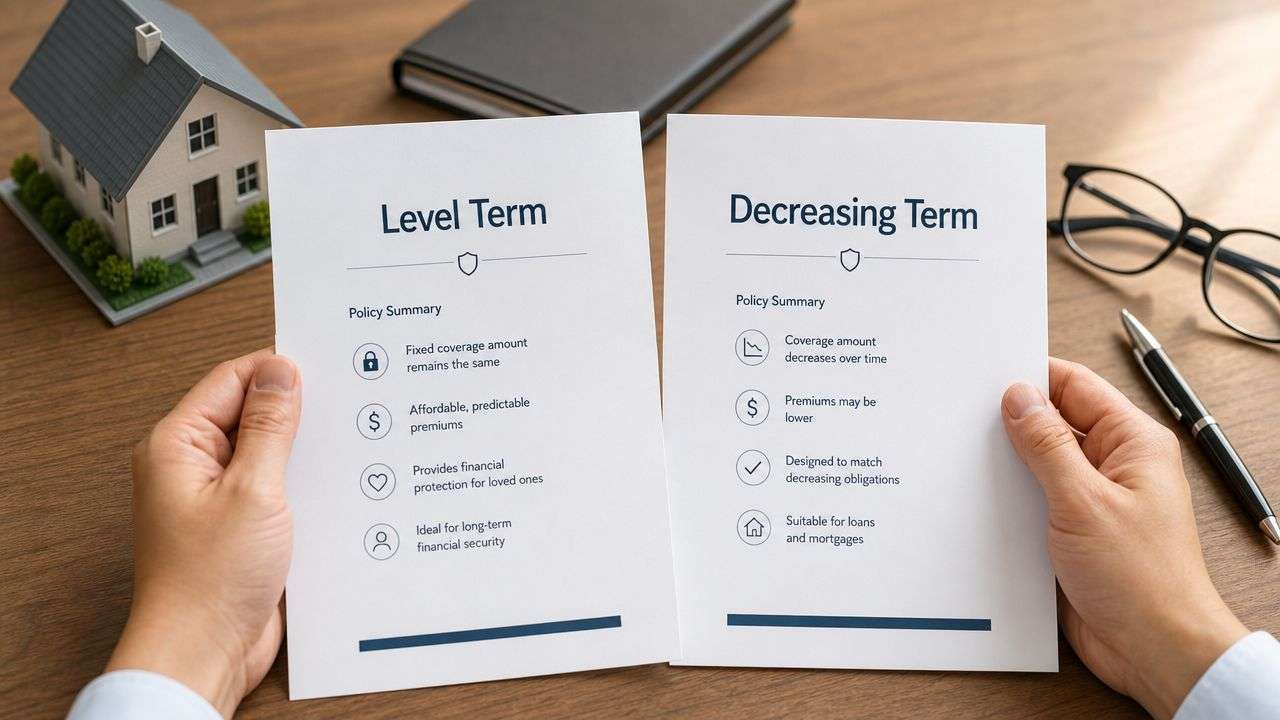
Level Term insurance is about as straightforward as it gets. The payout amount (the sum assured) and your monthly premiums are fixed for the entire length of the policy. If you pass away during this term, your loved ones receive a set, tax-free lump sum.
Best for: Covering interest-only mortgages, leaving a lump sum for your family to handle living costs, or paying off other large debts.
With Type 2 Diabetes: Because your premium is locked in from day one, it will not go up even if your health circumstances change down the line. That offers real peace of mind.
This policy acts as a predictable safety net, guaranteeing your family gets the exact amount you planned for, no matter when a claim is made within the term.
Decreasing Term Life Insurance
Decreasing Term insurance, often called mortgage protection, is designed to run alongside a repayment mortgage. The total payout reduces over time, mirroring your shrinking mortgage balance. As the potential payout decreases, the premiums are usually lower than for Level Term cover.
For many homeowners, this is one of the most cost-effective ways to make sure their single biggest debt is taken care of.
Best for: Protecting a repayment mortgage and ensuring your family can stay in their home without worrying about mortgage payments.
With Type 2 Diabetes: This is often the most affordable route to securing your mortgage. The insurer’s decreasing risk usually means lower costs for you.
Whole of Life Insurance
Unlike term policies, which have an end date, Whole of Life insurance promises to pay out whenever you pass away, provided you have kept paying your premiums. This makes it a great option for purposes such as inheritance tax planning or covering funeral expenses.
Because the payout is guaranteed, it is also the most expensive type of cover. For someone with type 2 diabetes, the premiums can be quite a bit higher than for term insurance, but in return, you get lifelong protection. Life insurance is often taken alongside other protection, and you can learn more about critical illness cover in our guide.
How a Specialist Broker Unlocks Better Terms
Applying directly to an insurer for Type 2 Diabetes Life Insurance is a bit like walking into a single shop and just accepting the first price you are given. You get one quote and a simple yes or no, with no room to explore other options. Working with a specialist broker, on the other hand, is like having a personal shopper who knows the entire market, including every store’s hidden sales and unique specialities, to find you the best possible value.
A good broker works for you, not the insurance company. Our job is to be your advocate, navigating the complexities of the market to find a policy that genuinely fits your health profile and financial needs.
The Power of Whole-of-Market Access
One of the biggest advantages of using a broker is our whole-of-market access. We are not tied to any single insurer. Instead, we have established relationships with dozens of companies, from the big high-street names to smaller specialist providers you would likely never find on your own.
This is absolutely crucial because every insurer has its own ‘appetite’ for risk. One company might apply a heavy premium to a certain HbA1c level, while another views the very same reading far more favourably. We have the inside knowledge on which insurers are more understanding of type 2 diabetes and who is most likely to offer you the best terms.
Strategically Positioning Your Application
Our expertise is not just about finding the lowest price; it is about strategically positioning your application for the best possible outcome. This involves a few key steps:
Pre-assessment: Before you commit to a full application, we can often get an informal indication from insurers. This simple step protects your record from the negative mark of a potential decline.
Framing your health: We help you present your medical information clearly and in the most positive light, making sure to emphasise the stability and good management of your condition.
Managing the process: We handle the paperwork, chase up the GP reports, and deal with insurer queries. It saves you an enormous amount of time and stress.
This hands-on approach is especially important for our clients in areas like Colchester, where getting the right protection for a family home is a huge priority. Instead of facing a frustrating automated decline online, you have a human expert fighting in your corner.
“A broker’s true value lies in knowing which door to knock on. For an applicant with type 2 diabetes, applying to the wrong insurer can lead to a decline, while applying to the right one can result in standard rates. That knowledge is everything.”
By managing the entire process, we shield you from the industry’s complexities and dramatically increase your chances of securing competitive and affordable Type 2 Diabetes Life Insurance. We turn what can feel like a gamble into a carefully planned strategy designed for success.
Practical Steps to Improve Your Insurability
Now that you understand the ‘why’, let’s move on to the ‘how’. Taking control of your application starts long before you fill out any forms. With a bit of preparation, you can present yourself in the best possible light to an insurer and significantly improve your chances of getting affordable Type 2 Diabetes Life Insurance.
Insurers always look favourably on proactive and organised applicants. Think of it as building a case for yourself—the more evidence you can provide to show you are managing your health responsibly, the better the outcome will be.
Organise Your Medical Information
The first step is to get your paperwork in order. Walking into an application with all your details ready not only speeds things up but also demonstrates that you are on top of your health.
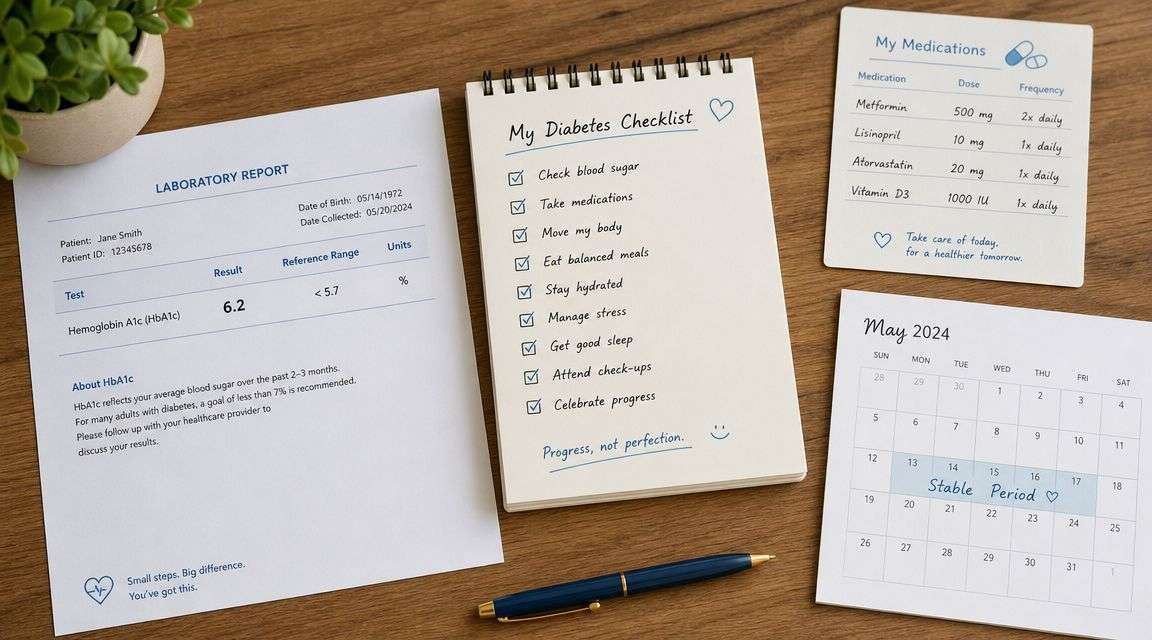
Before you apply, pull together this pre-application checklist:
Recent HbA1c Readings: Insurers will want to see a trend. Having your last two or three readings ready is ideal.
Full Medication List: Note down every medication you take, including dosages, not just those for diabetes. Being aware of all your treatment options is a key part of good management. FindMyScript offers diabetes management insights to help you learn more.
Other Key Metrics: Note your latest blood pressure and cholesterol levels.
GP and Consultant Details: Have the name and address of your GP practice, as well as any specialists, handy.
Demonstrate Stable Management
When it comes to underwriting, stability is king. If you have just been diagnosed, had a recent change in your medication, or your HbA1c levels have been up and down, it is often best to wait.
Timing is everything. Applying after 6 to 12 months of consistent readings and stable management provides the clear track record insurers want to see. This simple patience can make a huge difference to the terms you are offered. Rushing an application during a period of change can lead to higher premiums or even a postponed decision.
Focus on Lifestyle Improvements
Never underestimate the power of small, positive lifestyle changes. If you smoke, quitting is the single best thing you can do for your insurability. Insurers offer non-smoker rates to anyone who has been nicotine-free for at least 12 months, which can slash premiums by as much as 50%.
Likewise, maintaining a healthy BMI through a balanced diet and regular exercise sends a strong signal. It tells an insurer that you are actively minimising future health risks, which makes you a far more attractive applicant. It is all about putting yourself in the driver’s seat.
Frequently Asked Questions
When you are managing type 2 diabetes, the world of life insurance can seem full of questions. We often hear the same worries from our clients in Essex, so let’s tackle some of the most common ones head-on.
Will I Automatically Be Declined?
Absolutely not. This is a common fear, but a type 2 diabetes diagnosis does not mean a closed door with insurers. What they really care about is how well your condition is managed.
If you have a good track record of stable HbA1c levels and your overall health is otherwise good, you can often secure cover at standard or near-standard rates.
Do I Have to Take a Medical Exam?
Not always. For many people, an insurer can make a decision simply by reviewing their application and getting a report from their GP.
A medical exam is more likely if your diagnosis is very recent, your control is not stable, or if you have other significant health issues. A specialist broker can be invaluable here, guiding you towards insurers known for their less intensive underwriting.
Is It Better to Wait Before Applying?
Sometimes, yes. If you have just been diagnosed or your treatment has recently changed, it is often a smart move to wait 6-12 months.
This delay allows you to build up a positive history of stable management and good HbA1c readings. Applying with that solid track record can make a huge difference and lead to much lower premiums.
To get a better idea of how much cover you might need before you apply, you can learn more about calculating your life insurance needs in our detailed guide.
What Happens if I Do Not Disclose My Diabetes?
This is something you must never do. Failing to disclose a known medical condition like diabetes is a serious issue that can completely void your policy.
If you were to pass away, the insurer would almost certainly discover the non-disclosure during their checks and could legally refuse to pay the claim. This would leave your family without the financial safety net you worked so hard to put in place. Honesty is always the best policy.
Ready to find out more and get a clear, no-obligation quote? The team at EHF Mortgages is here to help you navigate the process with confidence. Click below to start the conversation.





