
💡 Top tip: the credit score you see on an app usually isn’t the thing that decides whether you get through a bad credit loan pre-approval. Lenders look at the details in your credit file, your evidence of income, and whether the repayments are affordable. I’ll come back to exactly what they check later.
That catches a lot of people out in Chelmsford, Braintree, Colchester and across Essex. They assume a promising online result means they’re safe to proceed, but the case gets re-priced or declined when the lender starts proper underwriting.
That’s why the key question isn’t just whether you can get pre-approval for a bad-credit loan. It’s whether that signal is worth anything. In the UK, a preliminary indication is not a guarantee, as lenders can reassess income, commitments, and credit risk at full application, especially in adverse credit cases, where manual assessment and policy overlays often change the result, as noted in NerdWallet’s bad credit loans guide.
If your credit problems followed bankruptcy, it also helps to understand the wider rebuilding process before you apply. A practical background read is this guide on how to get credit after bankruptcy, as it explains the issues borrowers often need to address before lenders take them seriously.
Securing a Loan Pre-Approval with Bad Credit
Most borrowers start in the wrong place. They start with the headline score, or they start firing applications at lenders and comparison sites. That usually creates more noise, more searches, and more confusion.
A stronger approach is to treat pre-approval as a filter, not a finish line. With bad credit, the point is to find out whether a lender is likely to accept your profile once they’ve seen the full facts, not whether a website can give you an encouraging message.
Why does rejection fear cause bad decisions?
People who’ve had defaults, missed payments or a CCJ often become overly cautious or overly reactive. Some avoid applying altogether. Others do the opposite and make too many enquiries in a short space of time.
Both approaches can hurt you. The first leaves you stuck. The second can make a thin or impaired file look worse.
Practical rule: bad credit cases improve when the application is organised before it’s submitted, not when problems are explained afterwards.
What actually helps at the start
The first job is to get the whole picture together. In practice, that means:
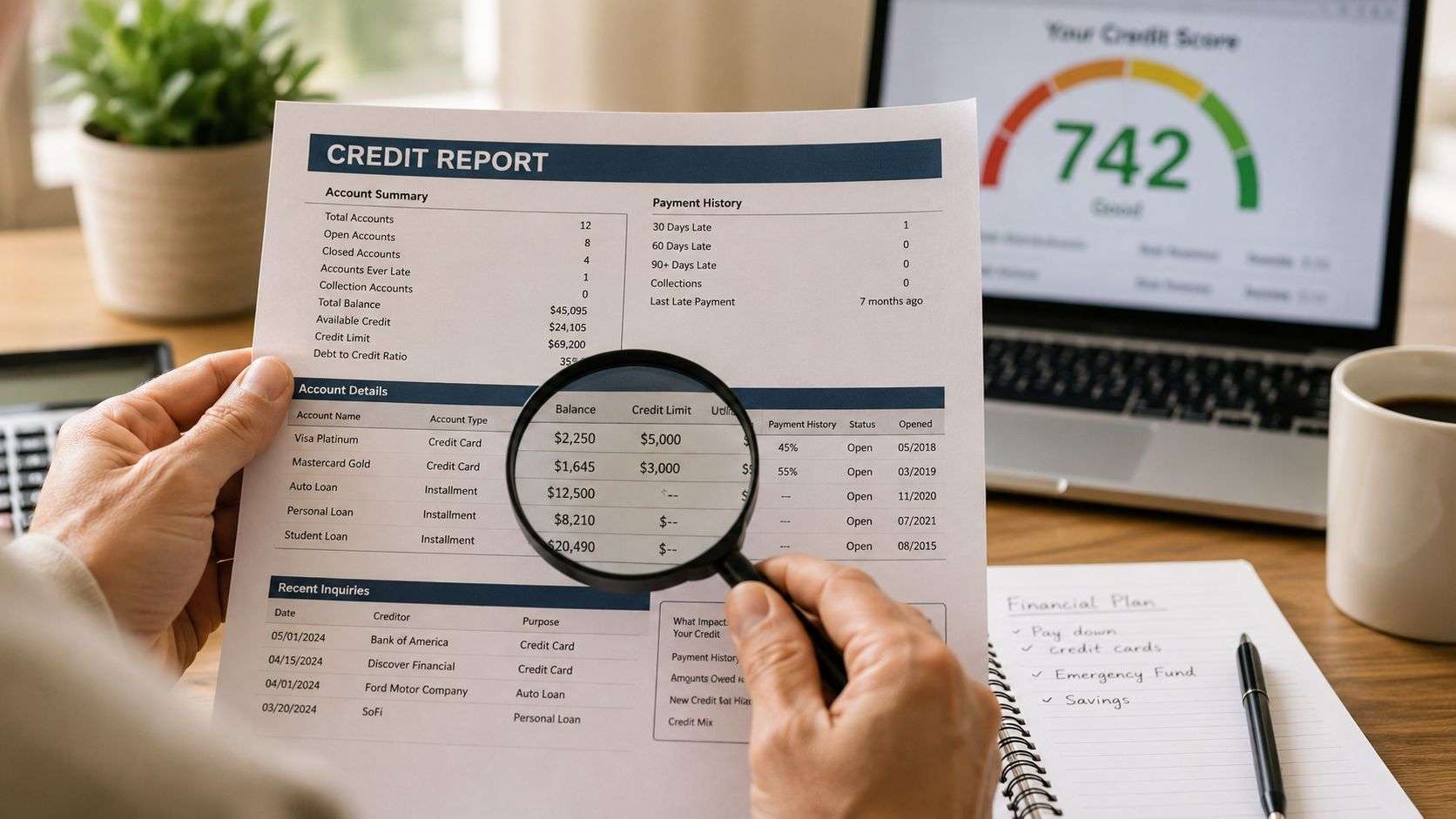
Your credit file: not just the score, but the entries, dates, balances and status markers
Income evidence: payslips, accounts if self-employed, and proof of regular income
Bank statements: so spending patterns and existing commitments are visible
Background notes: brief explanations for older credit issues, especially where circumstances have changed
That sounds basic, but it’s where solid cases are built. A lender can work with adverse credit more often than borrowers think. What they can’t work with is missing information, inconsistent paperwork, or a loan request that doesn’t fit the client’s actual disposable income.
For anyone aiming to buy or remortgage in Essex, the strongest mindset is simple. Don’t chase a flattering pre-approval. Chase one that can survive underwriting.
Pre-Approval vs Agreement in Principle: The Key Difference
Many borrowers use these terms interchangeably. They don’t.
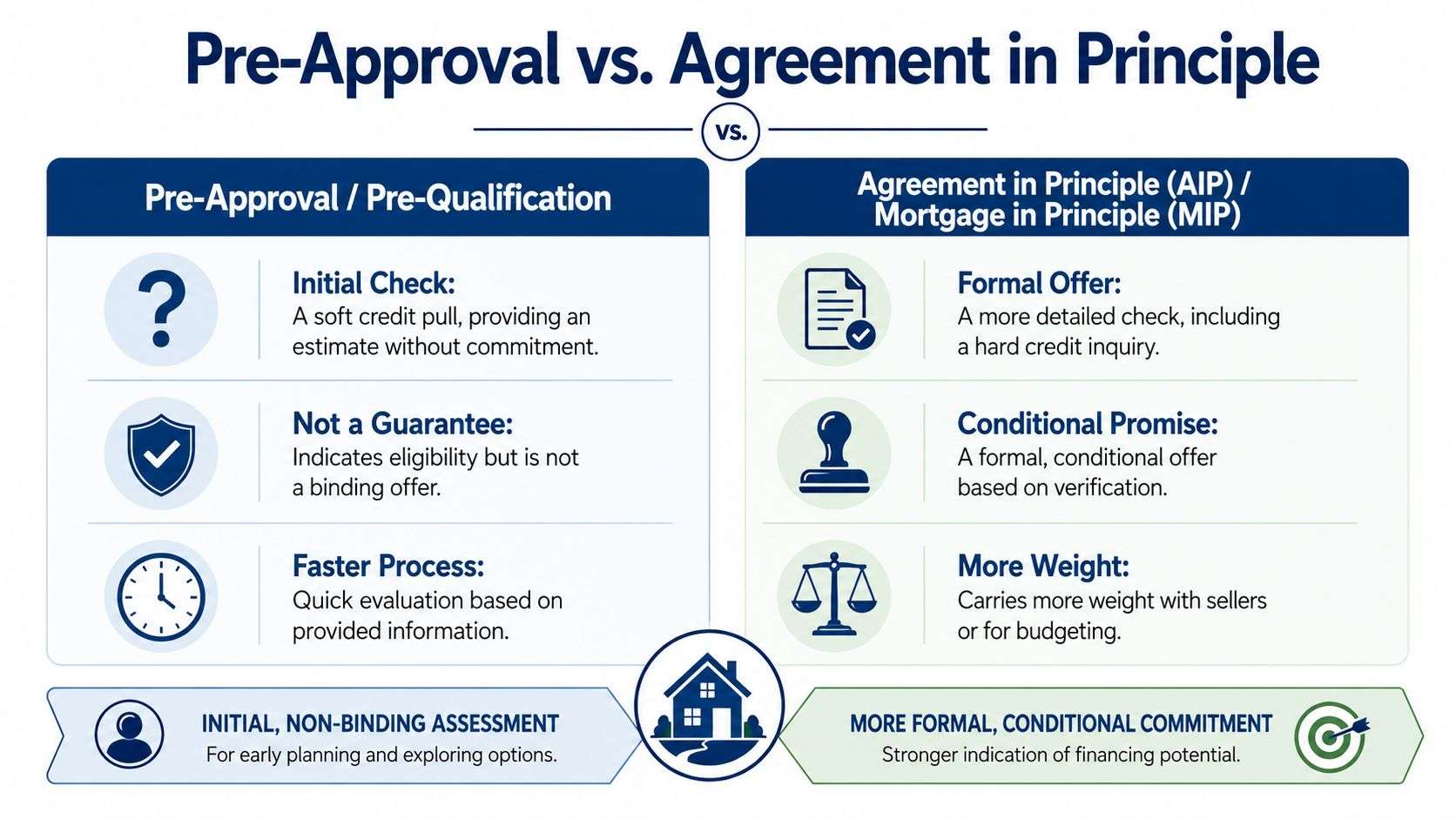
A pre-approval is often just an early indication. It’s useful, but only up to a point. An Agreement in Principle, also called an AIP or Decision in Principle, carries more weight because it usually sits on a firmer assessment.
The simple way to think about it
Pre-approval is like being told the shop probably has what you need.
An AIP is closer to the cashier, checking stock, confirming the price, and setting it aside while you complete the purchase. It still isn’t the final handover, but it’s much more meaningful.
In the UK, the usual process is two-stage. A lender or broker often starts with a soft search to assess eligibility, then requests full underwriting evidence, such as payslips, bank statements, proof of address, and credit commitments, before any binding offer is made. The soft-search stage is there to reduce unnecessary hard searches, and the best workflow is to check your file, correct errors, run an eligibility check, then proceed only when affordability is clear, according to Acorn Finance’s guide to pre-qualifying for a personal loan.
Why do bad-credit borrowers need a stronger signal
If your profile is straightforward, a loose pre-approval might be enough to get moving. If you’ve got adverse credit, it often isn’t.
Specialist lenders may accept cases that a high street lender would reject, but they also look more closely. They may ask when the issue happened, how large it was, whether it has been satisfied, and what your current conduct looks like. That means a vague online pass isn’t worth much unless it can be backed up by paperwork.
A proper AIP is a better target because it tests whether the lender is open to your case.
For a fuller breakdown of what lenders mean by this stage, this guide on what a mortgage agreement in principle is is worth reading.
Here’s the short version.
| Check type | How it’s used | Credit file impact | Reliability |
|---|---|---|---|
| Pre approval | Early eligibility signal | Usually lighter touch | Useful, but limited |
| Soft-search review | Initial screening | Designed to avoid unnecessary hard searches | Good for filtering |
| AIP or DIP | Conditional lending indication | More robust assessment | Far stronger |
| Full application | Formal underwriting | Full evidence reviewed | What actually decides it |
A quick explainer is below if you prefer video.
A bad credit loan pre approval is helpful only if it points towards a lender whose underwriting policy fits your case.
What Lenders Really Scrutinise with Bad Credit
The biggest mistake borrowers make is assuming lenders see one label. Bad credit. Accepted or declined.
That isn’t how specialist underwriting works. Lenders assess the shape of the case. In the UK there is no single legal definition of a bad credit borrower, and underwriting relies on core indicators such as credit history, affordability and debt-to-income, with the FCA framework focused on responsible lending rather than a fixed score threshold. That’s why outcomes vary sharply and why pre-approval checks are used to test those points before a full application, as explained in The Mortgage Reports guide on bad credit mortgage lenders.
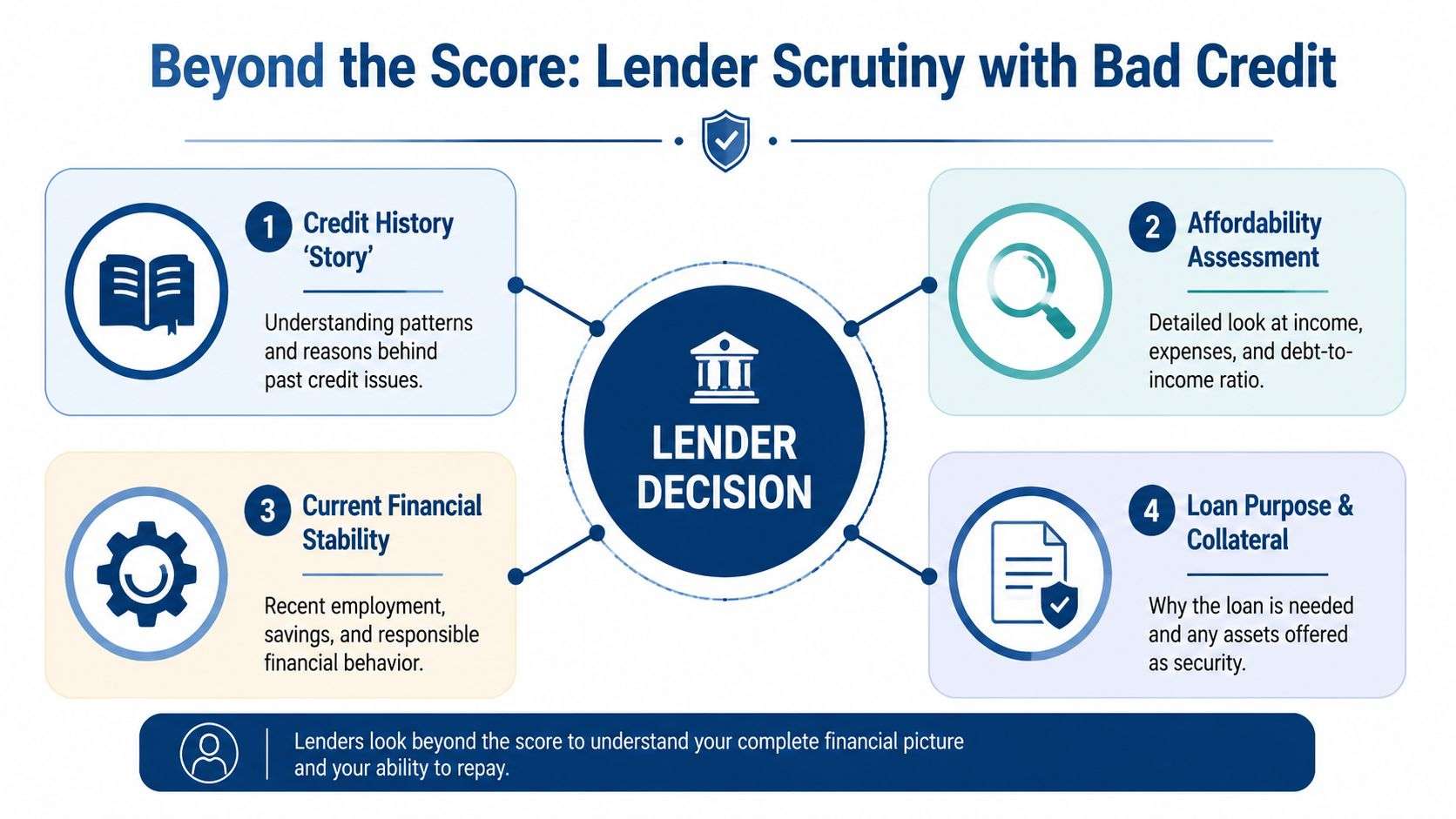
Credit history tells a story
The score matters far less than the entries behind it.
A lender wants to know what happened, when it happened, and whether the pattern has stopped. An older CCJ for a smaller amount is viewed very differently from a recent default with ongoing arrears. The date matters. The amount matters. The reason matters.
Where clients get caught out is that they often focus on the score and overlook the actual content of the report. A lender won’t.
Affordability is the core test
You can’t argue your way around affordability. If the monthly budget doesn’t stack up, the case won’t get stronger, even though the credit issue was explainable.
Lenders look at proof of income, regular outgoings, existing commitments, and how the new payment would affect the overall budget. They also want that picture to be stable, not just technically workable on paper.
Broker’s view: if the figures only work when every month goes perfectly, the case is weak.
Debt-to-income shows pressure
Many applications falter at this point. A borrower might be up to date on everything, but if too much income is already committed to unsecured debt, the lender sees pressure before the new loan is even added.
That’s why reducing unsecured balances can improve the quality of a bad-credit loan pre-approval more than chasing a better-looking score.
Deposit and loan-to-value affect your options
For mortgages and secured lending, deposit size matters because it changes the lender’s risk.
A larger deposit or more equity on a remortgage can open doors that remain shut at higher loan-to-value ratios. It won’t erase bad credit, but it can make the case easier to place.
What works and what usually doesn’t
What tends to help:
Stable income: regular, provable earnings are always easier to place
Clear explanations: brief facts about past credit problems, without drama
Controlled credit activity: no flurry of new applications before submission
Realistic borrowing: a loan amount that fits disposable income
What usually undermines a case:
Guessing the figures: giving rough outgoings that don’t match statements
Ignoring old credit entries: lenders won’t overlook them just because you forgot them
Applying too widely: multiple failed attempts can weaken the file further
Hiding commitments: undisclosed debt nearly always causes trouble later

How to Prepare Your Application for Success
Preparation wins bad credit cases. Not optimism. Not comparison sites. Not hoping an underwriter won’t notice something.
The strongest files are the ones where all the evidence is ready before the lender asks for it. That lets someone assess the case properly from the start, rather than trying to patch gaps later.
Get the documents together first
Below is a practical checklist.
| Document Type | Description | Why It’s Needed | Pro Tip |
|---|---|---|---|
| Proof of identity | Passport or driving licence | Confirms who you are | Make sure it’s in date |
| Proof of address | Recent utility bill or council tax document | Verifies residency | Use matching address details across documents |
| Income evidence | Payslips, pension statements, or self-employed accounts | Shows what you earn | Don’t submit partial records |
| Bank statements | Recent statements for main accounts | Lets lender review spending and commitments | Avoid unexplained transfers if possible |
| Credit file | Full report showing accounts, balances and adverse entries | Reveals what the lender is likely to see | Read entries, not just the score |
The credit file is the document that surprises many individuals. They can get it quite easily, but they often don’t understand what they’re looking at. They focus on the score and miss the defaults, status markers, settled dates, linked addresses, and credit activity.
Fix the obvious problems before applying
You don’t need to perform miracles. You do need to remove avoidable weaknesses.
Try these first:
Correct errors: if an account is marked wrongly, challenge it before applying
Reduce unsecured balances: lower outstanding commitments where possible
Stop new applications: don’t add fresh credit activity unless it’s necessary
Match the loan to your budget: a smaller request is often a better case
Check address consistency: make sure documents and accounts line up properly
Prepare explanations: keep them short, factual, and tied to dates
A useful next step if you want an early sense of whether your profile is likely to fit is a bad credit loan eligibility checker. Used properly, that sort of tool helps you filter options before a full application goes in.
Present the case as if an underwriter will read it
Think in terms of risk, not fairness.
An underwriter wants to see a borrower who has had problems, understands them, and is now in control. That means your documents should support the same message. Stable income. Managed spending. No fresh disorder. A borrowing request that makes sense.
Useful mindset: don’t ask, “Can I get away with this?” Ask, “Does this file look coherent from start to finish?”
If you’re self-employed, be even more careful. Make sure the income you state is supported by your documents. If there are irregular drawings or seasonal swings, put context around them early.
Finding Specialist Lenders and Finance Options
If you’ve got adverse credit, the high street often isn’t the best place to start. That doesn’t mean the case is impossible. It means the case has to be matched properly.
Mainstream lenders usually rely more heavily on automated systems and tighter policy lanes. Specialist lenders are more willing to assess the details, especially where the issue is historical, explained, or offset by stronger affordability and deposits.
Why specialist lenders matter
This market isn’t one-size-fits-all. Some lenders are comfortable with older credit issues. Some care more about how recent the issue was. Others focus heavily on current conduct, income stability, or loan-to-value ratio.
In practice, brokers dealing with adverse credit regularly look at names such as Precise, Pepper Money, Loughborough Building Society, Mansfield Building Society, Vida Homeloans, and Foundation. There are also many other specialist lenders and building societies that will consider unusual situations, but the fit depends on the exact credit profile, the dates of the blips, the amounts involved, and the available deposit.
What usually goes wrong with direct applications
Borrowers often assume that more applications create more chances. In adverse credit lending, that can have the opposite effect.
UK lending conditions have tightened around affordability, with debt-servicing pressure remaining high. For borrowers with missed payments or defaults, common failure points include debt-to-income strain, inconsistent evidence of income, and recent credit activity. Practical guidance is to reduce unsecured balances, limit new applications, and ensure the requested amount fits within disposable income, as outlined in Bankrate’s guide to boosting loan approval chances.
That lines up with what works in specialist mortgage and loan cases. One failed application can be manageable. A cluster of them creates a pattern nobody wants to explain.
Broker value in plain English
A good broker doesn’t perform magic. They do three useful things well:
They filter lenders: so your case only goes where it has a realistic fit
They package the story: so the underwriter sees the issue in context
They protect the file: by avoiding unnecessary applications
If you want a sense of the type of lender that handles these cases, this page on adverse credit mortgage lenders gives a useful overview.
There are also situations where the best answer isn’t a standard mortgage. Depending on the objective, a second-charge loan or bridging finance may be more suitable. That doesn’t make them better by default. It means the right product depends on what you’re trying to do, how fast you need to do it, and whether the exit route is clear.
Borrowers with bad credit usually don’t need more lender options. They need fewer, better-targeted ones.
Your Timeline and Next Steps to a Successful Offer
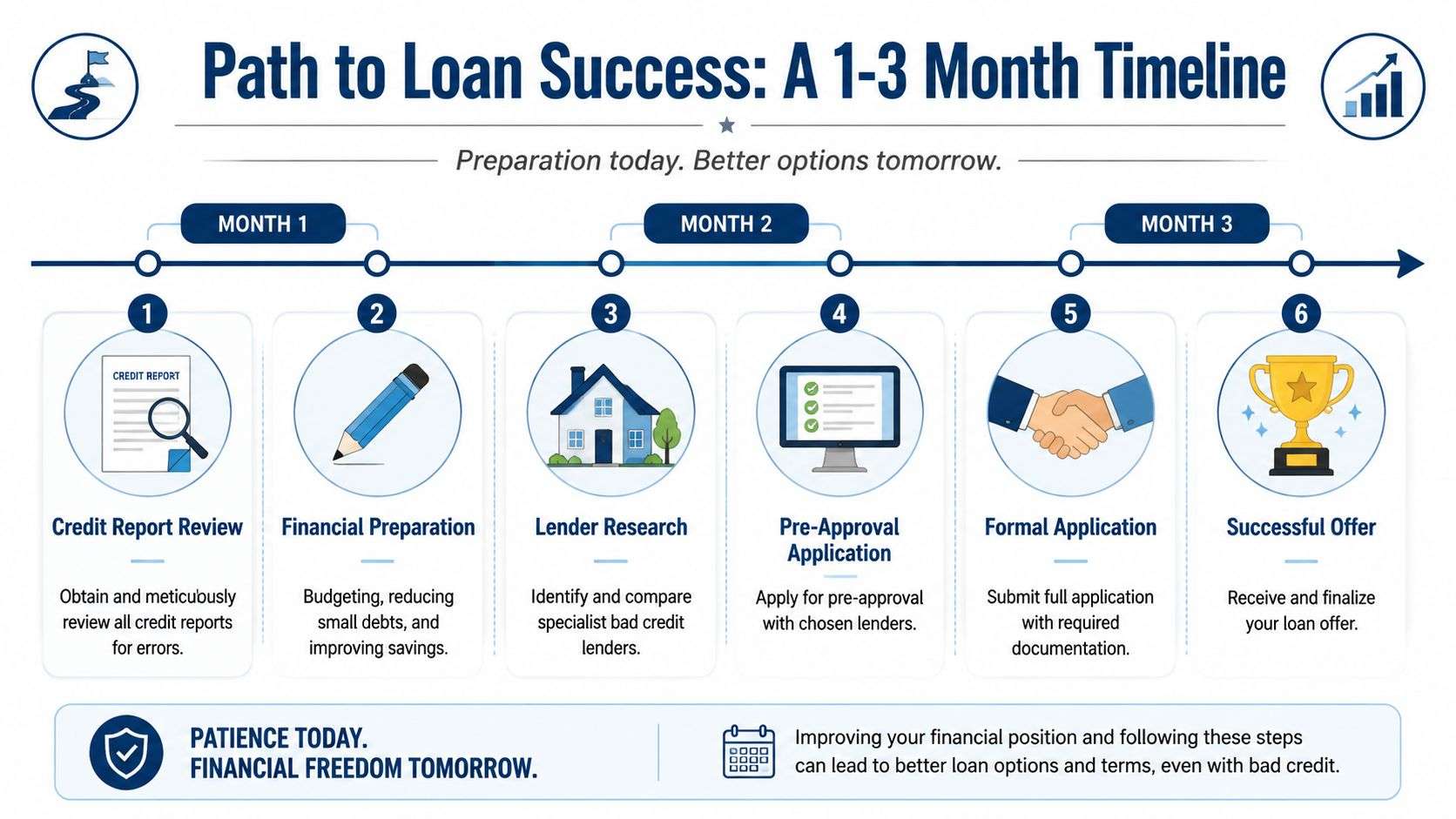
Bad credit cases rarely suit a rushed approach. The borrowers who get the best outcomes are usually the ones who prepare first and then apply once the case is clean enough to withstand scrutiny.
For many people, that means spending time pulling together documents, properly checking the credit file, correcting errors, and reducing obvious pressure points before a full application goes anywhere. Once the paperwork is organised, an AIP can often be pursued with far more confidence than a quick online pre-approval.
“The credit file is typically the most surprising document for clients. They can obtain it easily, but they don’t understand the contents. When you point out the issues, most don’t really understand what the data is showing; they simply look at the Credit Score figure, which lenders don’t actually use.”
The clearest next steps
Get your paperwork in order
Download your credit reports and gather your identification, income evidence and bank statements.Review and rectify
Check for errors, settle what can reasonably be settled, and stop unnecessary credit activity.Speak to a specialist
Don’t scatter applications and hope for the best. Get the case assessed properly before it reaches a lender.
If you’re buying, moving, or remortgaging in Chelmsford, Colchester, Braintree or elsewhere in Essex, the key is to treat bad credit loan pre-approval as part of a process, not the result itself. The result you want is a lender decision that remains in effect when the underwriter opens the file.
If you’re ready to move from guesswork to a properly assessed case, speak to EHF Mortgages. They help borrowers across Chelmsford, Braintree, Colchester and wider Essex understand what’s realistic, what needs fixing first, and which route gives the strongest chance of a successful outcome.





