
💡 Top Tip: Aligning your policy’s ‘deferment period’ with your employer’s sick pay is one of the smartest ways to lower your premiums without creating an income gap. We’ll explain exactly how this works later in this guide.
This guide gets straight to the point: protecting your financial stability. We’re not just talking about another insurance policy; this is about a fundamental tool designed to replace your salary if an illness or injury stops you from working.
Table of Contents
Think of income protection as a financial ‘spare tyre’ for your career. It’s a long-term insurance policy that kicks in if you’re medically signed off work, providing a regular, tax-free income so you can keep paying your most important bills.
With ongoing pressure on household budgets, this kind of protection is more vital than ever. For homeowners in areas like Chelmsford and Braintree, where the mortgage is often the biggest monthly outgoing, an unexpected loss of salary could be devastating.

Our goal is to give you practical, jargon-free advice to help you find the best income protection UK insurance providers have to offer. We’ll break down everything you need to know to secure your financial future.
“Always aim for an ‘Own Occupation’ policy. It means you can claim if you’re too unwell to do your specific job, not just any job. This is the gold standard for protection.”
The right policy gives you peace of mind, letting you focus on recovery without the added stress of financial worries. Whether you’re employed, self-employed, or a landlord in Colchester, understanding your options is the first step towards robust financial health.
While this guide focuses on income protection, it’s worth noting that contractors should also consider their broader needs, such as public liability and professional indemnity, as part of their overall planning. You can find out more about comprehensive contractor insurance in this helpful resource.
Trying to navigate the market alone can be a real challenge. With so many providers and policy types, it’s easy to feel overwhelmed.
That’s where expert advice becomes invaluable. A specialist can help you compare policies, understand the small print, and find a plan that perfectly matches your budget and circumstances.
What Is Income Protection and Why Does It Matter?
Let’s break down what income protection insurance actually is. Put simply, its job is to give you a regular, tax-free income if an illness or injury medically signs you off work and stops you from earning your usual salary. Think of it as a financial safety net for your most important asset: your ability to earn a living.
Unlike other policies, its purpose is very specific and incredibly valuable.

Income Protection vs Other Policies
It’s easy to confuse income protection with other types of cover, but they all serve very different roles. Knowing the difference is crucial when you’re looking for the best income protection insurance UK providers have to offer.
| Feature | Income Protection | Critical Illness Cover |
|---|---|---|
| Payout Type | Regular monthly income | One-off lump sum |
| Covered Events | Most illnesses/injuries | Specific serious conditions |
| Main Purpose | Replaces lost earnings | Covers major life changes |
| Flexibility | Covers long-term absence | One payment per diagnosis |
As the table shows, critical illness cover provides a single payment for a defined serious condition. Income protection, on the other hand, is built to manage the ongoing financial fallout from a much wider range of health issues. For a closer look, you can read our helpful guide on what income protection insurance is.
The Reality of Statutory Sick Pay
For many of us in employment, the first line of defence against illness is Statutory Sick Pay (SSP). But relying on SSP alone is a very risky strategy. At just £116.75 per week, it’s rarely enough to cover essential bills like your mortgage, utilities, and the weekly food shop.
This is where you really see the value of a proper income protection policy. It’s designed to bridge the huge gap between what SSP provides and what you actually need to live on, ensuring a health problem doesn’t turn into a full-blown financial crisis.
“For a self-employed tradesperson in Braintree, a back injury isn’t just a health problem—it’s an immediate threat to their family’s financial stability. Income protection is the tool that keeps the mortgage paid and the lights on.”
Picture this: you’re a self-employed homeowner in Essex, juggling a mortgage and family expenses, when a sudden back injury takes you out of work for months. This isn’t a far-fetched scenario; it’s the stark reality that led a record 247,000 UK residents to buy income protection in 2023.
This huge increase shows a growing awareness of financial vulnerability, especially as common issues like back pain and other musculoskeletal problems now account for 34% of all claims.
It’s exactly why so many people are now choosing to protect their income. It provides genuine peace of mind, knowing you have a reliable backup plan ready for when the unexpected happens.
With a strong policy in place, you can focus on what’s most important—your recovery—without the constant worry of falling behind on your financial commitments.
Understanding the Key Policy Features
Finding the best income protection insurance in the UK means getting to grips with the small print. Understanding these key policy features is vital, as they define exactly how and when your cover kicks in if you ever need to claim. This isn’t just about ticking boxes; it’s about making sure your financial safety net is built to last.
Let’s cut through the jargon. When you compare income protection policies, you’ll come across several core components. Each one plays a huge role in shaping how your cover works for you.
The Deferment Period
Think of the deferment period as your policy’s waiting time. It’s the agreed amount of time you need to be off work before the insurer starts making payments. This can be anything from 4 weeks up to 52 weeks.
The smart move here, especially if you get good sick pay from your employer, is to line up your deferment period with when your work pay stops. For example, if your Colchester-based company pays you for six months, choosing a six-month deferment period makes perfect sense. Your policy will then kick in right on cue, avoiding any income gap while keeping your premiums as low as possible.
Level of Cover and Payment Period
The level of cover is simply the amount of money you’ll receive each month if your claim is successful. It’s usually set as a percentage of your gross annual income, typically between 50% and 70%, and the income you receive from the policy is tax-free.
Meanwhile, the payment period determines how long the policy will continue to pay out. This could be a fixed-term (like two or five years), or, for the most robust policies, it could cover you all the way until you’re ready to return to work or reach retirement age.
The Crucial Definition of Incapacity
This is, without a doubt, the single most important part of any income protection policy. The ‘definition of incapacity’ sets the rules for what it means to be too unwell to do your job. There are three main types, and the difference between them is massive.
And these policies really do pay out. In 2024, UK insurers paid a staggering £1.33 billion in protection claims, with income protection accounting for a large share of that. These numbers show just how vital this cover is for homeowners and property investors across Essex. You can read Aviva’s full claims report for a closer look at the data.
Let’s break down those definitions.
| Definition Type | What It Means | Suitability |
|---|---|---|
| Own Occupation | You can claim if you are unable to do your own specific job. | The most comprehensive and highly recommended option. |
| Suited Occupation | You can claim only if you cannot do your own job or a similar one based on your skills. | Less protective and can be ambiguous. |
| Any Occupation | You can only claim if you are unable to do any kind of work at all. | The least protective and should generally be avoided. |
Opting for an ‘Own Occupation’ policy gives you the strongest guarantee. It ensures that if a surgeon can no longer perform surgery or a builder can’t work on-site, their policy will support them – even if they could technically do a different, lower-paid job.
Getting these features right is the first step, but it’s also important not to confuse income protection with other policies, like those designed purely to cover a mortgage. You might be interested in learning more about mortgage payment protection insurance in our detailed article.
How Much Does Income Protection Cost?
So, what’s the bottom line? How much does income protection actually cost? It’s the first question on everyone’s mind, and the good news is that this vital financial safety net is often far more affordable than people assume.
One of the biggest myths holding people back is the perceived high cost. The reality is that there’s no one-size-fits-all price. Instead, your premium is carefully calculated based on your personal circumstances and the exact cover you choose.
The Main Factors That Influence Your Premiums
Insurers look at a handful of key factors to work out the price of your monthly premium. Once you understand these, you can see exactly how a policy can be tweaked to fit your budget.
Your Age: The younger and healthier you are when you take out a policy, the lower your premiums will be.
Your Health and Lifestyle: Insurers will ask about your medical history and whether you smoke. Non-smokers with a clean bill of health naturally pay significantly less.
Your Occupation: A person in a low-risk office job will always pay less than a manual labourer whose role carries a higher risk of injury.
The Level of Cover: The more income you want to protect each month, the higher the premium.
The Deferment Period: A longer waiting period before payments kick in (for example, 26 weeks vs. 4 weeks) will reduce your monthly cost.
This diagram shows how the main policy features work together to shape the cost and quality of your cover.
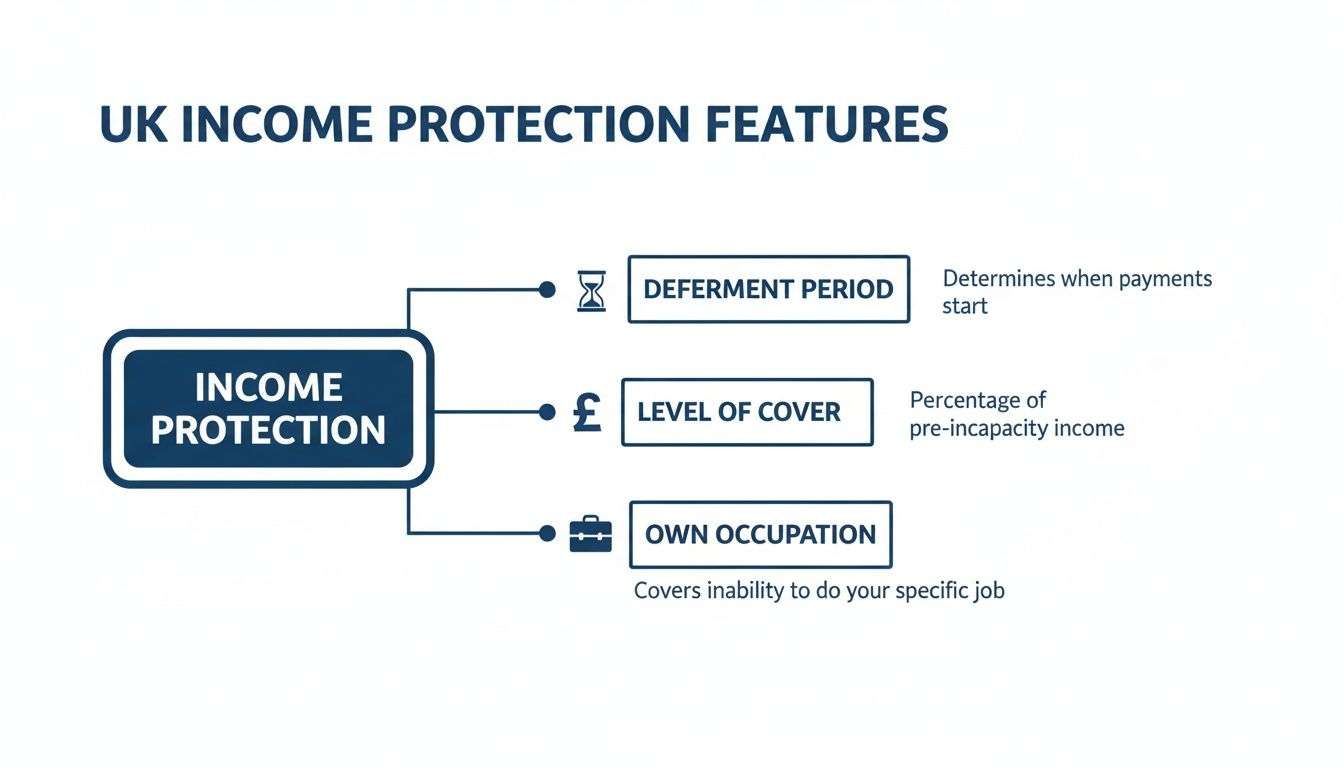
As you can see, things like the deferment period and the definition of your occupation are the main levers you can pull to find the perfect balance between comprehensive protection and a price that works for you.
Debunking Affordability Myths
It’s a shame that misconceptions about cost stop so many people from getting the cover they need. Recent data shows it can be much cheaper than you’d think, with policies for a healthy 35-year-old starting from just £35.81 a month.
That figure is a huge 63% lower than the average person’s estimate of the cost (£58.43), according to a Drewberry Insurance survey. For our clients, from remortgagers in Braintree to landlords in Colchester, this really highlights how easily cover can be built into your financial plan.
To give you a clearer picture of how these factors play out in the real world, take a look at the table below.
Example Monthly Income Protection Premiums (2026)
This table illustrates sample monthly costs for a non-smoker seeking £2,000/month cover until age 65, using an ‘Own Occupation’ definition. It shows just how much your job and the deferment period can affect your premium.
| Age | Occupation | Deferment Period | Example Monthly Premium |
|---|---|---|---|
| 30 | Office Worker | 13 weeks | £28 |
| 30 | Manual Labourer | 13 weeks | £45 |
| 45 | Office Worker | 13 weeks | £55 |
| 45 | Manual Labourer | 13 weeks | £90 |
As you can see, factors such as your job and age have a direct, significant impact on the premium. By working with an adviser, you can fine-tune your policy to get the best income protection insurance UK providers can offer for your specific budget.
Comparing Policies For Your Unique Situation
When it comes to income protection insurance, there’s no such thing as an “off-the-shelf” solution. The best policy is one that’s built around you—your job, how you get paid, and where you are in life. A policy that’s a perfect fit for an employee in Chelmsford will look very different from one designed for a self-employed professional in Colchester.
Getting this right is the secret to finding cover that genuinely has your back when you need it most. Let’s walk through how to match a policy to your specific circumstances.
For Employed Individuals
If you’re on a company payroll, your first port of call should always be your employer’s sick pay policy. Most companies will offer a period of full or half pay if you’re signed off work, and getting clear on this is the key to making your income protection affordable.
The trick is to align your policy’s deferment period – the time you wait before payments start – with your employer’s sick pay. For example, if your company gives you three months of full pay, you can set your deferment period to three months. This one simple move makes sure you have a seamless flow of income while bringing your monthly premiums right down.
“For someone employed in Essex, syncing their policy with their work’s sick pay is the smartest financial move. It provides seamless cover without paying for protection you don’t immediately need.”
For The Self-Employed
For anyone who’s self-employed, income protection isn’t just a safety net; it’s an absolute essential. You don’t have an employer’s sick pay to fall back on, so any time off due to illness or injury means your income stops. Immediately.
When you’re looking at policies, you’ll want an insurer that’s realistic about how self-employed earnings work – they can go up and down. Some providers are much better at this than others. The must-have features are:
Own Occupation Definition: This is non-negotiable. It means your policy pays out if you can’t do your specific job, which is vital for tradespeople, consultants, and other specialists.
Flexible Underwriting: Look for insurers who understand fluctuating income, like a mix of salary and dividends or profits from a new business.
Guaranteed Premiums: This locks in your monthly premium for the entire policy term, giving you one less thing to worry about when budgeting for your business and personal life.
For Landlords And Property Investors
If you’re a landlord or property investor in Essex, that rental income is the lifeblood of your operation. But if you fall ill, who’s going to manage the portfolio? A personal health issue could quickly put your rental income—and your ability to cover your buy-to-let mortgages – at risk.
Income protection can be set up to protect you here. A policy can provide a tax-free monthly payout to cover your personal living costs, which frees up your other funds to keep the property business running smoothly. It creates a financial buffer, making sure your personal bills get paid even if you can’t actively manage your investments. For more on protecting your finances, you might find our guide to life and critical illness insurance useful.
Nearing Retirement
It might seem strange to think about income protection as you get closer to retirement, but these last few working years are often your most important. It’s when you’re typically making your largest pension contributions and putting the final touches on your retirement fund.
A serious illness at this stage could throw a real spanner in the works. A policy with a shorter payment term – say, for five years – can be a cost-effective way to shield your income right up to your planned retirement date. It’s peace of mind, ensuring an unexpected health problem doesn’t force you to retire early on a smaller pension than you’d planned for.
Your Income Protection Checklist
Deciding to protect your income is a huge step. But before you dive into comparing policies, a little preparation goes a long way. Knowing the right questions to ask yourself and your adviser will ensure you end up with cover that truly fits your life.
Think of this as your game plan. We’ve put together a practical checklist to help you have a confident, informed conversation and find the best income protection insurance UK providers can offer for your unique situation.
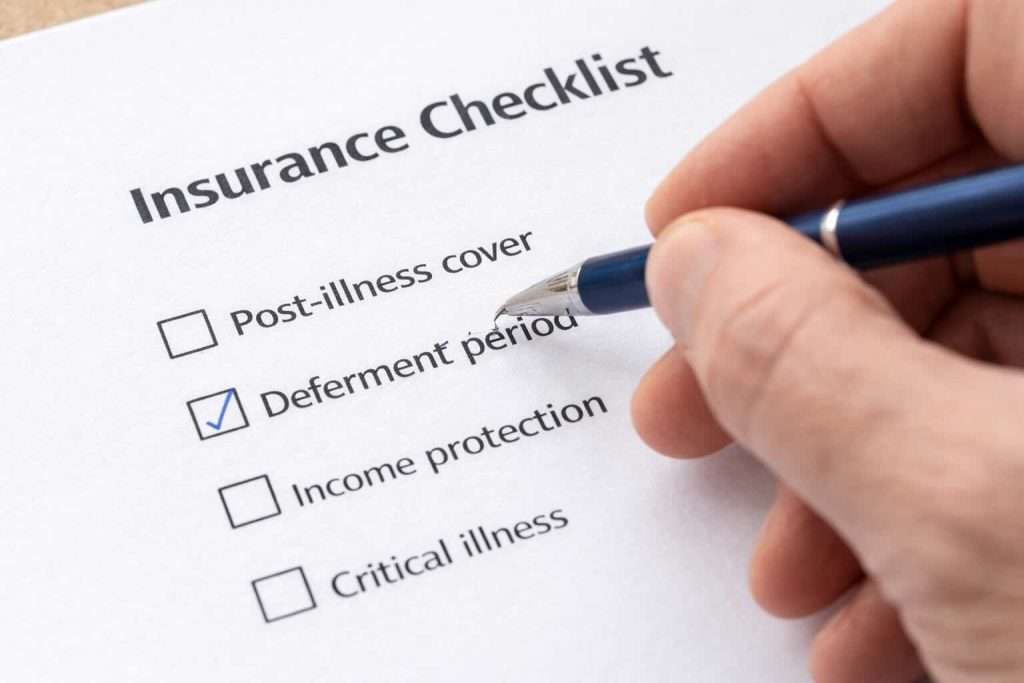
Questions To Ask Yourself First
Grab a pen and paper. Answering these questions honestly will give you a clear picture of what you need and what you can afford.
How long could I last on my savings? Be realistic. This will help you determine the shortest deferment period you can manage before the policy kicks in.
What sick pay does my employer provide? Dig out your employment contract. If you get generous sick pay, you can choose a longer deferment period, which can seriously reduce your monthly premiums.
What are my essential monthly bills? Tally up the absolute essentials: mortgage or rent, council tax, utilities, and food. This is the minimum monthly benefit you should be looking to cover.
Is my job considered high-risk? Your job title matters. A roofer will pay more than an office worker. An adviser can quickly tell you how different insurers view your profession.
Questions To Ask Your Adviser
Once you’ve got your numbers sorted, you’re ready for a productive chat with a specialist. A good adviser will cut through the jargon and explain the fine print.
Here are the critical questions to bring to the table:
Which definition of incapacity is right for me? You should always aim for an ‘Own Occupation’ policy if you can get one. If an adviser suggests anything else, ask them to clearly explain why it’s a better fit for you.
Should I go for guaranteed or reviewable premiums? Guaranteed premiums give you long-term peace of mind, as the cost is fixed. Reviewable premiums start cheaper but can (and often do) rise over time.
Do I really need index-linked cover? For younger people, especially, this is vital. It makes sure your payout keeps pace with inflation, so its real-world value doesn’t shrink over the years.
Income Protection Policy Feature Comparison
An adviser will help you weigh up the different features on offer. This table gives you a quick summary of the core differences you’ll be discussing.
| Feature | Short-Term Policy | Full-Term Policy | Age-Rated Premiums | Guaranteed Premiums |
|---|---|---|---|---|
| Payment Period | Fixed (1-5 years) | Until retirement age | Increase with age | Fixed for life of policy |
| Best For | Budget-conscious | Maximum security | Younger applicants | Long-term budgeting |
| Cost | Lower initial cost | Higher initial cost | Start low, rise later | Higher but stable cost |
| Typical Use | Covering specific debts | Full income replacement | Short-term needs | Locking in a low rate |
Choosing the right combination of these features is where professional advice becomes invaluable, ensuring your policy is built for your specific needs, not someone else’s.
“Navigating the income protection market alone is tough. With over 35 years of experience, our team at EHF Mortgages can find the right policy to protect you and your family, giving you complete peace of mind.”
Frequently Asked Questions
When you start looking into income protection, it’s natural for questions to pop up. To help you feel confident in finding the right policy, we’ve put together straightforward answers to the queries we hear most often from our clients across Essex.
Is Income Protection Insurance Tax Deductible?
This is a question we get all the time, and the answer is refreshingly simple. For any personal policy you take out, the monthly premiums you pay are not tax-deductible.
But here’s the good news. Any monthly income you receive if you need to make a claim is paid to you entirely tax-free. This means the benefit you agree upon with the insurer is exactly what you’ll get in your bank account, ready to cover your outgoings.
What Conditions Are Usually Excluded?
Income protection is designed to cover a wide range of illnesses and injuries, but, like any insurance, it has standard exclusions to be aware of. A policy typically won’t pay out for:
Self-inflicted injuries.
Illnesses that are a direct result of substance or alcohol abuse.
Any pre-existing conditions you did not tell the insurer about when you first applied.
Being completely open during your application is vital to make sure your policy stands up when you need it most. An adviser will walk you through the small print of any policy, so you know exactly where you stand.
“Understanding your policy’s exclusions is just as important as knowing what it covers. It’s the key to ensuring there are no surprises if you ever need to make a claim.”
Can I Get Income Protection If I Am Self-Employed?
Absolutely. In fact, for anyone who’s self-employed, it’s arguably even more important. If you work for yourself in places like Braintree or Colchester, there’s no safety net of employer sick pay. Your income simply stops the minute you can’t work.
This is where specialist advice is crucial. A good adviser can point you towards insurers who properly understand the ups and downs of a self-employed income, ensuring you get a policy that’s both robust and reliable.
How Much Income Protection Cover Do I Actually Need?
Working out the right amount of cover is a critical step. A great rule of thumb is to start by adding up all your essential monthly expenses. Think mortgage or rent, utility bills, council tax, food, and any other costs you can’t avoid.
From that total, just subtract any other income you’d still have coming in if you were off sick, like state benefits or money from a rental property. The number you’re left with is the minimum monthly benefit your policy should aim to provide.
Feeling clearer about your options? With over 35 years of experience, the team at EHF Mortgages has helped countless people secure their financial futures with the right protection. Let us take the complexity out of finding the perfect policy for you.





